Unit title borer check
Borer inspections for bodies corporate
A converted villa split into three flats, or a block of 1960s units with a shared roof: when borer turns up in a unit-titled building, the first question is often not what to do but who decides and who pays.
In a unit-titled building, borer in shared timber such as the roof, cladding and foundations is usually the body corporate's to repair, while each owner looks after their own unit. A borer inspection for a body corporate covers the shared structure and any units it can reach, and reports common property and unit findings separately. See borer inspection for the visit itself.
A borer inspection booked through this site costs $285 + GST. The fee is credited against the treatment if you go ahead with the recommended work through the same operator. Larger buildings are quoted when you book.
Who is responsible for borer in a unit-titled building?
Under section 138 of the Unit Titles Act 2010, the body corporate must repair and maintain the common property and any building elements and infrastructure that relate to or serve more than one unit. Section 80 requires each unit owner to repair and maintain their own unit so that it does not damage common property, building elements or other units.
The Act defines building elements broadly. It includes components needed for the building's structural integrity, its exterior look or the safety of the people in it, and names the roof, balconies, decks, cladding and foundations among them. In a timber building, that covers most of the places borer lives. Where a building element sits inside one unit, section 138 lets the body corporate recover the repair cost from that unit's owner. Exactly what is common property in your building depends on its unit plan, so this is general information, not legal advice.

Which older Auckland buildings are most likely to have borer?
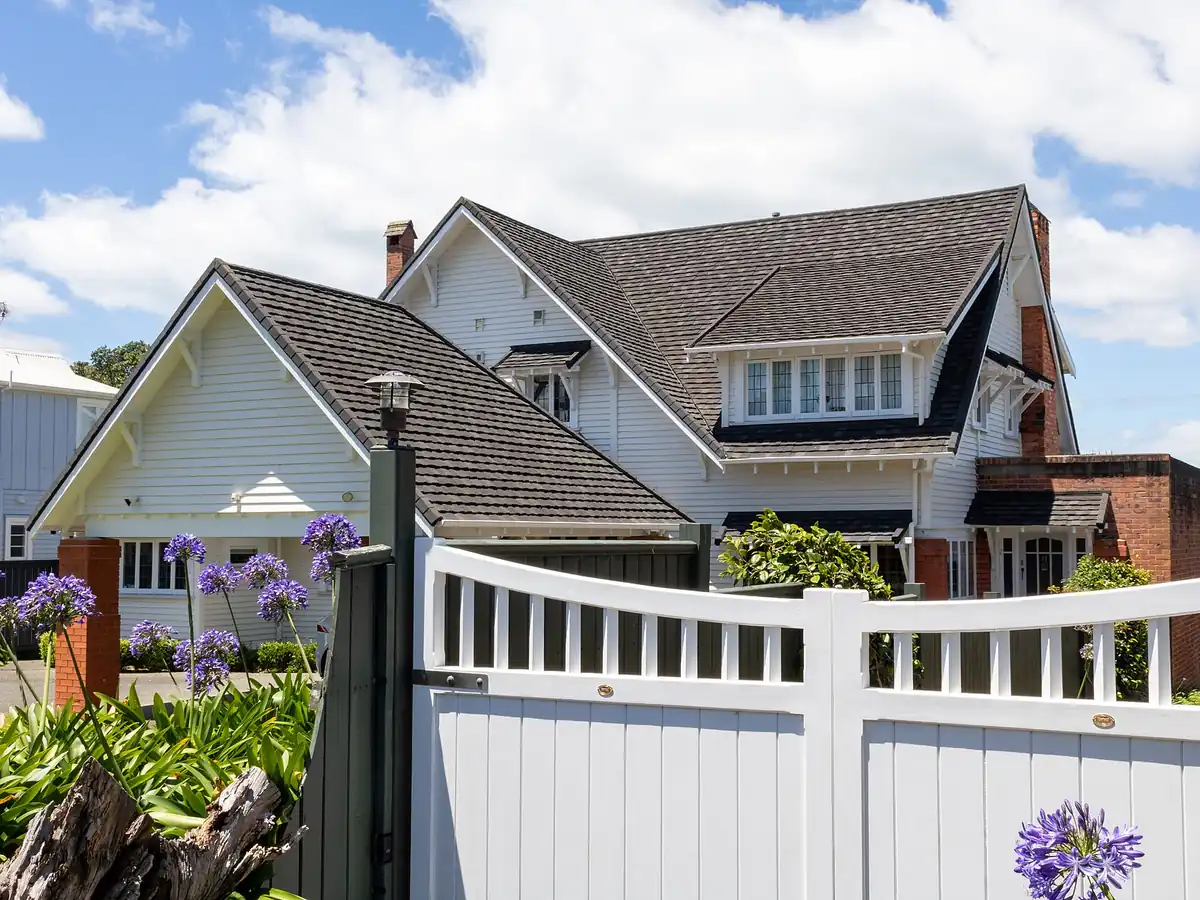
Converted villas and bungalows carry the same borer history as any house of their age, but with one roof space and one subfloor shared between several owners. Older blocks of flats from the 1960s and 1970s are often timber framed too; boron treatment of framing was introduced in the 1950s, but treatment cannot be assumed without checking.
- Converted villas. Original untreated timber throughout, with walls and floors added later to split the units. Early-era houses are covered under villas and bungalows.
- 1960s and 1970s flats. Timber floors and roof framing in low-rise blocks; check whether the framing is stamped as treated.
- Units with timber decks and balconies. Decks and balconies are named building elements, and wet timber invites borer and decay.
- Mixed-age developments. Infill units built around an older house, where the original structure sits beside newer framing.
How do borer findings fit a long-term maintenance plan?
Section 116 of the Unit Titles Act requires a body corporate to keep a long-term maintenance plan covering at least ten years, to identify future maintenance and estimate its cost. Borer findings belong in it: what was found, where, what was treated, and when the next check falls due.
A written inspection gives the plan something concrete. Live borer in the subfloor becomes a treatment item with a date; old, inactive holes become a recheck item; weakened timber becomes a builder's assessment with a likely repair. Section 117 adds that spending more than 10 percent above the plan's figure for an item needs a special resolution, so realistic figures matter. Published Auckland prices for treating a roof space run about $350 to $600 + GST and a subfloor about $450 to $750 + GST; a building with several units is priced on its own.

How is an inspection scoped for a body corporate?
Scoping starts with the unit plan and a list of what the committee wants answered. Usually that is the shared roof space, subfloor, cladding, decks and balconies, plus entry to any unit where signs have been reported. Access to each unit needs the owner's or occupier's cooperation, so the committee arranges it ahead of the visit.
-
Brief
The committee or body corporate manager sends the address, unit plan, number of units and what prompted the inspection.
-
Access plan
Which units can be entered, which are tenanted, and where the roof hatches and subfloor openings are.
-
Visit
Shared structure first, then the units that can be entered, each recorded separately.
-
Report
Common property and building elements in one part, unit-level findings in another, with areas not inspected listed.
Section 80 requires unit owners to allow the body corporate in at reasonable hours after reasonable notice to check building elements. Tenanted units also need the tenancy notice rules followed, which are summarised for landlords under borer inspections for rentals.
How are findings reported to a committee?
A committee reads findings differently from a single owner: it needs to see what is shared, what belongs to one unit, what it costs and how urgent it is. The report separates common property and building elements from unit-level items, and gives each area an outcome: no action, treat, monitor or builder.
| Group | Example | Usually decided by |
|---|---|---|
| Common property | Shared roof space, driveway retaining timber | Body corporate |
| Building elements serving more than one unit | Subfloor bearers, cladding, roof framing | Body corporate |
| Building elements within one unit | Floor joists under one unit only | Body corporate, cost may be recovered |
| Unit interior items | Skirtings, internal joinery, owner's furniture | Unit owner |
The grouping in the table follows the Act's general scheme; the unit plan and any legal advice the committee has decide where a particular item sits.
How is treatment coordinated across units?
Treating shared timber means coordinating several households: notice to each occupier, access to the subfloor or roof space from whichever unit holds the opening, and a clear record afterwards. Treatment is planned ahead of the flight season of the beetle involved and quoted per area, so the body corporate pays for what is needed.
Where treatment reaches inside a unit, the owner and any tenant are told which products are used and where. Timber found to be weakened goes to a builder; when repair work needs a building consent is set out under borer damage repair, and methods under treating live borer. A follow-up check after the next season gives the maintenance plan a dated update.
How this part fits into a single visit, with the fee and the report it produces, is summarised under borer inspection in Auckland.
Asked before booking
Who pays for borer treatment in a unit title?
Generally the body corporate pays for common property and building elements serving more than one unit, and may recover costs for building elements within one unit from that owner. Unit owners look after their own interiors. The unit plan and your body corporate's advisers settle any particular item.
Can one owner book a borer inspection of the whole building?
An owner can have their own unit inspected. Shared areas are the body corporate's to manage, so an inspection of the roof space, subfloor or cladding is normally arranged through the committee or body corporate manager.
Is borer covered by the body corporate's insurance?
That depends entirely on the policy wording, and insect damage and gradual deterioration are worth asking about specifically. Check the policy or ask the broker; the inspection findings will help with that conversation.
How often should a body corporate check for borer?
There is no set interval. Older timber buildings benefit from a check every few years, timed after a flight season, with dates recorded in the long-term maintenance plan.
Related pages
- Borer inspectionWhat a borer inspection records, part by part, and what it costs
- Villas and bungalowsWhere borer usually shows in Auckland villas and California bungalows, and in renovations that mix old and new timber
- Borer damage repairWhen borer damage needs a builder, which repairs are exempt from consent, re-piling and the order of work
- Borer costPublished Auckland prices for borer inspections and treatment, and what moves them
Sources
Ask about a body corporate borer inspection
The inspection is $285 + GST, credited against treatment done through the same operator. Treatment ranges sit on the cost page.