North Shore · Kaipātiki
Borer inspection in Birkenhead
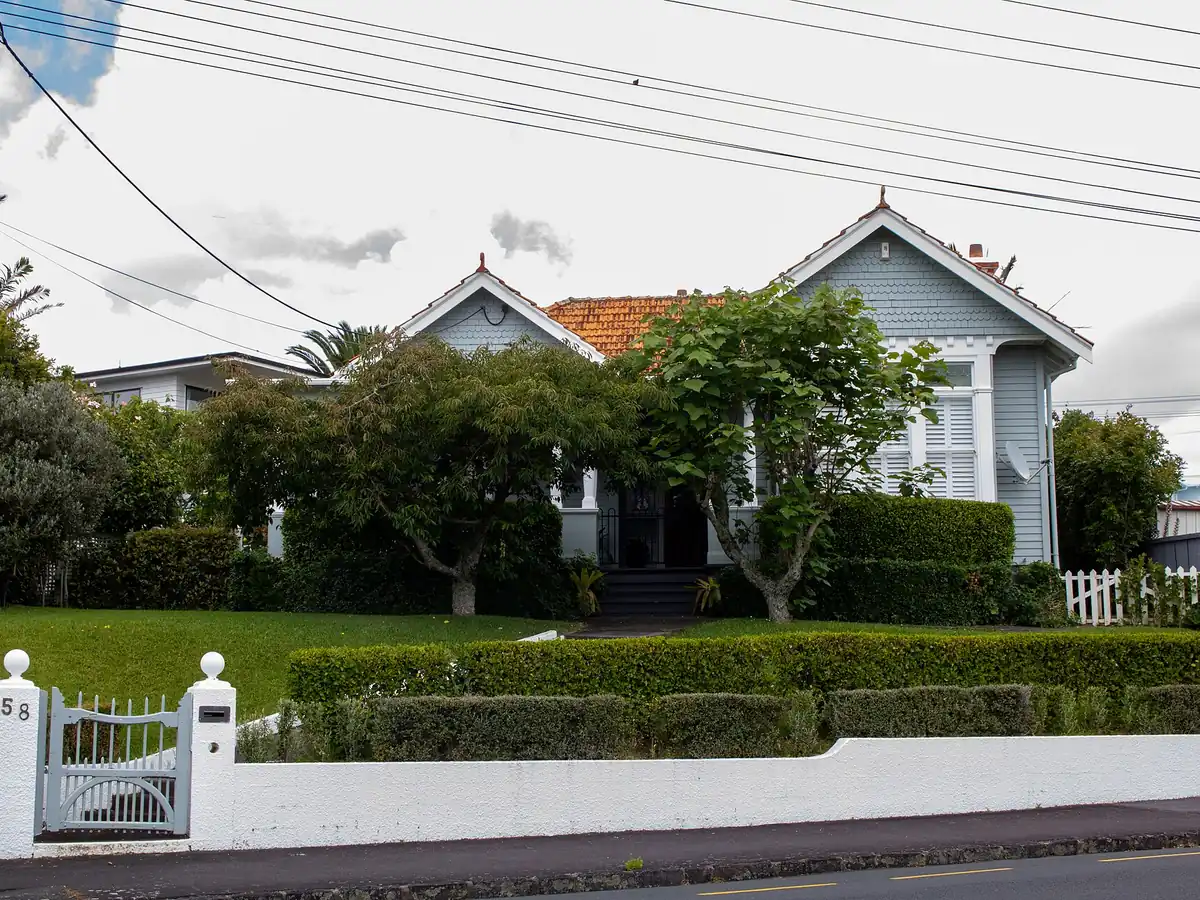
Birkenhead grew around a sugar refinery, a ferry wharf and some of the last kauri forest on the North Shore. Its houses span well over a century, and a borer inspection here is mostly about telling one era's timber from another's.
Birkenhead has three broad layers of housing: older timber homes near Birkenhead Point and the refinery, houses built after the Harbour Bridge opened in 1959, and later infill. Untreated native timber in the oldest layer is where the common house borer is most likely, while damp sites beside the kauri gullies can also draw the native longhorn.
An inspection anywhere in Auckland, including Birkenhead, Chatswood and Beach Haven, costs $285 + GST. The fee is credited against the treatment if you go ahead with the recommended work through the same operator.
How did a refinery town become a commuter suburb?
Birkenhead's first permanent European settlers arrived in 1849, and orchards followed in the 1850s, with strawberries a major crop from the 1860s. A township was subdivided from 1863. The Chelsea Sugar Refinery opened in 1884 and became the area's main employer, and Birkenhead was made a borough in 1888.
The refinery shaped the housing directly. In 1910 a scheme gave Chelsea workers low-interest loans to build or buy homes near the works, and the ferry carried commuters to the city by the early 1900s. Commercial fruit growing was largely gone by the 1910s and the last strawberry fields went in the 1940s, freeing land for houses. Houses from this period were built before boron treatment of framing began in 1952.

After 1959: the bridge years
The Auckland Harbour Bridge opened in 1959 and pulled Birkenhead much closer to the city. The following year the council encouraged low-cost housing, and a state housing area was built at Hammond Place. Birkenhead became a city in 1978, joined North Shore City in 1989, and now sits in the Kaipātiki Local Board area.
For borer, the bridge is a useful dividing line. Houses built from the 1960s were framed in an era when wet boric treatment of framing timber had been available for some years, so their framing is less likely to carry the common house borer than the older stock. Less likely is not never: native timber floors, reused timber and later additions all vary, and a 1960s house extended in the late 1990s may contain untreated kiln-dried framing from the window described in house borer by build year.
Sandstone ridges and kauri gullies
Birkenhead is built over uplifted Waitemata sandstone, cut by creeks such as Duck Creek and Hellyers Creek, with remnant kauri forest in Kauri Park, Le Roys Bush, Kauri Glen, Kauri Point Domain and Eskdale Reserve. Houses on the edges of these reserves often sit on sloping sections with shade on one side.
The practical effect is a damp downhill corner. Water running off a sloping section collects against the low side of the house, subfloor vents on that side get buried by soil or plantings, and timber there stays wetter than the rest. Those are the spots the inspector probes first, because damp timber suits both the common house borer and the native two-toothed longhorn, and because softness there may be rot rather than insects.

Birkenhead Point and the special character overlay
Part of Birkenhead Point is mapped in the Auckland Unitary Plan's Special Character Areas Overlay, listed as Residential: North Shore, Birkenhead Point. The overlay manages how the street looks: demolition, additions and new buildings. Its policies also encourage maintenance and repair, and ask for new materials compatible with the age, detailing and finish of the house.
For a borer repair, that last point is the one to notice. Replacing a run of borer-damaged weatherboards with a profile that matches the originals sits comfortably with the overlay, while swapping them for a different cladding might not. Restoration and repair are listed as permitted in the operative plan, but larger external alterations need consent, so check your address on Auckland Council's maps before planning more than like-for-like work. Board-by-board advice is in borer in weatherboards.
What the inspector reads in each kind of Birkenhead house
The timber changes with the era, so the inspection does too. The table summarises where effort goes in the three main kinds of house you will find in Birkenhead. It is a guide to likely findings, not a substitute for looking.
| House type | Typical timber | Where the inspector spends time |
|---|---|---|
| Early houses near the Point and the refinery | Untreated native timber: rimu, kauri, kahikatea | Subfloor bearers and joists, rimu floorboards, roof framing, lower weatherboards |
| 1960s and 1970s houses | Framing from the boron era; floors vary | Additions, floor sapwood, any reused older timber, damp downhill subfloor |
| Later infill and renovations | Treated framing; check anything built from about 1995 to 2005 | Roof space framing, the join between old and new work |
Floors are a common find in the older homes, where sapwood edges on rimu boards carry the holes. See borer in floorboards for what is typical underfoot, and villas and bungalows for the wider pattern in houses of this kind.
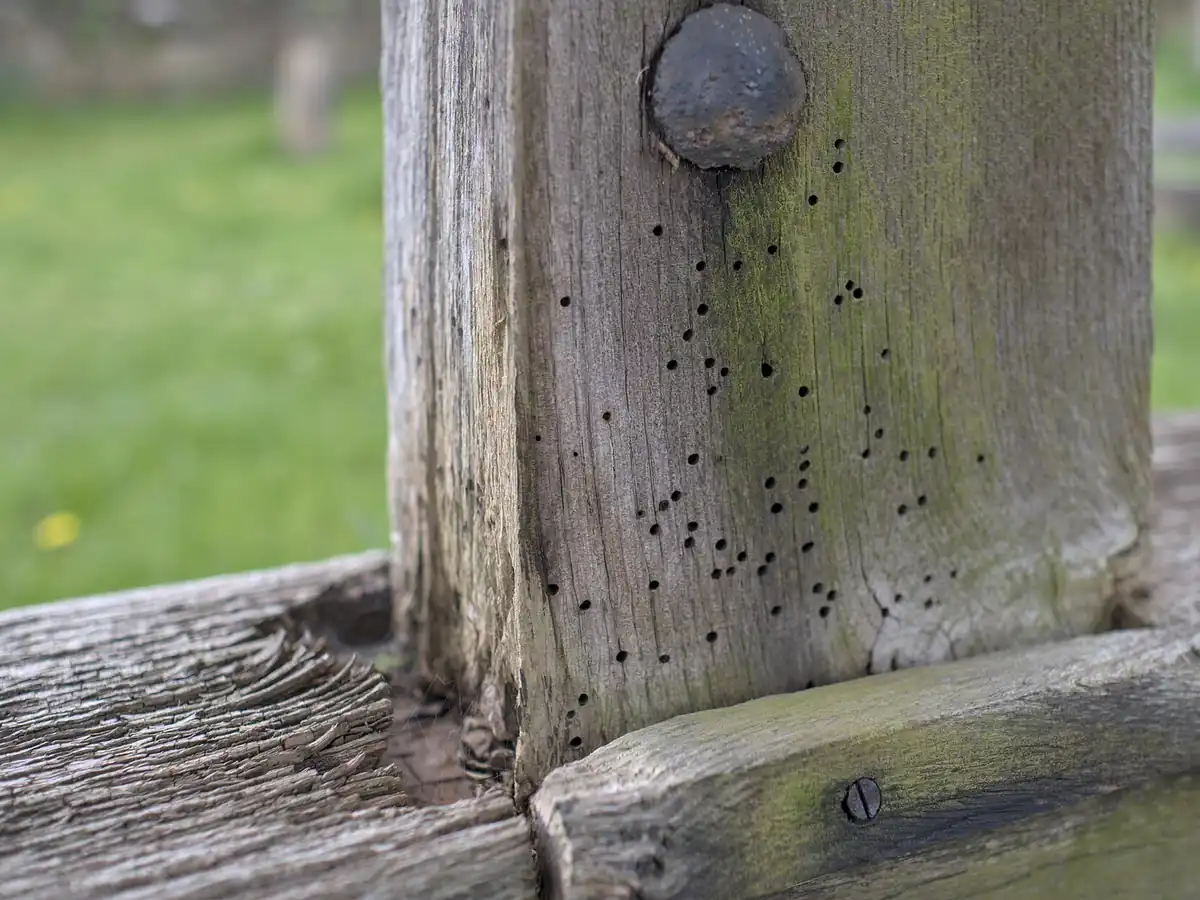
Ceilings are worth a glance too. In refinery-era cottages the roof space is often small, with sarking boards over the rafters, and fine dust falling onto the ceiling below can be the first visible sign of an infestation above. The inspector reads that dust for colour and texture, then checks the timbers directly overhead where the hatch allows.
Steep sites, low floors and getting access
Many Birkenhead sections fall away from the street, so the subfloor is roomy at one end and tight at the other. Older houses near the Point can have low crawl spaces and small hatches, sometimes inside a cupboard. Houses on the reserve edges may only be reachable around the back down a bank.
Before the visit, find the subfloor hatch and the roof hatch and clear anything stored in front of them. If the property is tenanted or you are buying, the agent usually arranges entry. Areas that cannot be entered safely are inspected from the opening and noted, and the findings list them so nothing is presented as seen when it was not.
Next door in Northcote the older villa stock on Northcote Point follows the same pattern, and is covered by the same inspection.
Every other suburb gets the same visit and the same report format; the overview is under Lignum Timber Inspections.
Asked before booking
Are Birkenhead villas likely to have borer?
Older timber houses here were built from untreated native timber, which is what the common house borer feeds on, so holes in floors and framing are common. Many are historic rather than live. An inspection separates the two and says whether any timber has lost strength.
Does the special character overlay stop me replacing borer-damaged boards?
Not if the work is restoration or repair with matching materials, which the operative plan lists as permitted in the Special Character Areas Overlay. Bigger external changes need resource consent. Check your address on Auckland Council's maps first.
My house is near Kauri Glen. Is the bush a borer risk?
The bush itself is not the source. The risk comes from the shade and damp it creates around lower timbers, which suits borer and rot. Keeping vents clear, stopping water pooling on the low side and keeping soil off cladding all help, and the inspection notes where moisture is a problem.
Further reading for Birkenhead houses
- Villas and bungalowsWhere borer usually shows in Auckland villas and California bungalows, and in renovations that mix old and new timber
- Borer in weatherboardsBorer in lower boards and sills, what paint does and does not stop, and replace versus treat versus repaint
- House borer by build yearWhich New Zealand houses carry house borer, era by era, and why the framing timber decides it
- Pre-purchase borer inspectionA borer check timed to your building condition, read alongside the building report
Sources
- Wikipedia: Birkenhead, New Zealand (history and geology)
- Auckland Unitary Plan, D18 Special Character Areas Overlay (Auckland Council)
- Standards New Zealand: key historical dates for timber treatment regimes
- NZ Farm Forestry Association: household borer, leaflet 32
- NZ Farm Forestry Association: two-toothed longhorn
Book a Birkenhead borer inspection
The inspection is $285 + GST, credited against treatment done through the same operator. Treatment ranges sit on the cost page.