Timber-pest inspections, Auckland
Borer inspection in Auckland, before you buy and before you treat
Borer holes are close to universal in older Auckland houses. What needs answering is which beetle left them, whether anything is still coming out, and whether the timber carrying the house is affected. Borer inspections and pre-purchase borer checks across Auckland, with written findings on the beetle, the timber and what it needs before any treatment is quoted.
Where are you starting from?
People arrive here for one of three reasons, and each has a different first step. A buyer needs an answer before a condition date. An owner who has found dust or holes needs to know whether anything is still alive. Someone holding a building report that mentions borer needs to know what that line actually means.
- You are buying a houseA borer inspection timed inside your condition period, alongside the building report.
- A report mentions borerWhat "evidence of borer" can and cannot tell you, and what to ask next.
- You have found holes or dustWhich beetle, live or historic, which timbers, and whether it needs anything at all.
- You are about to sellKnowing what a buyer's inspector will find, before the listing goes live.
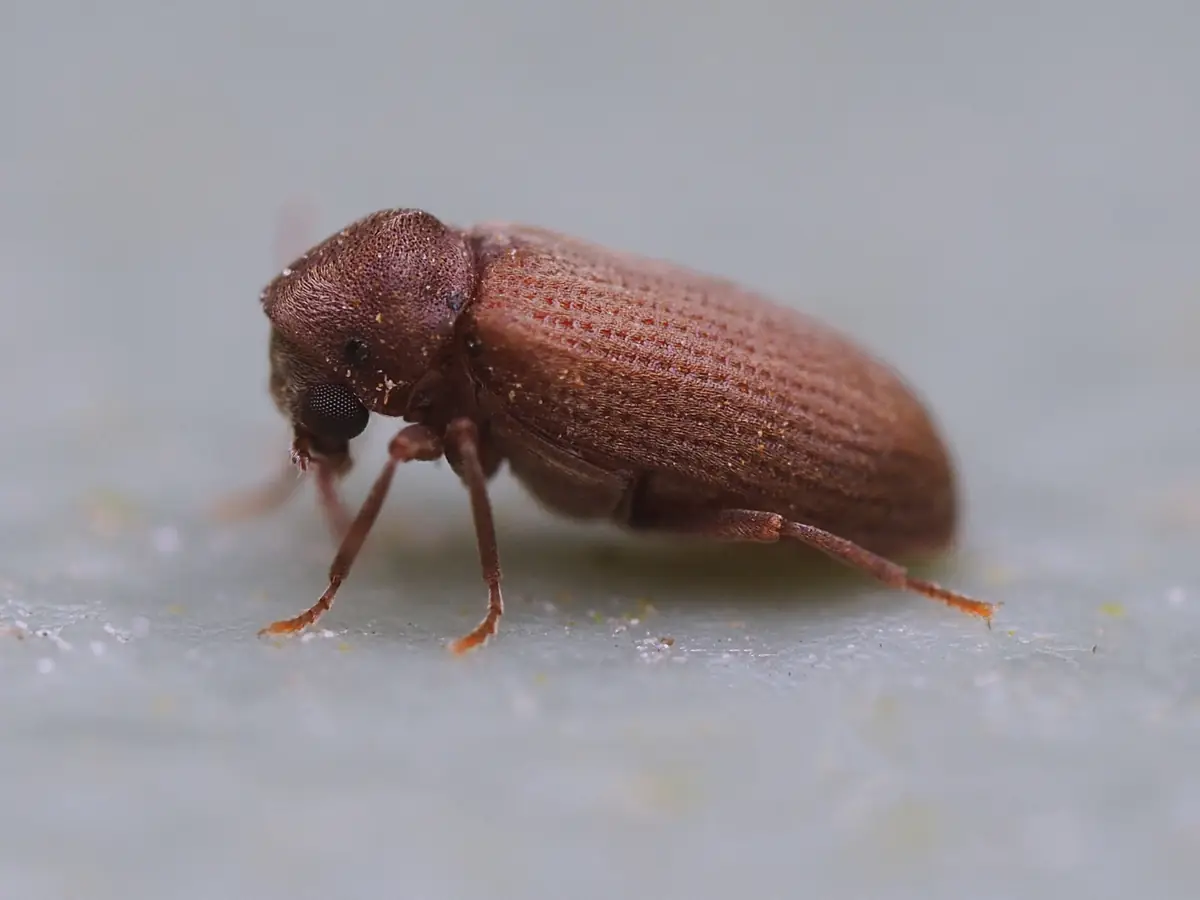
What does a borer inspection write down?
Each part of the house gets the same six lines: the species, whether it is active, which timber carries it, the moisture conditions, whether anything looks structurally weakened, and the next step. Writing every area the same way lets a buyer, a vendor, a lawyer or a builder read the findings later without having been there, and it keeps the recommendation tied to what was actually seen.
Areas that could not be reached, such as a subfloor with too little clearance or a roof space boarded over, are listed as not inspected. That matters more than it sounds: a report that is silent about an area tells you nothing, while one that says the area was not seen tells you where the uncertainty is. The guide to reading a borer report goes through each line.
Which parts of an Auckland house does borer affect?
The common house borer feeds in the sapwood of untreated timber, so it turns up wherever older native timber or untreated pine is exposed: roof framing, subfloor piles, bearers and joists, floorboards, weatherboards and old furniture. Boron-treated framing resists it, which is why the age of each part of the house matters.
- Roof spaceRafters, purlins and sarking, and dust on the ceiling linings.
- FloorboardsRimu and kauri boards, and powderpost beetle in hardwood floors.
- Piles and subfloorBearers, joists and the native longhorn in damp subfloors.
- WeatherboardsLower boards, failed paint and moisture.
- Furniture and antiquesKeeping the piece, and keeping borer out of the house.

Which beetle made the holes?
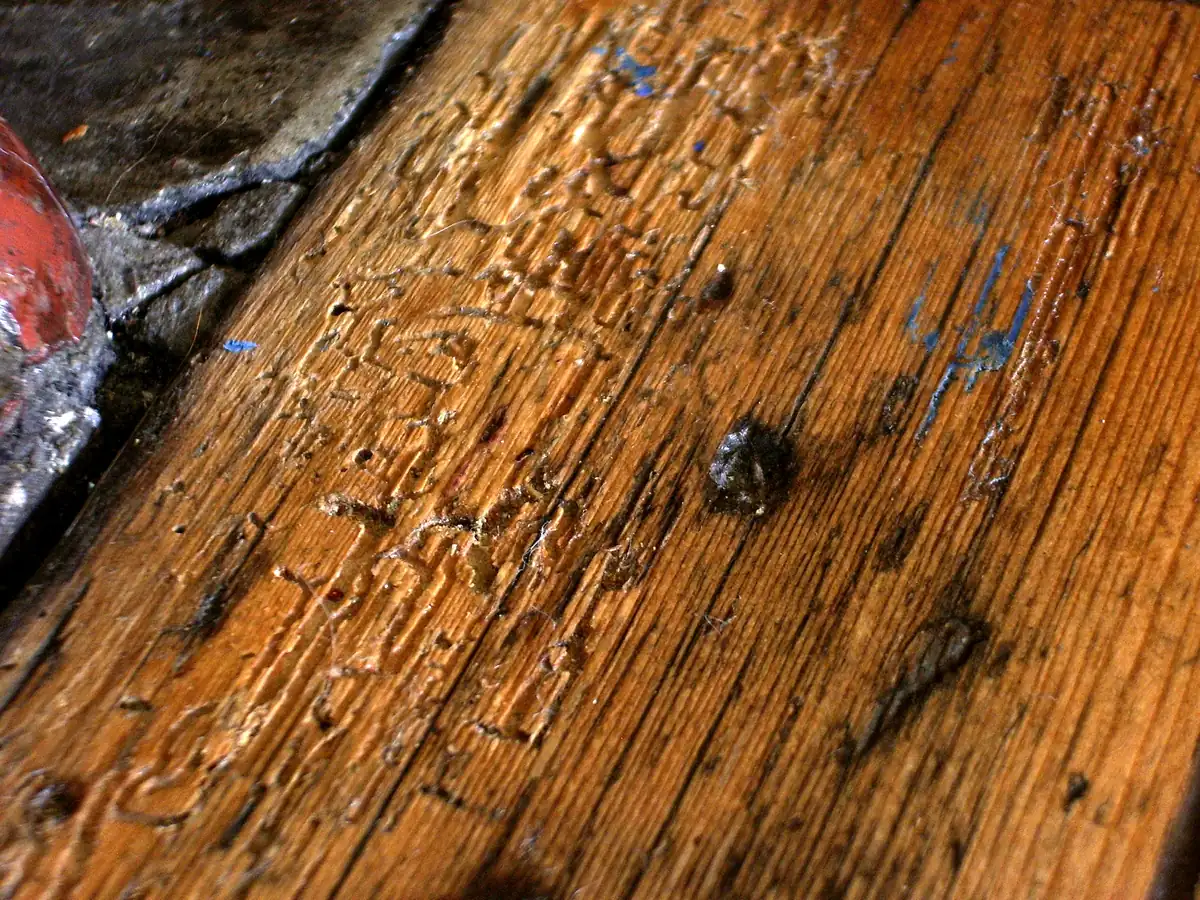
Four beetles account for most borer found in Auckland timber, and their exit holes differ enough to tell them apart. Round holes of about 1 to 2 mm with gritty dust belong to the common house borer. Oval holes of 3 to 7 mm point to the native two-toothed longhorn. Pinhead holes in hardwood are powderpost beetle, and large oval holes of 10 to 20 mm mean huhu in damp wood.
The species changes the advice. The house borer mostly stays in sapwood, so a joist with holes along one edge often still carries its load. The longhorn tunnels through heartwood too and can leave a thin outer shell, which is why the inspector probes rather than looks. Huhu need wood at or above about 25% moisture, so huhu in a house is first a leak or a damp subfloor. Side-by-side photos are in the beetle identification guide.
Is it live borer, or old holes?
Activity is the line that changes a recommendation most. Signs of live borer are pale, clean-edged holes, fine dust that gathers again after cleaning, and adult beetles appearing in late spring and summer, when the common house borer mostly emerges, roughly November to January. Dark, dirty holes with no new dust are usually old and may need nothing at all.
Old damage still gets a strength check, because decades of feeding can weaken a floorboard even after the beetles have gone. Where the evidence is unclear, a sample area can be marked and looked at again after the next flight season instead of treating on a guess: that is what a re-inspection is for. More on telling the two apart is in old borer damage.
Buying a house with borer in it
For a buyer, borer is rarely a reason to walk away on its own, but live borer in structural timber, longhorn in bearers or a damp subfloor can change the cost of owning the house. A pre-purchase borer inspection answers those questions before the agreement goes unconditional, alongside the building report, so the decision rests on findings rather than a single line saying borer was noted.
A standard building inspection follows NZS 4306 and is a visual survey of the whole house, with borer as one item among many. As far as published sources show, New Zealand has no dedicated timber-pest inspection standard like Australia's AS 4349.3, which is why the two inspections are booked separately. The pre-purchase borer check page covers timing, and is borer a deal breaker covers the decision itself.
How does the build year change the risk?
Borer risk follows the timber, and the timber follows the decade. Boron treatment of building timber began in 1952, so older houses were usually framed and floored in untreated native timber. Untreated kiln-dried framing was allowed again from September 1995, and treated framing was required for consents from 1 April 2004. Renovated houses often mix timber from several eras.
| Built | Typical timber | What the inspection watches |
|---|---|---|
| Before the 1950s | Untreated rimu, kauri, kahikatea; early untreated pine | Floors, sarking, subfloor framing and weatherboards throughout |
| 1950s to mid 1990s | Boron-treated framing in most new work | Original framing usually resists borer; untreated additions, furniture, recycled timber |
| About 1995/98 to 2004/05 | Some untreated kiln-dried framing | Framing visible in the roof space and subfloor |
| After 2004/05 | H1.2 boron-treated framing | Untreated items brought in, wet timber where boron may have leached |
The detail and the sources are in house borer by build year and houses from the untreated-framing years.
Auckland suburbs and their housing
The inspection is the same everywhere in Auckland, but the houses are not. Ponsonby, Grey Lynn and Parnell are dense with villas and cottages of untreated native timber. Mt Eden, Epsom and Remuera add interwar bungalows. Devonport and Northcote Point are harbourside villa suburbs, Titirangi is bush and damp, and Botany grew in the years when untreated framing was allowed.
Each of those suburbs has its own page under locations, with notes on housing age, ground, moisture and the Unitary Plan's special character overlay, which can affect how original exterior timber is replaced. Villa and bungalow owners anywhere will find the villas and bungalows page useful.

What does an inspection cost, and what happens after it?
An inspection booked here costs $285 + GST. The fee is credited against the treatment if you go ahead with the recommended work through the same operator. The written findings give each area one of three outcomes: leave it, treat it before the beetles next emerge, or have a builder look at timber that has lost strength.
Where treatment is needed, published Auckland prices run about $350 to $600 + GST for a roof space and about $450 to $750 + GST for a subfloor, and the figure for a particular house is confirmed in writing after the visit. See what borer work costs and how live borer is treated.
When does borer damage need a builder?
Timber that dents, crumbles or flexes under a probe is recorded as a structural flag, and that is a builder's job rather than a treatment. Under the Building Act 2004, like-for-like repair of some damaged boards, joists or piles in the same position is generally exempt from consent, but complete or substantial replacement of structural parts, such as a full re-pile, needs a building consent.
Consented structural work is restricted building work, done or supervised by a Licensed Building Practitioner. With your agreement the findings go to a builder who quotes the repair, and any live borer is dealt with before or alongside the repair so new timber is not joined to an active infestation. The borer damage repair page sets out the limits.
What a borer inspection is not
It is not a building inspection or a building report, it does not assess weathertightness, wiring or plumbing, and it does not include repairs. It does not offer tented whole-house fumigation, which Consumer NZ notes is not usually suitable for houses. It also does not promise that borer will never return: it records what is in the timber on the day, and what that means.
Suspected exotic termites are a separate matter. The Ministry for Primary Industries treats them as an unwanted pest, recorded Australian subterranean termites in some Auckland houses in 2021, and asks for suspected cases to be reported on 0800 80 99 66. The termite or borer guide explains the differences.
From the borer library
The library holds longer guides written for owners and buyers, built from published New Zealand sources such as the NZ Farm Forestry Association's timber insect leaflets, Consumer NZ, BRANZ and Standards New Zealand. These are the ones most people start with, and the full list is in the borer library.
Asked before booking
Do most older Auckland houses have borer?
Borer holes are very common in Auckland houses built before boron-treated framing came into use in the 1950s, because their native timber and early pine were untreated. Holes on their own do not mean live borer or weak timber. The inspection separates old, inactive damage from current activity and records which members are affected.
How long before settlement should a buyer book?
As early in the condition period as possible. The visit itself is usually one appointment, but access has to be arranged through the agent and the written findings need to reach you, and anyone advising you, before the date the agreement goes unconditional. Put that date on the booking.
Will the inspection tell me the house is safe to buy?
No inspection can promise that. The borer inspection records the beetle, its activity, the timbers involved, the moisture and anything that looks structurally weakened. A building inspection covers the rest of the house. Whether the findings change your offer is a decision for you and your lawyer.
Is the fee refunded if no borer is found?
No. The fee covers the visit and the written findings, and a clean result is a useful answer in its own right, especially for a buyer. Where treatment is recommended and goes ahead through the same operator, the fee is credited against it.
Can I send photos instead of booking a visit?
Photos of holes, dust or a beetle are useful when you call, and they help the inspector plan, but they cannot show whether larvae are still feeding inside the timber or how deep the damage goes. That needs the timber to be seen and, where it matters, probed.
Book a borer inspection
Tell the inspector the suburb, why you are calling and any date you are working to. The inspection is $285 + GST, credited against treatment done through the same operator. Treatment ranges sit on the cost page.