Herne Bay, Waitematā shore
Checking a Herne Bay marine villa for borer
Herne Bay has some of the largest timber houses on the isthmus, built for families who once came and went by boat. A borer inspection here covers a lot of floor, a lot of roof and a weather side that faces open water.
Most Herne Bay houses were framed, floored and clad in native timber long before boron treatment began in 1952. The inspector works through the roof space, subfloor, cladding and floors, names any beetle found, says whether it still looks active and notes where wind-driven rain is keeping timber damp.
For Herne Bay buyers the timing matters as much as the findings, because so many sales here go to auction.
Boat-trip commuters and the first marine villas
Herne Bay was settled from the 1850s by people who worked in town and travelled home across a short stretch of water. Wealthy professionals built what were called marine villas, some with their own jetties and boathouses, and a few with no road access at all. The large estates were cut up around the turn of the twentieth century.
Schedule 15 of the Unitary Plan records original slope sections of 3000 to 4000 m² later divided into sites of up to about 1800 m², and names the Avenues south of Jervois Road as a subdivision full of villas by the end of the Edwardian period.
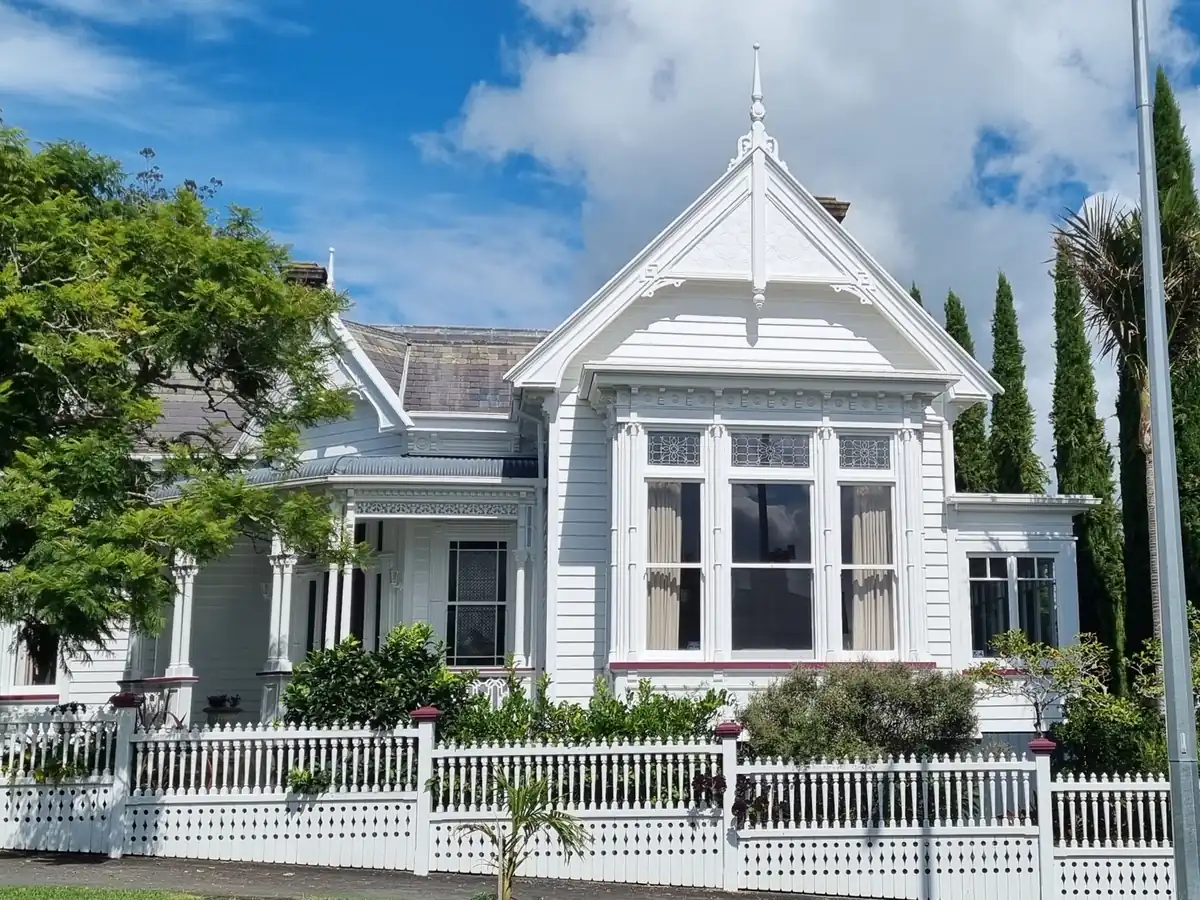

So the typical Herne Bay house is big, old and built from timber that went in untreated. Turret House and Dome House on Shelly Beach Road show the scale some of these homes reached. Size alone changes an inspection: more rooms, longer subfloor runs, and roof spaces split by turrets, gables and later additions.
How does harbour exposure change where borer settles?
A house that faces the Waitematā takes the weather straight off the water. Rain driven sideways gets behind paint that has started to lift, sits on sills and the lower edges of boards, and runs into joints around bay windows. The boards on that face dry more slowly than the sheltered side of the same house.
That uneven wetting is what the inspector is looking for. The common house borer develops faster in humid conditions, and the native two-toothed longhorn and huhu need timber that stays properly damp. A Herne Bay villa can carry old, long-finished house borer holes on its dry side and a live moisture problem on the harbour face. The findings treat the two differently.
Rusticated boards, bay windows and verandah posts
On the outside, the inspector reads the weatherboards from the ground and, where safe, from a ladder. The places that collect damage are predictable: the bottom two or three boards, the ends of boards where they meet corner facings, sills and the timber under them, and the feet of verandah posts that stand in a puddle every winter.
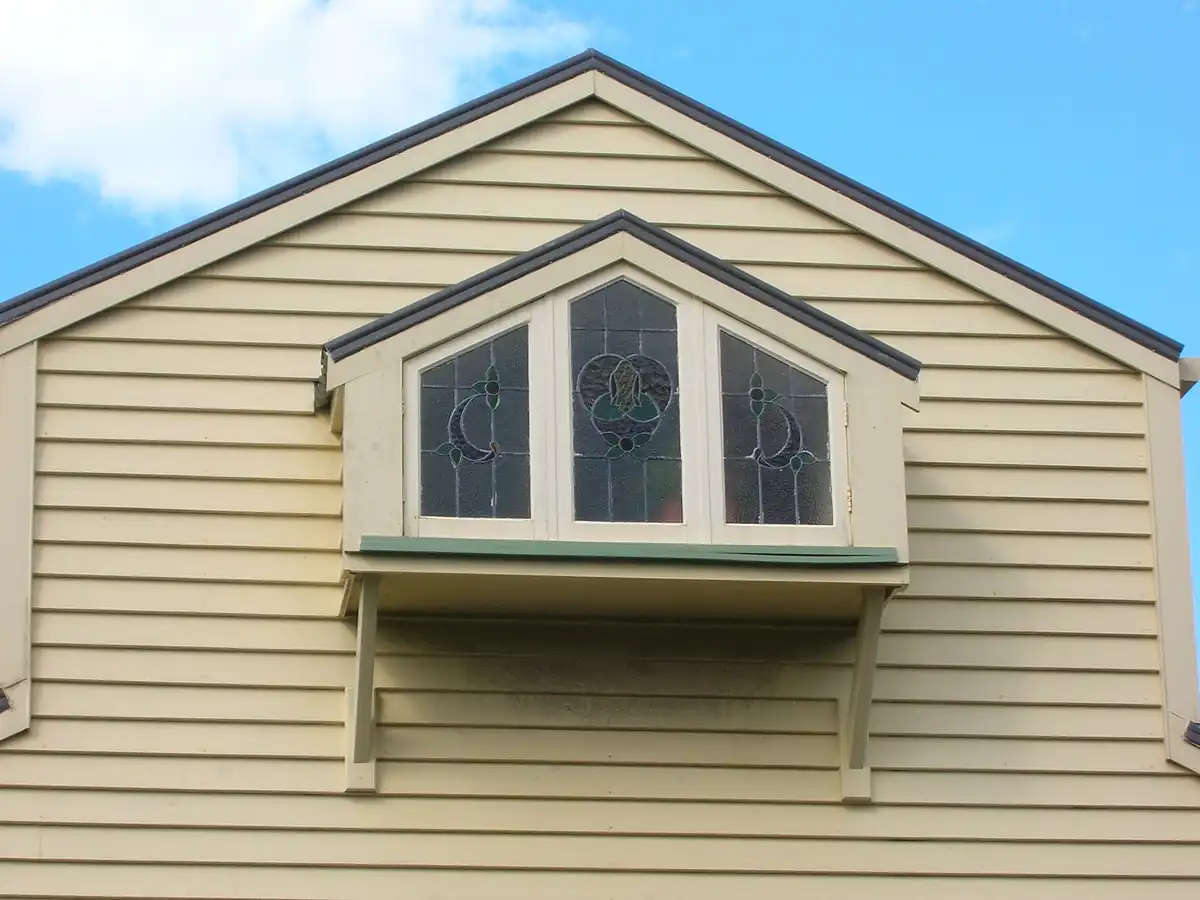

- Exit holes in paint. Round holes of one to two millimetres punched through recent paint mean emergence since the last repaint.
- Soft board ends. Probing separates borer damage from rot, which often sit together on the weather side.
- Verandah and bay framing. Posts, plates and bay window sills are checked separately from the main cladding.
The borer in weatherboards guide explains how the inspector separates old, filled holes from fresh ones on painted cladding.
Marseilles tiles, Art Deco flats and later towers
Not every Herne Bay home is a villa. Arts and Crafts houses from about 1915 to 1928 often carry Marseilles tile roofs; Williamson House on Jervois Road, designed by J.W. Chapman Taylor in 1928, is one named example. Tile roofs are heavy, the battens and rafters under them are original timber, and a tile roof space can be harder to move through than one under corrugated iron. The inspector records which bays were reached.
The 1930s Art Deco flats built on former tram-company land and the late-1980s apartment towers such as Shangri-la and Westwater are mostly concrete and masonry. Borer there is usually limited to joinery, floors, built-in cabinetry and furniture, and in a unit title any common-property timber belongs to the body corporate.
Bidding on a Herne Bay house at auction
OneRoof reported in February 2021 that Herne Bay's median property value had passed $3 million, the first New Zealand suburb to do so, and the same report cited an auction result on Hector Street. When this much money is committed on the fall of the hammer, any borer question has to be answered beforehand, because an auction bid carries no conditions.
A builder's report on a house this old will usually note borer and move on. The pre-purchase borer inspection adds the species, whether it is still active, which members carry it and what that means for the roof and floor. Allow a few working days between the visit and auction day for the written findings.
The visit costs $285 + GST. The fee is credited against the treatment if you go ahead with the recommended work through the same operator. Treatment, where it is needed, is published at about $350–$600 + GST for a roof space and about $450–$750 + GST for a subfloor; the borer cost guide explains what moves a quote within those ranges.
Special character rules when old timber has to come out
Parts of Herne Bay sit inside the Isthmus A special character area, where Schedule 15 names Herne Bay among Auckland's earliest suburbs, and the D18 overlay list includes a separate Isthmus B area for Herne Bay. Both were drawn around the villas and Edwardian houses that give these streets their look.
Inside an overlay, swapping a few damaged boards for matching timber is a different matter from changing the cladding or the street-facing joinery. Plan Change 120 is amending the special character overlays, so confirm with Auckland Council which rules apply to your address before any timber is ordered.
Two Herne Bay houses, at 58 Wallace Street and 85 Sarsfield Street, are on the Heritage New Zealand list as Category 2 places. If the house you are buying is listed or scheduled, read borer in heritage homes before planning repairs.
Sloping sections, harbour edges and Jervois Road parking
Streets fall away towards the water, so a subfloor can be a crawl at the street end and full height at the back. Larger houses often have several separate subfloor areas, each with its own hatch, and the front rooms usually have the least clearance of the whole visit.
If the property sits close to a cliff or a retaining wall above the shore, raise any ground movement with a geotechnical engineer; that is outside a borer inspection, though cracked piles or racked framing will be noted. Parking near Jervois Road shops is limited, so mention off-street space when booking.
Herne Bay shares its ridge with Ponsonby, and the bungalow streets of Westmere lie to the west. Other suburbs are listed in the locations hub, and a summary of borer inspection in Auckland explains the visit and report used everywhere.
Every other suburb gets the same visit and the same report format; the overview is under borer inspection Auckland.
Asked before booking
Does a Herne Bay villa need a longer inspection than a smaller house?
Often it does. Large villas and Edwardian homes have more rooms, longer subfloor runs and roof spaces broken up by gables or turrets. Mention the number of bedrooms, any additions and any separate subfloor hatches when you book so enough time is allowed.
Is borer on the harbour side of the house more serious?
Not automatically, but the weather side deserves the closer look. Boards and sills that stay damp suit the longhorn and huhu as well as house borer, and they can hide rot. The findings record moisture on each face so you can see whether paint and drainage work is needed alongside any treatment.
Can I replace borer-damaged boards on a Herne Bay character house myself?
Small like-for-like repairs are commonly allowed, but overlay rules are being changed by Plan Change 120. Check your address with Auckland Council first, and check the Heritage New Zealand list if the house might be on it.
Before you bid in Herne Bay
- Pre-purchase borer inspectionA borer check timed to your building condition, read alongside the building report
- Borer in weatherboardsBorer in lower boards and sills, what paint does and does not stop, and replace versus treat versus repaint
- Heritage and character homesBorer in scheduled heritage and special character houses: keeping original timber, consents and working with a builder
- Borer in a building reportWhat the common borer phrases in a pre-purchase report can and cannot tell you
Sources
- Wikipedia: Herne Bay, New Zealand
- Auckland Unitary Plan, Schedule 15: Special Character Schedule, Statements and Maps
- Auckland Unitary Plan, D18 Special Character Areas Overlay
- OneRoof, February 2021: Herne Bay is New Zealand's first $3m suburb
- Heritage New Zealand: 58 Wallace Street, List No. 593
- Standards New Zealand: key historical dates for timber treatment regimes
Book a Herne Bay borer inspection
The inspection is $285 + GST, credited against treatment done through the same operator. Treatment ranges sit on the cost page.