Freemans Bay, inner city
Borer in Freemans Bay cottages: an inspection guide
Freemans Bay holds some of Auckland's oldest timber houses on some of its smallest lots. Many were built quickly for working families, and that shows up underneath them once a borer inspection gets to the subfloor.
A Freemans Bay cottage or villa was built in untreated native timber, often with little gap between it and the next house. The inspector checks the subfloor, roof space, cladding and floors, sorts old holes from fresh activity, and records which parts could not be reached on a tight site.
Several older cottages here have had floors, piles or framing replaced over the decades, so the timber can vary room by room.
Cottages on the slopes, wealth on the ridge
Colonial Surveyor Felton Mathew laid out streets here in the 1840s, and land auctions in 1864 sold the Brookville estate in 121 sites and Alma Place in 152. Heritage New Zealand describes working-class cottages on the slopes above the bay and wealthier homes higher up the ridge, including along Hepburn Street. By 1883 sawmills and foundries lined the shore.
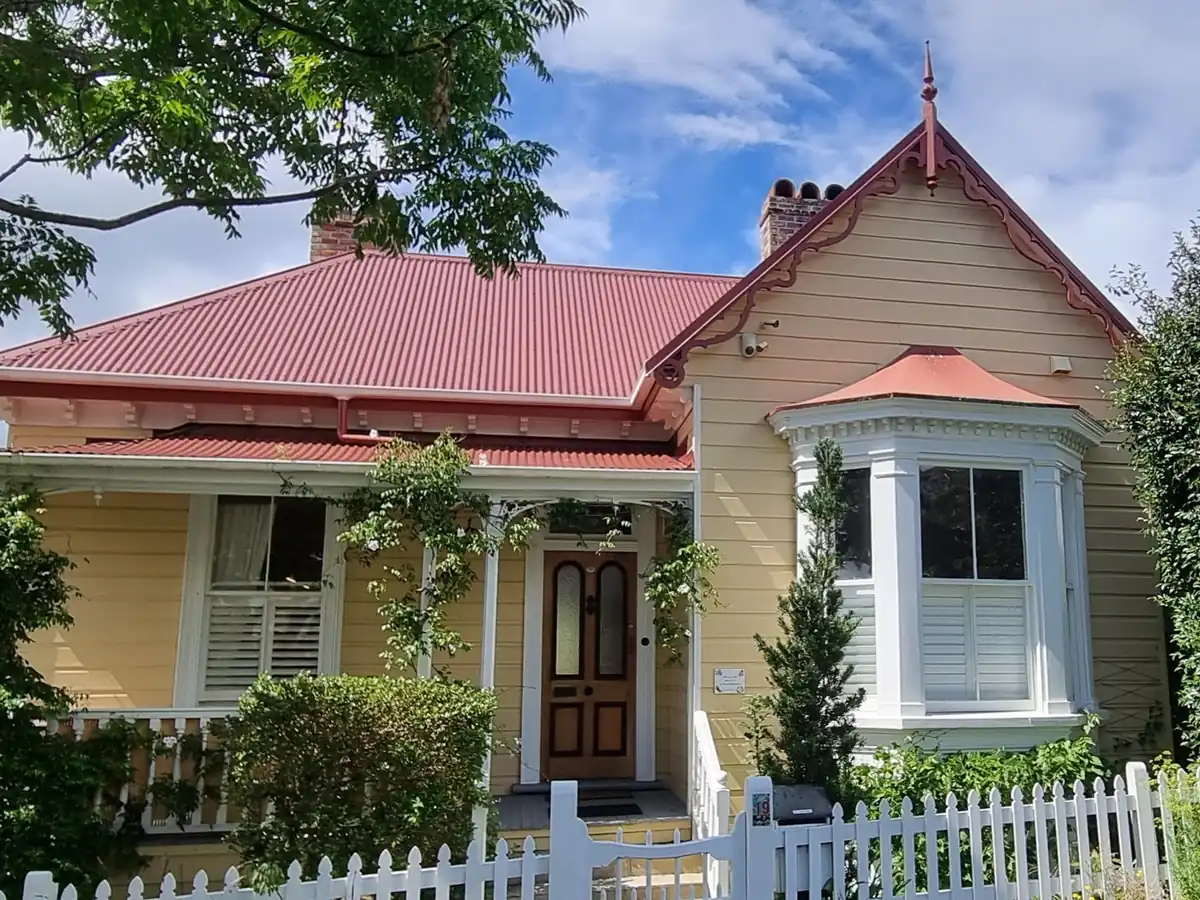
Contemporary accounts describe the workers' cottages as built close together and often poorly constructed, some with dirt floors. Franklin Road had larger houses, including two-storey ones that later became boarding houses. The house at 19 Collingwood Street, a single-bay villa finished by January 1880, is recorded as timber framed and clad on concrete piles, and as little altered. Charles Blomfield's house at 40 Wood Street dates from 1880.

Clearance, survival and later restoration
In 1951 the council designated a large part of Freemans Bay for slum clearance. On the city side of Union Street clearance was total, and flats and townhouses went up in the 1960s and 1970s. The scheme was abandoned in 1973, and the surviving Victorian houses were bought and restored through the 1980s and 1990s. The NZ Herald has reported small timber cottages in Ireland Street valued above $1.4 million.
Restoration explains a lot of what an inspector finds. A cottage may have new piles under old bearers, replacement flooring over original joists, or a rebuilt rear lean-to. Each part has its own age and its own borer history.
Where do exit holes turn up in a Victorian cottage?
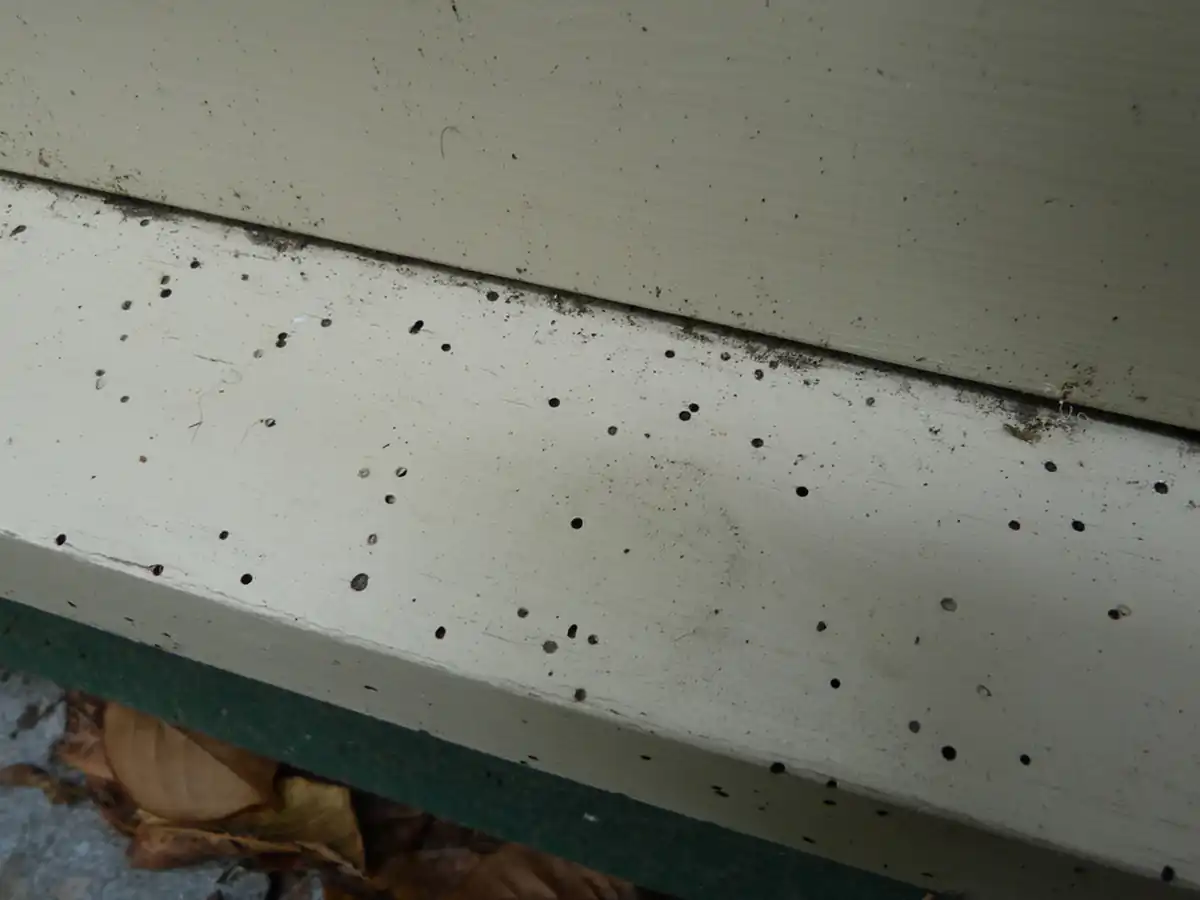
The common house borer favours the sapwood edges of rimu, kahikatea and pine. In a small cottage that usually means the subfloor framing, the underside of floorboards, roof sarking and battens, and the backs of skirting and architraves. Round holes of one to two millimetres with gritty dust are typical.
- Floors. Original boards lifted for services often show tunnelling on the underside that the top face hides.
- Roof space. Low-pitched cottage roofs leave little room, so the inspector notes which bays were reached.
- Lean-tos. Rear additions are often the least well built part of the house and the dampest.
Fresh dust, clean-edged holes or holes through recent paint suggest current activity. The notes on borer dust and frass explain how the inspector reads them.
Is the ground under a Freemans Bay house dry?
The old bay itself is reclaimed land, filled between 1873 and 1901. Two streams ran into it: the Waikuta came down to the bottom of College Hill Road, and the Tunamau ran from Western Park to the foot of Franklin Road. Houses on the slopes above are on natural ground, but runoff still follows the old stream lines downhill.
For an inspection the question is simple: is the soil under the house damp, and is any timber touching it? Damp ground slows drying of bearers and joists and suits longhorn and huhu as well as house borer, so the findings for a cottage near an old stream line usually carry a moisture note for each subfloor area.
Isthmus A rules for the oldest walking suburbs
Schedule 15 names Freemans Bay as one of Auckland's earliest walking suburbs within the Isthmus A special character area, describing small lots, narrow roads, closely spaced housing and Victorian cottages and villas of one and two storeys. Those same features are what make a cottage slow to inspect from underneath.
Repairs that keep the original look are a different category from changing cladding or street-facing joinery. Te Kāinga Aroha on Hepburn Street is a Category 1 historic place, so some properties carry heritage obligations as well. Plan Change 120 is still amending the special character overlays, so ask Auckland Council what applies to your address. The heritage homes page covers repair choices in listed houses.
Clearance-era flats and the 1935 apartments
The flats and townhouses built in the 1960s and 1970s, such as those on Whitson Terrace, and the earlier Gloucester Court apartments of 1935, are a different job from the cottages around them. Concrete and block construction leaves less timber for the beetle, so the inspection concentrates on floors, stairs, joinery and any timber-framed upper level.
Many former council and state flats remain in the suburb, and where a block is a unit title the roof and structure are usually common property. Bring the body corporate minutes and maintenance plan, because a borer finding in shared timber is decided and paid for by the body corporate rather than by one owner.
Hatches, boundaries and kerbside parking
Many cottages sit close to both side boundaries, so the subfloor may only be reachable from a small hatch at the back or through a floor trap inside. Clearance under a cottage is often low. If a space is too tight to enter safely, the inspector looks from the opening with a light and lists it as part-seen. Narrow streets mean parking can be some distance away, so allow time for that when you book.
Costs and timing for a Freemans Bay buyer
You pay $285 + GST for the visit and the written findings. The fee is credited against the treatment if you go ahead with the recommended work through the same operator. If the result is treatment, the published guide is about $350–$600 + GST for a roof space and about $450–$750 + GST for a subfloor, with details on the cost page.
Book after your offer is accepted, or well before an auction, and tell the inspector which parts were restored and when. The pre-purchase borer check explains what the report adds to a builder's report. Ponsonby and Herne Bay are close by; other suburbs are in the locations hub, and borer checks across Auckland is described on the home page.
Every other suburb gets the same visit and the same report format; the overview is under Auckland borer inspection.
Asked before booking
Are Freemans Bay cottages more likely to have borer than villas elsewhere?
They are older than most, all original timber is untreated, and some were built cheaply, so old borer holes are common. Whether anything is still active depends on the house, which is the point of the inspection.
Can the inspector get under a cottage with almost no clearance?
Only where it is safe. Tight areas are viewed from the hatch or a floor trap and recorded as part-seen, so you know which timber was examined and which was not.
Does a restored cottage still need a borer inspection?
Usually. Restoration often replaced finishes and some floors but left original framing, sarking and joists in place, and those are where the beetle tends to live.
For Freemans Bay cottages
- Heritage and character homesBorer in scheduled heritage and special character houses: keeping original timber, consents and working with a builder
- Borer dust and frassWhat wood borer dust looks like by species, fresh against old, and how termite droppings differ
- Borer in floorboardsHouse borer and powderpost beetle in timber floors, finished versus bare boards, and when boards need replacing
- Pre-purchase borer inspectionA borer check timed to your building condition, read alongside the building report
Sources
- Wikipedia: Freemans Bay
- Heritage New Zealand: Te Kāinga Aroha (Former), List No. 9681
- Heritage New Zealand: house, 19 Collingwood Street, List No. 4514
- NZ Herald: Auckland slum killings, Freemans Bay and the inner west side
- Auckland Unitary Plan, Schedule 15: Special Character Schedule, Statements and Maps
Book a Freemans Bay borer inspection
The inspection is $285 + GST, credited against treatment done through the same operator. Treatment ranges sit on the cost page.