Identification
Borer dust and frass: reading what falls out of the timber
The little piles of powder under a floorboard or skirting are frass, the waste a borer larva leaves after digesting wood. Its texture and freshness carry more information than most people expect, and they are among the first things a borer inspection looks at.
First published · updated
Borer dust, or frass, is the digested wood and droppings a larva packs behind it as it tunnels. Common house borer frass is loose and gritty between the fingers; powderpost frass is as fine as talc; longhorn frass stays packed hard inside oval tunnels. Fresh, pale dust that returns after cleaning suggests activity, while old dust can fall out of long-dead holes.
What does wood borer dust look like?
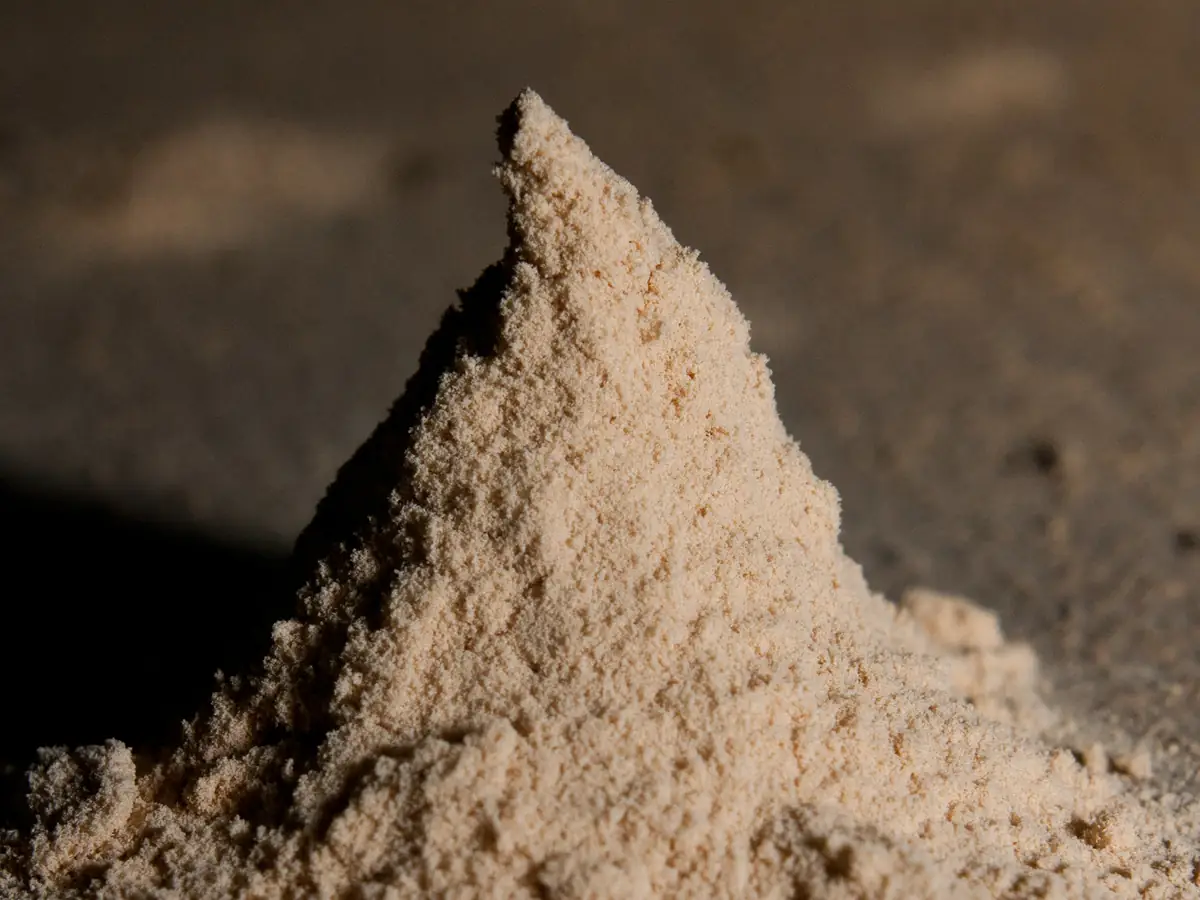
It looks like fine sawdust at a glance, but it is not sawdust. Frass is wood that has passed through a larva, and under a hand lens it is made of tiny pellets rather than splinters. It usually appears as small cones or scatterings below exit holes, on the floor beneath a joist, or in the grooves of furniture.
Most of it never leaves the timber. The tunnels behind each exit hole are packed with frass, and only a little spills out when an adult chews its way free, when parasites move through, or when the wood is jarred. The NZ Farm Forestry Association lists all three as ways house borer dust reaches the surface.

How does borer dust differ between species?
Texture is the most useful clue. House borer dust is granular and gritty when rubbed between the fingers. Powderpost dust is soft and fine enough to feel like talcum powder. Longhorn tunnels are tightly packed with scrapings and pellets that hold together. Termite droppings are separate hard pellets, which MPI describes as about 1 mm long.
| Insect | Texture | Under a lens | Where it shows |
|---|---|---|---|
| Common house borer | Loose, gritty | Small elongated pellets, likened to wheat grains | Below round 1 to 2 mm holes in softwood |
| Powderpost beetle | Very fine, like talc | Flour-like, few visible pellets | Below tiny round holes in tawa, rewarewa, oak |
| Two-toothed longhorn | Packed hard in the tunnel | Scrapings mixed with pellets; crescent marks on the tunnel wall | Mostly inside subfloor timber, little falls out |
| Exotic termites | Separate hard pellets | About 1 mm long | Piled under tiny holes; report to MPI |
Gritty dust from pine or rimu with round holes is the common case in Auckland. Talc-fine dust from a hardwood floor points to the powderpost beetle. Packed tunnels uncovered when a damaged bearer is cut point to the longhorn.
How do you tell fresh borer dust from old?
Fresh frass is pale, clean and loose, often in a tidy cone under one hole, and it comes back after the area has been cleaned. Old frass tends to be darker, dusty, compacted or webbed into cracks, and it does not return. The pattern over weeks matters more than any one look.
Be careful with dust that appears after something has been moved. English Heritage notes that old frass often falls out of cracks and holes when an object is shifted or dries out, and that this is not a sign of activity. A rimu table carried to a new room, or a floor vibrated by renovation work, can shed dust from holes that have been empty for decades.
A simple test helps: clean an area completely, mark it, and look again a few weeks later, ideally after the flight season. New dust in a cleaned area is a much stronger signal than an old pile.
How do termite droppings differ from borer dust?
Termite droppings are distinct, hard pellets, which MPI describes as about 1 mm long and piled under tiny holes. Borer frass is a mixed powder or grit. MPI also lists discarded wings and mud tubes as termite signs. If you see any of these, photograph them and call MPI on 0800 80 99 66.
Do not clean the pellets away first, and do not spray the area. MPI wants the evidence as found. Exotic termites were found in some Auckland houses in 2021, and unlike borer they can damage treated framing, so a suspected find is a biosecurity report, not a borer question.
What should you photograph before cleaning borer dust?
Take a wide photo showing where the dust is, then a close-up with a ruler or coin beside it, then the holes above it. Shoot dust on a dark surface if you can lift some onto black card. Note the date and timber, and whether the area had been cleaned recently.
- The wide shot. Which room, which board or joist, and how far the dust spreads.
- The close-up. Texture and colour, with a scale. Phone macro modes help.
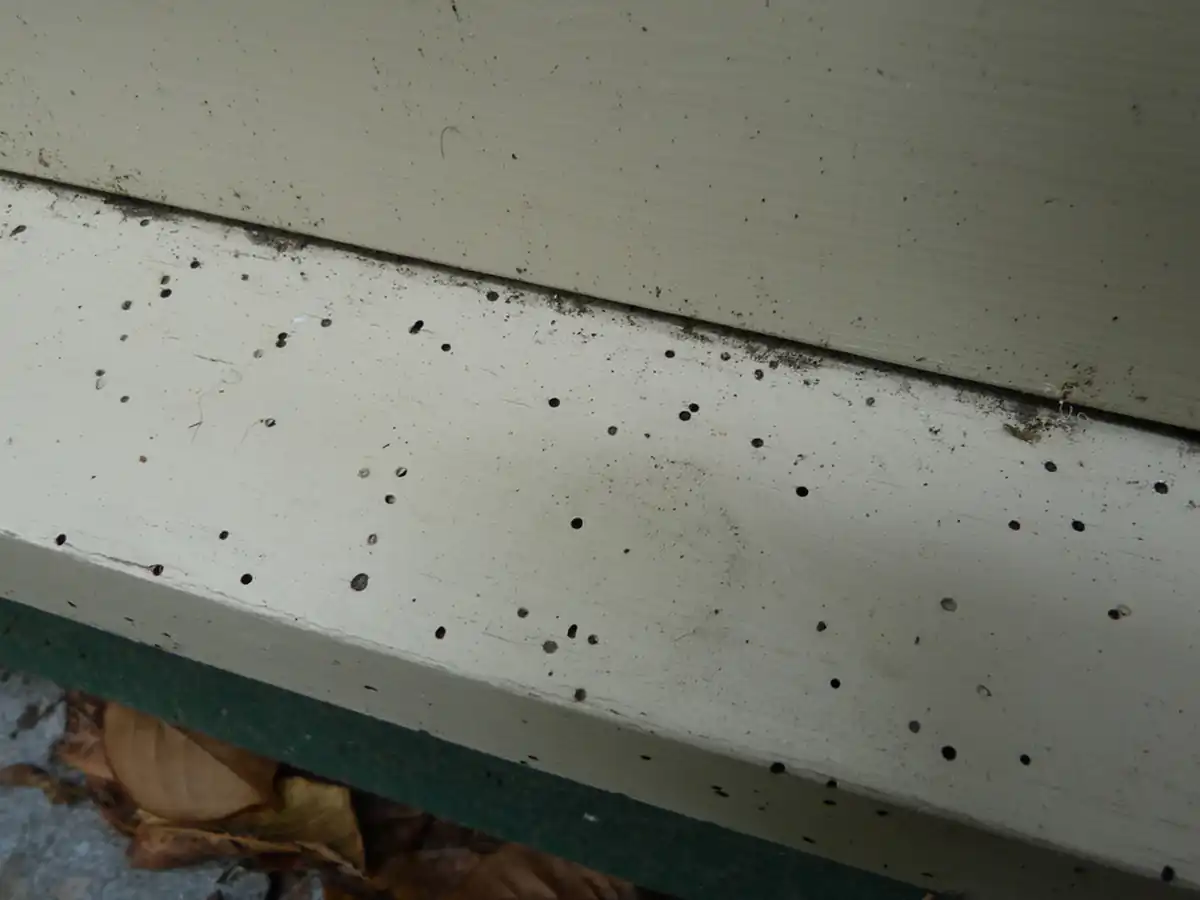
- The holes. Shape and size, and whether the edges look sharp and pale or dark and worn.
- The repeat. The same spot a few weeks after cleaning, from the same angle.
These photos help whether you are an owner deciding what to do or a buyer comparing a building report with what you saw at the open home.
Where does borer dust collect in a house?
Dust gathers below the timber it came from, so look on surfaces underneath. Common places are the subfloor ground or vapour barrier under joists, the tops of ceilings in the roof space, along skirting boards, inside drawers and under the joints of old furniture. Polished floors rarely show it because cleaning removes it.
In the subfloor, a dark sheet of polythene can make fresh grit easy to see. Under weatherboards, the dust may fall behind the cladding and never be seen inside. The pages on subfloor timber and weatherboards describe how each area is checked.
What does an inspection do with the dust?
It treats dust as one line of evidence, read with the holes, the timber and the moisture. The inspector notes texture to confirm species, colour and placement to judge freshness, and then probes the timber, because the amount of dust says little about how much wood is left.
A thin trickle of fresh dust from a floor edge can be minor; a joist with almost no dust can be hollow. That is why the written finding gives the species, an activity view and a structural flag separately. The cost of the visit is on the borer cost guide page.
When the reading turns into a decision about one real house, the fee, the report and the booking steps are set out under Lignum Timber.
Asked about this
What does wood borer dust look like?
Usually like fine, pale sawdust in small piles below round holes. Rubbed between the fingers, common house borer dust feels gritty; powderpost dust feels soft like talc. Under a lens it is made of tiny pellets, not splinters.
Does borer dust mean the borer is still active?
Not on its own. Fresh dust that returns after cleaning is a good sign of activity, but old dust can fall out of empty holes when timber is moved, vibrated or dries out. Clean, mark and recheck, or have the area inspected.
Are borer droppings the same as frass?
Yes. Frass is the general term for the waste wood-boring insects leave in their tunnels, which includes their droppings and chewed wood. Borer droppings, borer dust and bore dust all describe the same material.
Should I vacuum up borer dust?
Photograph it first, with a scale, then clean it so you can see whether fresh dust appears. If the droppings could be termite pellets, leave them in place and contact MPI on 0800 80 99 66 before touching anything.
Read next
- Beetle identificationThe wood-boring beetles of New Zealand houses side by side: size, colour, hole, dust, timber and season
- Borer larvae and eggsThe hidden stage of borer: where eggs go, how long larvae feed, and why holes lag years behind the damage
- Borer inspectionWhat a borer inspection records, part by part, and what it costs
- Flight seasonThe months each borer flies in New Zealand, and what that means for treatment and for buyers
Sources
Book a borer inspection
The inspection is $285 + GST, credited against treatment done through the same operator. Treatment ranges sit on the cost page.