Follow-up borer inspection
Borer re-inspection: checking again after a season
Some borer findings end with a decision, and some end with “check again”. A follow-up inspection looks at the same timber after the beetle has had a chance to show itself, and says whether anything has changed.
A borer re-inspection is a second look at timber already checked once, either after treatment or after a finding marked “monitor”. It is best booked after the next flight season of the beetle involved, so that any surviving or new beetles have had time to emerge, and it compares fresh holes and dust against the first written findings.
A borer inspection booked through this site costs $285 + GST. The fee is credited against the treatment if you go ahead with the recommended work through the same operator. A re-inspection limited to areas already marked is quoted when you book.
When is a borer re-inspection worth booking?
There are two common reasons. The first is a finding where activity could not be judged with confidence, for example dusty roof timber with holes of uncertain age, recorded as “monitor” rather than treated on a guess. The second is after treatment, when you want to know whether the treated timber has gone quiet.
A third reason is a change you have noticed yourself: dust reappearing under a floor after cleaning, a beetle on the windowsill in summer, or holes in a board that you do not remember. In each case the useful question is the same: is there anything here now that was not here at the last visit? The first visit is described under borer inspection.

How long should you wait before the re-inspection?
Wait until the beetle involved has been through at least one emergence period since the first visit or the treatment. For the common house borer, that means after early summer: the NZ Farm Forestry Association records adults from November to January. For the two-toothed longhorn, it means after autumn or early winter.
| Beetle | Adults emerge | Recheck after |
|---|---|---|
| Common house borer | Mostly November to January, sometimes from October into March | Late summer |
| Two-toothed longhorn | Autumn or early winter | Winter |
| Powderpost beetle | Life cycle usually about one year | About a year after the first visit |
| Huhu | November to early March, needs damp timber | Once the moisture source is fixed and summer has passed |
Booking too early tells you little: holes and dust only appear when beetles leave the timber, so a re-inspection before the flight season mostly confirms that the beetles have not flown yet. The flight season guide sets out each beetle's calendar in more detail.
What counts as new activity?
New activity means signs that appeared after the first visit: holes with clean, pale edges in places recorded as clear, fresh dust on surfaces that were cleaned or marked, and live or recently dead beetles in the area. A single sign is weighed carefully; several together on the same member are strong evidence.
- Fresh holes. Bright, sharp-edged holes stand out against older dark ones, especially on surfaces photographed at the first visit.
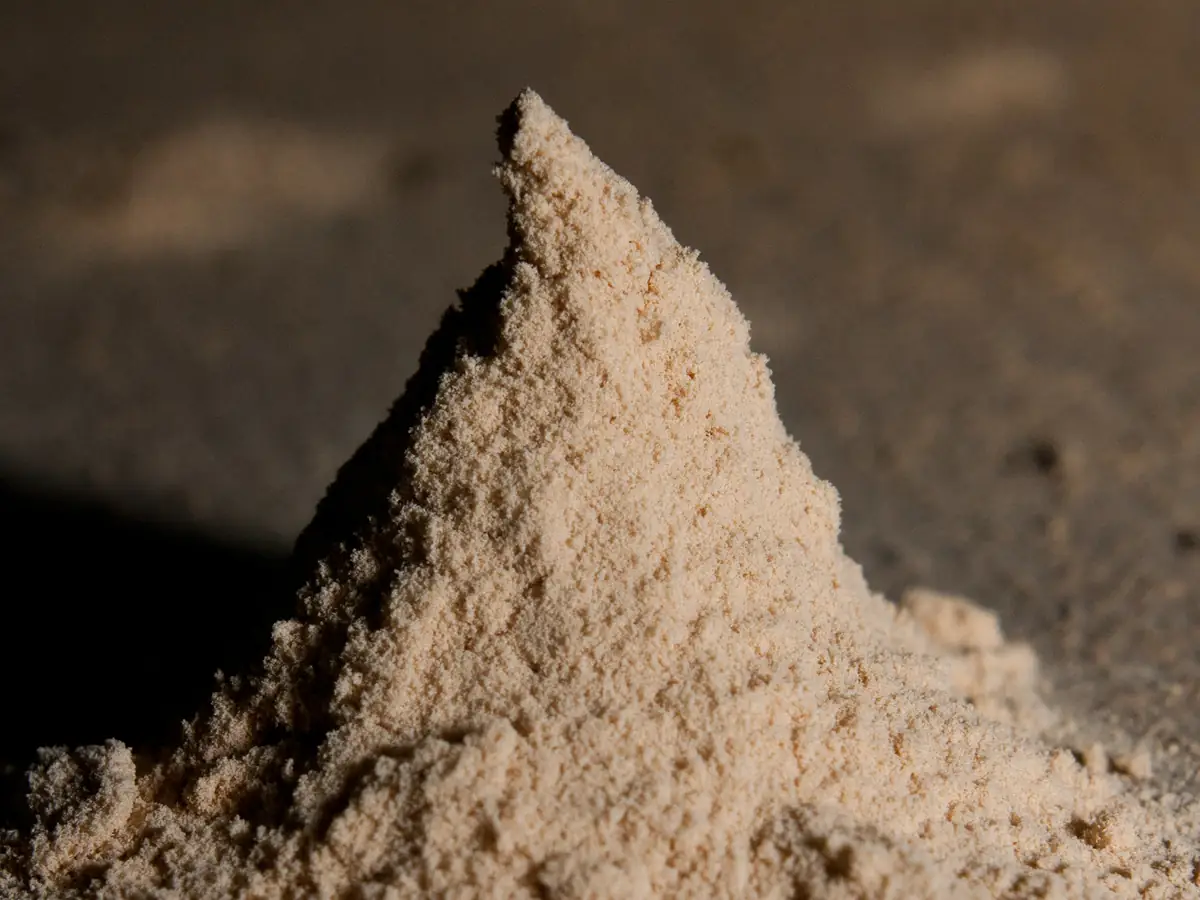
- Dust on cleaned surfaces. Small heaps of gritty frass below a member that was wiped or vacuumed are the clearest sign.
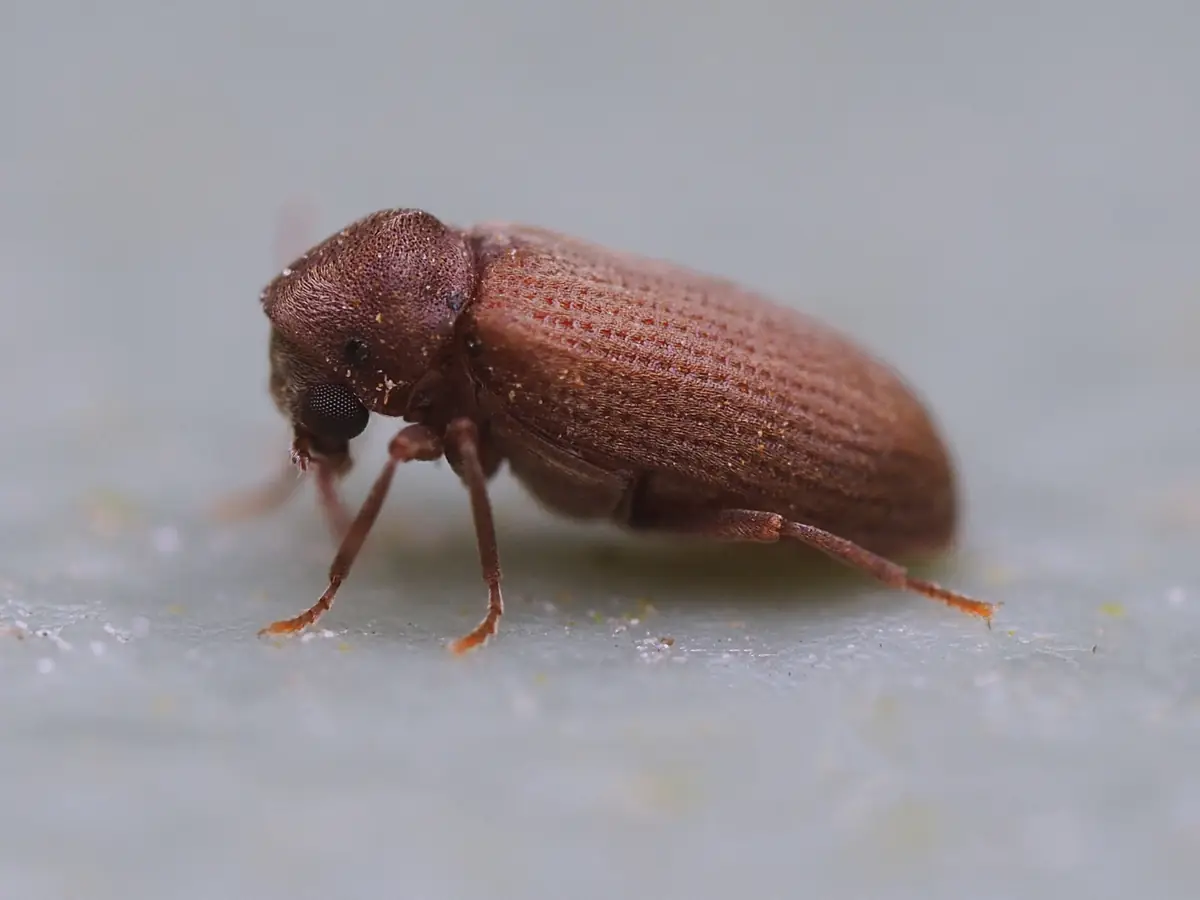
- Beetles. Adults found on sills or in cobwebs near the timber during the emergence period.
- Not counted. Old holes that were already recorded, dust from building work, and stains or marks without holes.
Where the first visit marked sample areas, those are the first places checked, because they give a direct before-and-after comparison on the same piece of timber.
How is the re-inspection compared with the first findings?
The comparison works area by area, using the first written findings as a checklist. For each area the re-inspection records whether it is unchanged, shows new signs, or could not be checked this time. Any new area of concern is added, and the next step for each area is restated, so the result reads as an update.
Good first findings make this much easier. Marked sample areas, photos of representative holes, notes on where dust was cleaned and a record of which areas were not inspected all let the second visit say something specific. If the first inspection was done by someone else, bring their report: the inspector can still use it, though the comparison will be less exact.
What can a re-inspection after treatment show?
After treatment, the re-inspection looks for signs that the treated timber is still producing beetles. Kiwicare describes surface treatments as working at the timber surface, on larvae hatching there and adults chewing out. A few fresh holes in the first season after treatment are therefore not proof that it failed.
What matters is the pattern. A handful of new holes that then stop is different from fresh dust appearing across a treated run of timber season after season. Untreated areas next to treated ones, timber that was covered or painted at the time of treatment, and members that were hard to reach are the usual places where activity continues. The findings say which it looks like, and treatment of any missed area is quoted on its own. The treatment page explains why bare timber matters.
What does a re-inspection not do?
A re-inspection reports what can be seen on the day it happens. It is not a promise that borer will not return, and it does not replace a building inspection or a builder's view on timber strength. Larvae can feed inside timber for years, so a quiet season is good news rather than a final answer.
It also cannot see more than the first visit could unless access has improved. If a roof space was only seen from the hatch, or part of the subfloor was too low to enter, the re-inspection will have the same limits. Improving access before the second visit, such as clearing a subfloor opening or laying boards in the roof space, is often the cheapest way to get a more useful answer. Owners preparing to sell often book one so the findings they hand over are recent; see borer inspection before you sell. Parts of the house are covered in roof space and subfloor guides.
How this part fits into a single visit, with the fee and the report it produces, is summarised under Lignum Timber.
Asked before booking
Do I need a re-inspection after every treatment?
No. Where the first findings were clear and the treatment covered all affected bare timber, many owners simply watch for dust and beetles in the next summer. A re-inspection is most useful when activity was uncertain, access was limited, or you are selling and want a recent written record.
Can the same inspector do the re-inspection?
Ideally yes, because they know where the sample areas were and how the first findings were worded. If that is not possible, a different inspector can work from the written findings and photos.
What if the re-inspection finds new activity after treatment?
The findings say where, and whether it looks like missed timber, covered timber or a separate problem such as damp. Treatment of the affected area is then quoted on its own. Ask what any earlier treatment quote said about follow-up work before you book.
Is a re-inspection cheaper than the first one?
Usually it is quicker, because it focuses on areas already recorded. A re-inspection limited to marked areas is quoted when you book; a full re-inspection of the whole house costs the same as a first visit.
Related pages
- Borer inspectionWhat a borer inspection records, part by part, and what it costs
- Treating live borerWhat treatment involves after a live borer finding: bare and finished timber, timing, moisture and follow-up
- Flight seasonThe months each borer flies in New Zealand, and what that means for treatment and for buyers
- Two-toothed longhornThe native longhorn that tunnels through heartwood: oval holes, autumn emergence, damp subfloors
Sources
- NZ Farm Forestry Association: household borer, Anobium punctatum
- NZ Farm Forestry Association: two-toothed longhorn, Ambeodontus tristis
- NZ Farm Forestry Association: powder-post beetle, Lyctus brunneus
- NZ Farm Forestry Association: huhu beetle
- Kiwicare: borer control technical sheet
- Consumer NZ: borer and other pests
Book a borer re-inspection
The inspection is $285 + GST, credited against treatment done through the same operator. Treatment ranges sit on the cost page.