Mt Eden and Balmoral
Borer inspections in Mt Eden
Mt Eden grew outward from the slopes of Maungawhau over about ninety years, so a single street can hold a Victorian villa, a 1920s bungalow and a block of flats. A borer inspection starts by working out which of those you are standing in.
A Mt Eden inspection covers the roof space, subfloor, cladding and floors, and reads each against the house's era: native timber villas, bungalows and interwar buildings all predate boron treatment. The inspector names the beetle, says whether it is still active, lists the affected members and flags damp or weakened timber. Inspections are done on site anywhere in all of Auckland.
The inspection costs $285 + GST. The fee is credited against the treatment if you go ahead with the recommended work through the same operator.
Three building eras around Maungawhau
Land around the mountain was sold to settlers from 1841, a store opened on the site of Mt Eden Village in 1873, and many middle-class families arrived in that decade. The railway stop came in 1881 and electric trams in the early 1900s. The last large block was subdivided by about 1930, which sets the outer limit of the older housing.
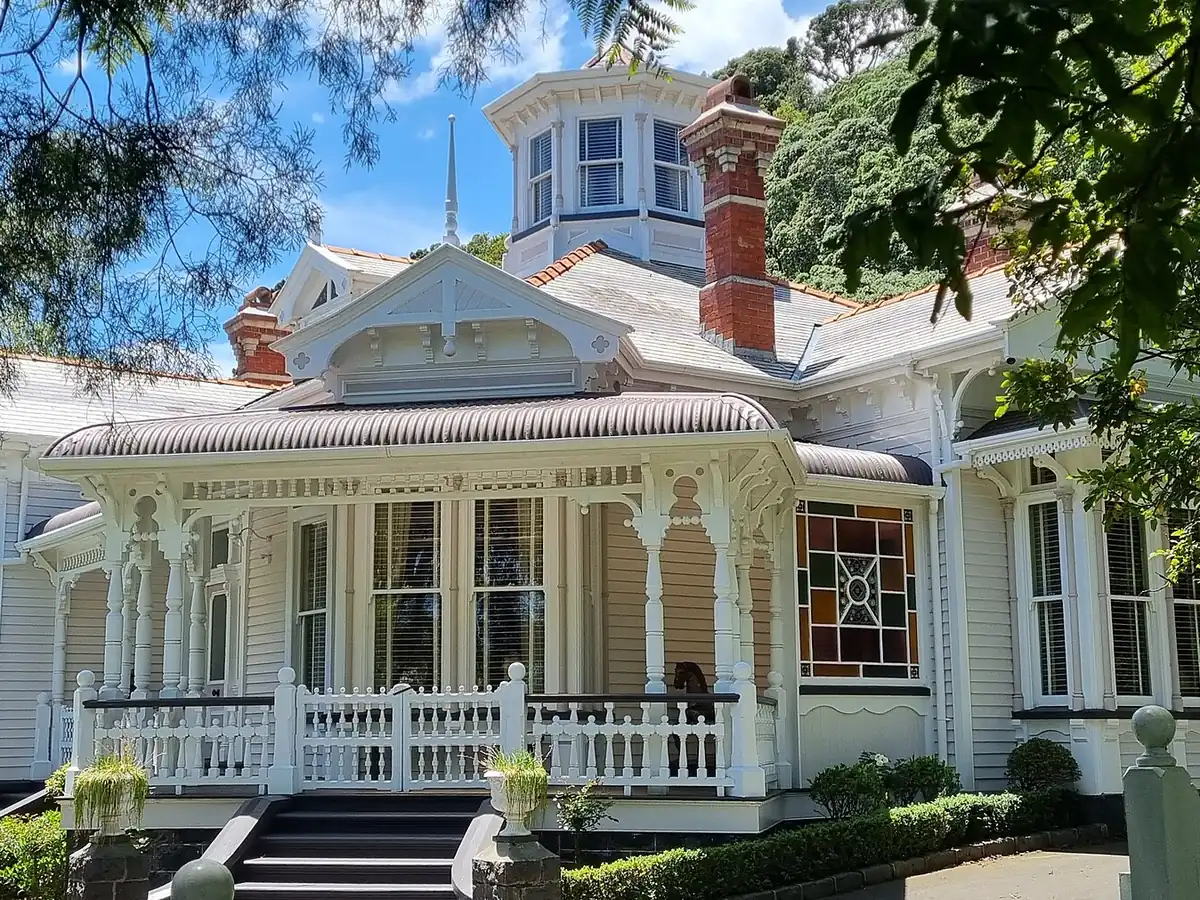

| Era | Typical house | Borer focus |
|---|---|---|
| 1870s to 1910s | Timber villa, mostly kauri, mataī or tōtara; villas cluster around Balmoral Road | Original floor framing, sarking, lower weatherboards |
| 1910s to 1930s | Bungalow, Arts and Crafts or Spanish Mission house, further from the city | Subfloor, rimu floors, timber added in later renovations |
| Interwar and after | Apartment blocks between the wars, multi-unit housing after 1945 | Shared roof spaces, access to each unit's subfloor |
Two stone houses survive from the early period, but timber was the rule, and everything built before 1952 went up before boron treatment was introduced.
Maungawhau's pā and the land that came after
Maungawhau is the highest natural point on the isthmus, and its terraces and earth ramparts survive from its time as a fortified pā, thought to have been abandoned around 1700. Scoria from its slopes and smaller pits built early roads, sometimes with prison labour, and Mount Eden Prison was built of local basalt between 1882 and 1917.
For house timber, the mountain matters less than the decades of building around it. Streets nearest the city filled first with villas; streets further out filled with bungalows once the trams ran. That gradient is a fair first guess at a house's era, which the inspector then confirms from the framing, the floor and the roof space.
Does volcanic ground change a borer inspection?
It changes what the inspector notes about the subfloor, not the beetle. Mt Eden sits on and around the cone of Maungawhau, and scoria was quarried locally: Bellevue Reserve and Nicholson Park are former quarry sites. Where rock sits close to the surface, a subfloor can be shallow and awkward to crawl.
Where the house steps down a slope the uphill end of the subfloor may be too tight to crawl, and that part is recorded as not inspected rather than assumed sound. Drainage still matters on free-draining ground: a leaking downpipe or a blocked vent can keep a corner damp enough for the two-toothed longhorn, which favours wet subfloor timber and attacks heartwood as well as sapwood. The guide to piles and the subfloor shows what is checked under the house.
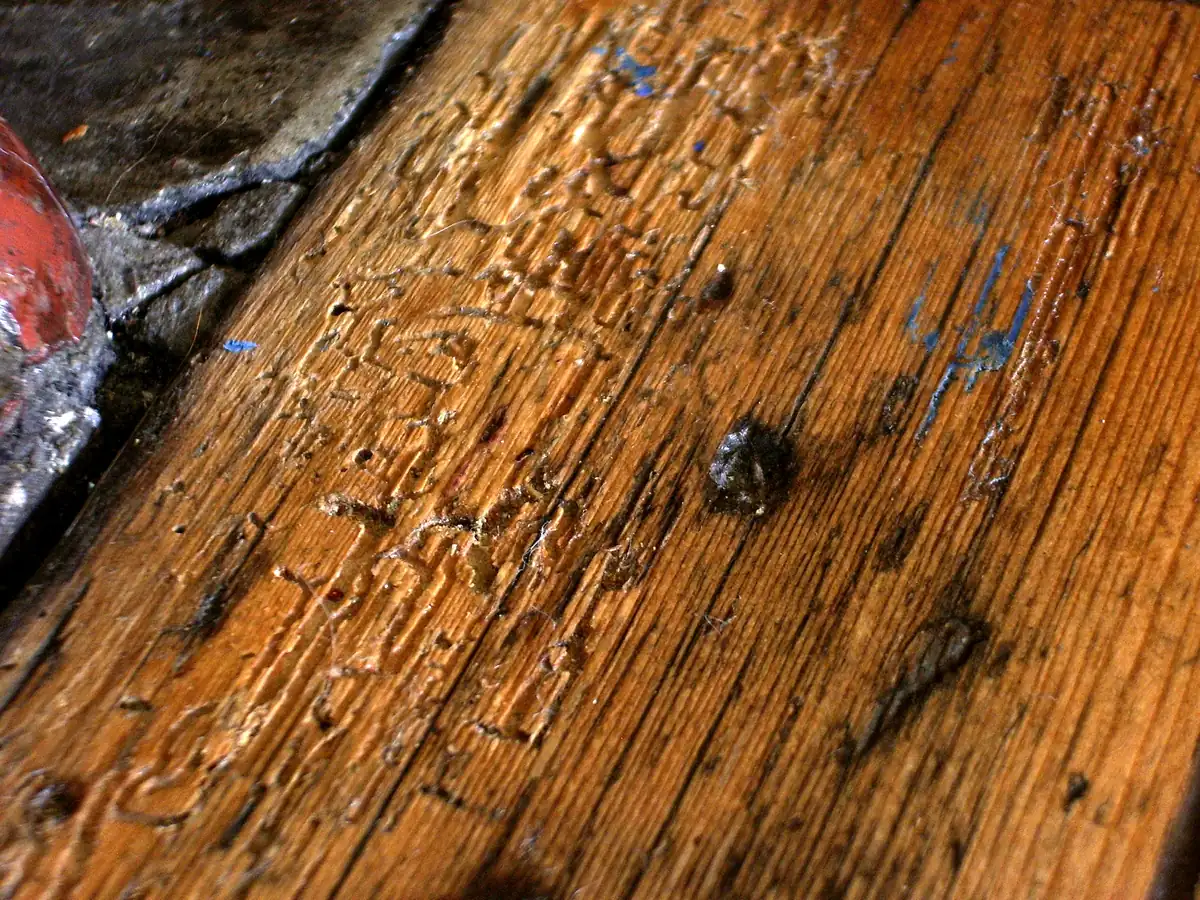

Villa, bungalow or flat: where the beetle shows
In a villa, look first at the subfloor and the roof space, where untreated framing is bare. In a bungalow, the rimu floor framing and any original built-in joinery come next. In an interwar flat, the shared roof space and the subfloor under each unit need separate access, which the body corporate or owners may have to arrange.
- Floors: sanded native boards can hide holes under the finish; tawa or rewarewa boards may carry powderpost beetle instead of house borer.
- Roof spaces: dust on the ceiling below the sarking is often the first sign people notice.
- Additions: sleep-outs and extensions consented between the mid-1990s and 2004 may contain untreated kiln-dried pine.
Apartment blocks and units: shared roof spaces
Mt Eden has more apartment blocks than most older suburbs, starting between the wars, and multi-unit housing followed after 1945. Borer in a block is a shared problem: the roof space, external cladding and subfloor framing are usually common property, so one owner's finding affects everyone in the building.
If you are buying a unit, ask the body corporate whether there has been any borer work and when. The inspector needs access to the common roof space and subfloor as well as the unit, and the findings are most useful when the body corporate sees them too. Treating one unit's floor achieves little if the framing next door keeps producing beetles.
Heritage streets and the Mt Eden character area
Mt Eden has a named residential special character area in the Auckland Unitary Plan, and Mt Eden Village is a special character business area. Wikipedia notes that King Edward Street and Burnley Terrace have heritage protection for their Victorian and Edwardian villas, and Mount Eden Prison, of local basalt, is Category 1.
In the residential overlay, restoration and repair is a permitted activity and external alteration needs resource consent. That makes the method of repair important: a borer-damaged board, finial or verandah bracket replaced in matching timber is repair, whereas a material change on a street elevation is assessed. For individually scheduled houses the historic heritage rules require the same or closest equivalent material. Plan Change 120 may change overlay boundaries, so check the current maps with Auckland Council for the address.
Buying in Mt Eden against a deadline
Buyers here usually work to a fixed date, whether that is an auction or the end of a condition period. An auction bid is unconditional, so any borer check has to happen before it. With a conditional offer, book as soon as the agreement is signed so findings arrive before your due-diligence date.
The pre-purchase borer inspection page explains how the borer check sits alongside a building report. For what a finding should do to your price, read is borer a deal breaker?, and for treatment ranges, borer cost.
After the visit: what a Mt Eden owner receives
You get written findings area by area, with the species, the activity judgement, the timbers involved, moisture notes and any structural flag. Each area ends in one of three outcomes: leave it, treat it, or have a builder assess it. Treatment is quoted only where the findings support it.
If the answer is treatment, timing follows the beetle: early summer for the common house borer, autumn for the longhorn. For the bungalow streets further south see the Epsom page, and for cottages to the west, Grey Lynn.
Every other suburb gets the same visit and the same report format; the overview is under borer inspection in Auckland.
Asked before booking
Are Mt Eden bungalows less likely to have borer than villas?
Not necessarily. Bungalows from the 1910s to the 1930s were also built from untreated timber, because boron treatment began only in 1952. The difference is usually in where the borer sits, not whether it can be there.
Can the inspector get into a subfloor on a rocky site?
Where there is safe room to crawl, yes. Parts that are too low or blocked by rock are recorded as not inspected, with a note on what that means for the findings.
Will the inspector lift carpet or floorboards?
Not without your agreement, and on a pre-purchase visit the vendor would have to agree as well. Most findings come from the roof space and subfloor, where framing can be seen directly. Areas hidden behind finishes are recorded as such rather than guessed at.
Is an interwar flat worth inspecting separately from the block?
Yes, if you can arrange access to the common roof space and subfloor through the agent or body corporate. The unit's own floors and joinery are checked too, but most of the framing that matters is shared.
For Mt Eden houses
- Borer costPublished Auckland prices for borer inspections and treatment, and what moves them
- Powderpost beetleThe hardwood-only beetle behind talc-fine dust in tawa, rewarewa and oak floors and furniture
- Piles and subfloorBorer in piles, bearers and joists, damp subfloors, rot versus borer, and when replacement needs a consent
Sources
- Wikipedia: Mount Eden (suburb history, housing eras, heritage streets)
- Special Character Areas Overlay rules, Auckland Unitary Plan D18
- Auckland Unitary Plan D17 Historic Heritage Overlay (operative)
- The Spinoff on Auckland's Plan Change 120
- Settled.govt.nz: buying by auction
- NZ Farm Forestry Association: two-toothed longhorn
- NZ Farm Forestry Association: powder-post beetle
- Standards New Zealand: when framing treatment rules changed
Book a borer inspection in Mt Eden
The inspection is $285 + GST, credited against treatment done through the same operator. Treatment ranges sit on the cost page.