Identification
Identifying wood-boring beetles in New Zealand houses
Four beetles account for nearly all the timber damage found in New Zealand homes, and each leaves a different signature in the wood. This guide sets them side by side so you can narrow down what you are looking at before a borer inspection confirms it in your own timber.
First published · updated
The wood-boring beetles found in New Zealand houses are the common house borer (Anobium punctatum), the native two-toothed longhorn, the powderpost beetle (Lyctus brunneus) and the huhu. They differ in size from about 2.5 mm to 50 mm, and their exit holes run from pinhead-round to thumb-wide ovals. The hole, the dust and the timber identify the species more reliably than a loose beetle does.
Which wood-boring beetles are found in New Zealand houses?
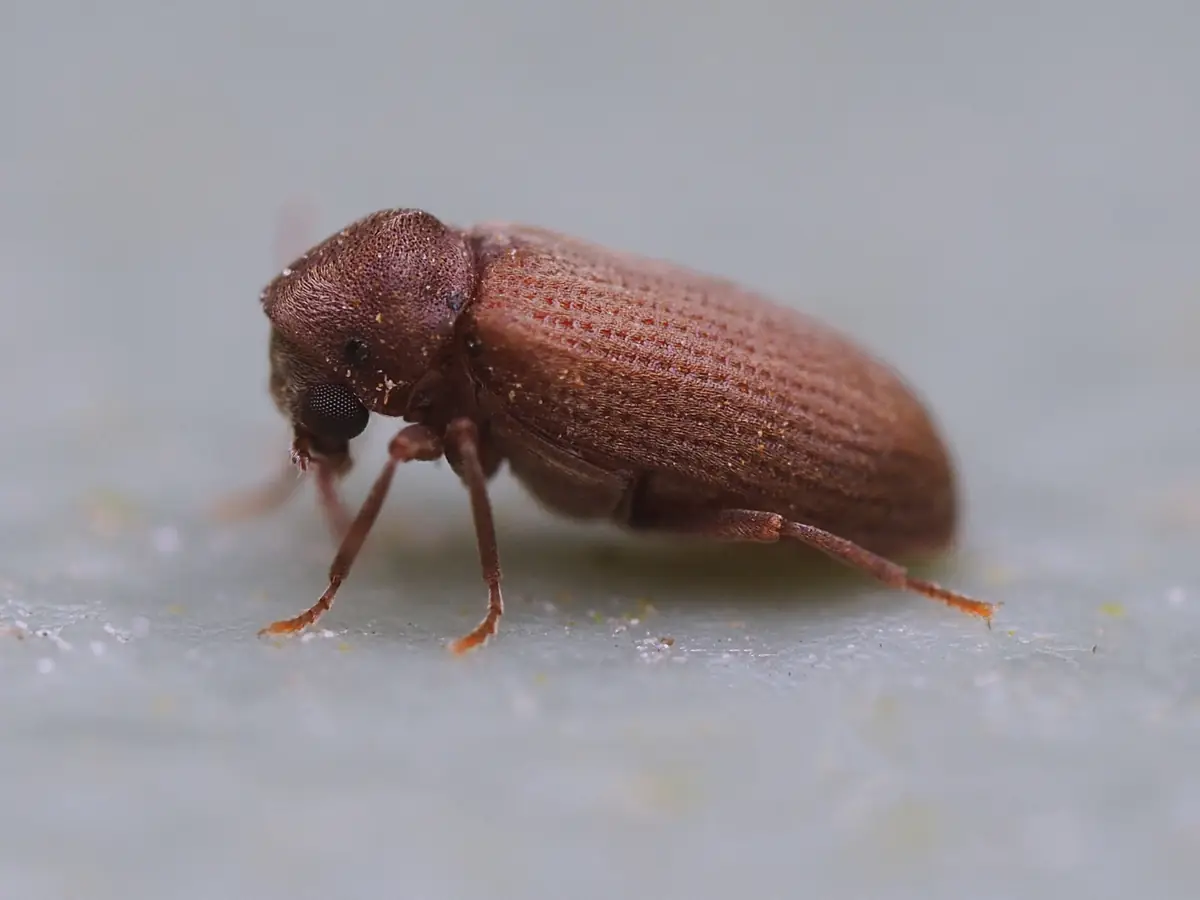
Four beetles matter in a house. The common house borer is small, brown and by far the most widespread. The two-toothed longhorn is a native beetle that favours damp subfloors. The powderpost beetle is confined to certain hardwoods. The huhu is large, native and only damages timber that stays wet. The table compares them on the points an inspection records.
| Beetle | Adult | Exit hole | Dust in the tunnels | Timber | Adults out |
|---|---|---|---|---|---|
| Common house borer | 2.5 to 5 mm, reddish to blackish brown | Round, about 1 to 2 mm | Loose, gritty granules | Sapwood of softwoods: rimu, kahikatea, radiata pine | Mostly November to January |
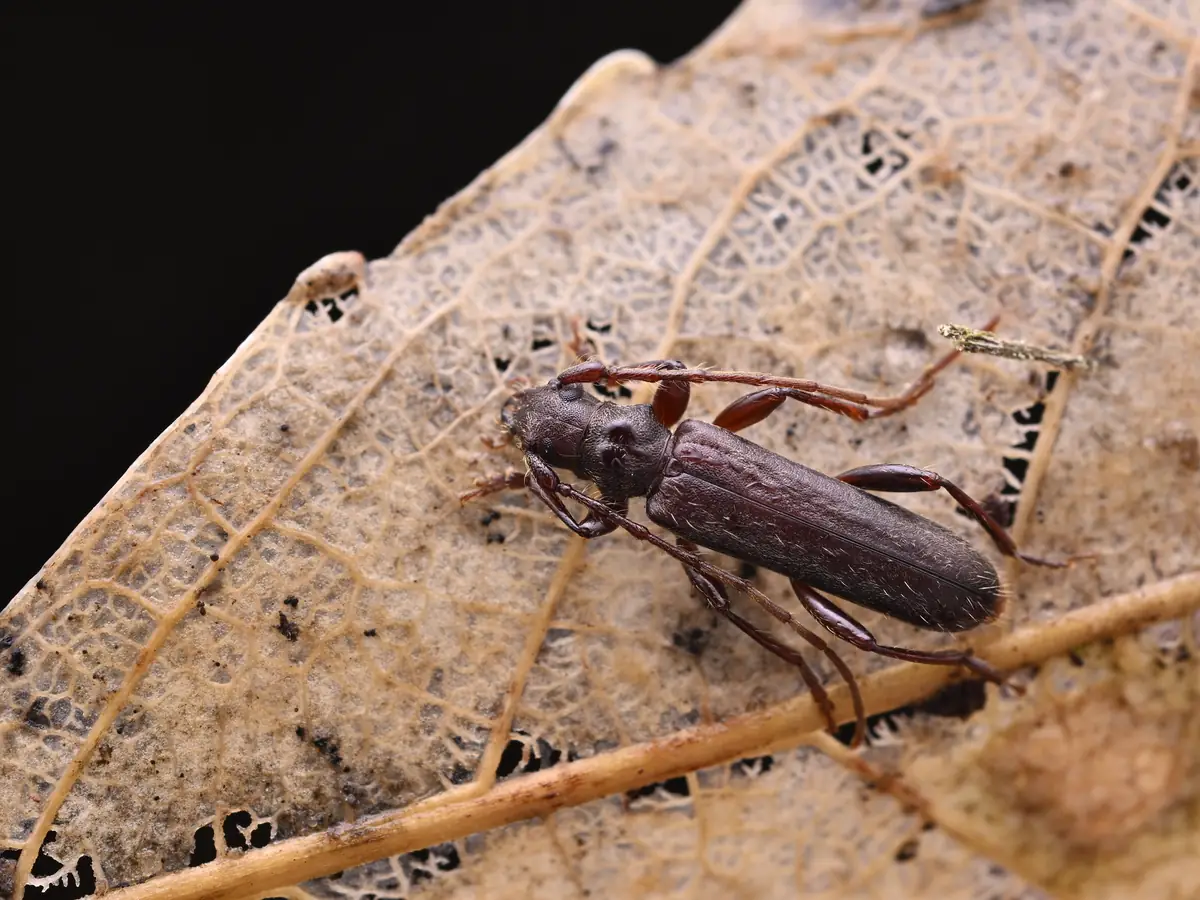
| Two-toothed longhorn | Up to about 25 mm, red-brown to black | Oval, about 3 to 7 mm | Packed hard with scrapings and pellets | Sapwood and heartwood of rimu, kahikatea, macrocarpa and others | Autumn and early winter |
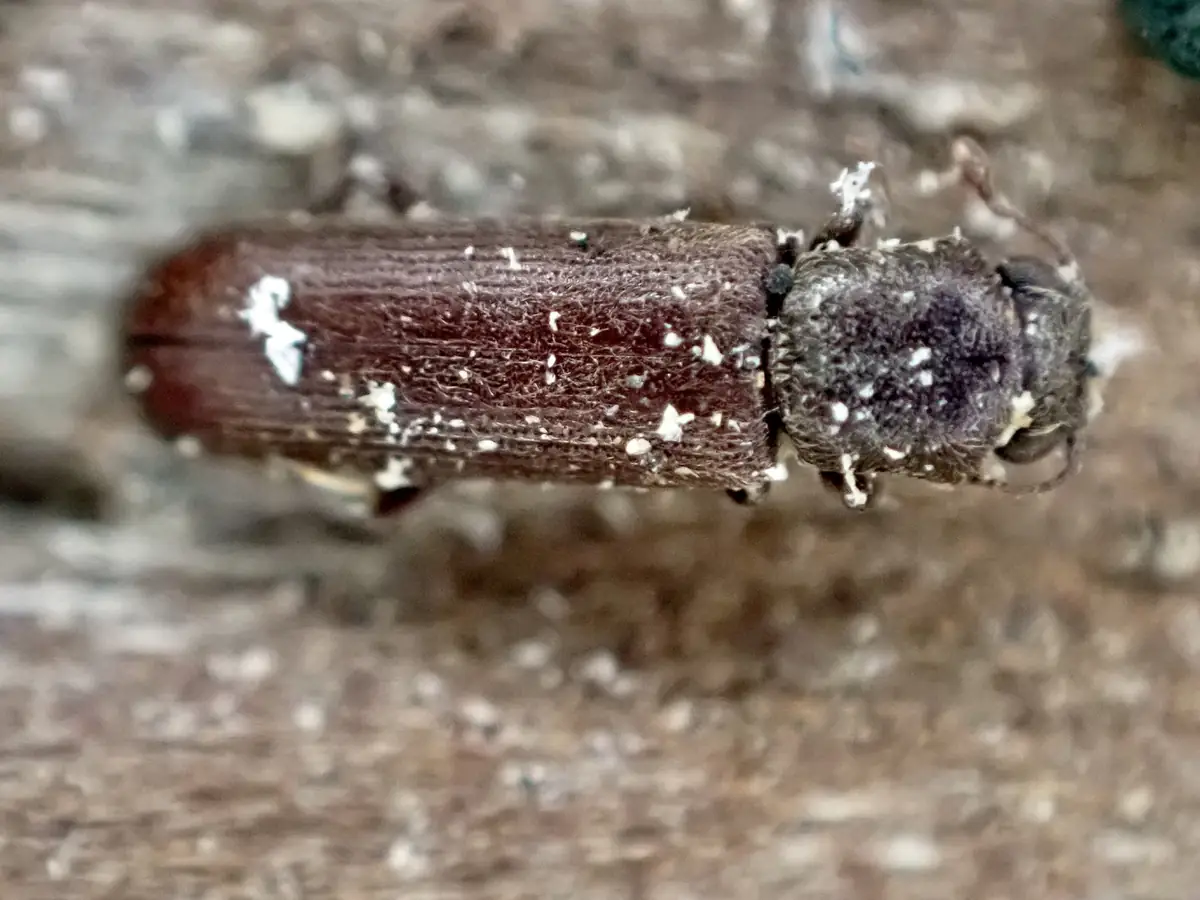
| Powderpost beetle | 4 to 7 mm, flattened, reddish to dark brown | Round, about 0.8 to 1.6 mm | Very fine, like talc | Sapwood of starchy hardwoods: tawa, rewarewa, oak | October and November |
| Huhu | Up to about 50 mm | Oval, about 10 to 20 mm | Coarse, in wet or rotting wood | Damp untreated timber of many kinds | November to early March |
Exotic termites are not beetles, but they belong in the same conversation because they also eat timber and the Ministry for Primary Industries wants every suspected case reported. They are covered further down.
What is the small brown beetle on my windowsill?
In late spring and early summer, a small brown beetle of a few millimetres found on a sill or at the foot of a window is often an adult common house borer. Adults emerge mostly from November to January, live only a few weeks, do not feed and tend to collect at windows. Finding one says timber somewhere nearby produced it.
That is useful, but it is not the same as knowing which timber. The beetle may have come out of a floor, a skirting, a piece of furniture or the roof framing, and it may have flown in. Many other small brown beetles also turn up indoors, and telling them apart reliably takes a hand lens and a reference collection. For a householder, a beetle is a prompt to look at the timber, not an answer in itself.
If you want to keep one for the inspector, put it in a small sealed container or photograph it beside a ruler. Note the date and where it was found. The date matters as much as the beetle: a small brown beetle in December points towards house borer, while a similar one in October in a room with tawa trim leaves powderpost in play.
Why do holes and dust identify borer better than the beetle?
Because holes and dust stay put. A beetle is seen for a few weeks a year and may have travelled; the exit hole and the dust sit in the timber that fed the larva, all year round. Hole size and shape, dust texture and the kind of wood together narrow the species to one in almost every house.
Round holes about 1 to 2 mm in pine or rimu, with gritty dust, are the common house borer. Smaller round holes in tawa or oak, with dust as fine as flour, suggest powderpost. Oval holes several millimetres long in subfloor timber point to the longhorn, and large ovals in wet wood to huhu. The individual species guides cover each in more depth: house borer, two-toothed longhorn, powderpost beetle and huhu.
How do the beetles differ in size and colour?
Size separates them better than colour, since all four are shades of brown to black. The house borer is 2.5 to 5 mm with a fine coat of yellow hairs. Powderpost adults are slightly longer and noticeably flat. The longhorn reaches about 25 mm with long antennae, and the huhu, at up to 50 mm, is hard to mistake.
Behaviour helps too. The NZ Farm Forestry Association notes that longhorn adults tend to avoid light, so they are rarely seen at windows, while Te Papa describes huhu as strongly drawn to artificial light. A big beetle bumping a lit window on a summer night is far more likely a huhu that flew in from outside than one that came from your framing.
What does the timber itself say about the beetle?
The wood narrows the list before any hole is measured. Softwood sapwood such as rimu, kahikatea and radiata pine points to the house borer. Starchy hardwoods such as tawa, rewarewa and oak are where powderpost lives. Damp subfloor rimu or macrocarpa raises the longhorn, and wet, decaying timber raises huhu.
Location adds a second filter. Longhorn egg-laying in buildings is mostly confined to damp, poorly ventilated places, so longhorn holes in a dry upstairs floor would be unusual. Powderpost will not develop in pine framing, so fine dust in a pine joist needs another explanation. The guide to the timbers borer attacks sets out which local timbers each beetle uses.
When should an insect be reported to MPI instead?
Report anything you suspect is a termite. MPI classes exotic termites as an unwanted pest, and asks for a photograph and a call to its pest and disease hotline on 0800 80 99 66. Signs that differ from borer include small droppings piled under tiny holes, discarded wings, and mud tubes or mudding on timber.
Australian subterranean termites were found in some Auckland houses in 2021, and MPI notes that exotic termites can damage treated timber as well as untreated. Borer cannot do that to sound boron-treated framing. If an identification leaves any doubt between the two, it is reported first and investigated second.
What helps an inspector identify the beetle?
A few clear photographs and notes make the visit more useful. Photograph the holes with a ruler or coin for scale, any dust on a dark surface, and any beetle you have kept. Write down where each was found, the month, and whether the dust came back after you cleaned it.
The inspector then checks those leads against the timber itself, probes where the holes are, and records the species beside activity, timber type and moisture. If you are buying, the pre-purchase borer inspection explains how this fits a sale; for what dust can and cannot tell you, see the guide to borer dust and frass.
When the reading turns into a decision about one real house, the fee, the report and the booking steps are set out under Lignum Timber.
Asked about this
What does a borer beetle look like in New Zealand?
The common house borer, the one most people mean, is a small cylindrical beetle 2.5 to 5 mm long, reddish to blackish brown with fine yellow hairs. Its head is tucked under a humped thorax, so from above it can look headless. The other wood-boring beetles in houses are larger, except the powderpost, which is similar in length but flatter.
Is every brown beetle in the house a borer?
No. Plenty of small brown beetles come indoors, and several are hard to separate without magnification. A beetle on its own is a weak clue. Fresh holes and dust in nearby timber are the stronger evidence that wood-boring beetles are breeding in the house.
Which borer leaves the biggest holes?
The huhu, with oval holes about 10 to 20 mm across, followed by the two-toothed longhorn at about 3 to 7 mm. Both are native beetles. The common house borer and the powderpost beetle leave small round holes, mostly between 1 and 2 mm.
Can I identify borer from a photo?
Often the species can be narrowed from a sharp photo of the holes and dust with a scale beside them. Whether the borer is still active, and how deep the damage goes, cannot be read from a photo. That needs the timber probed and, sometimes, checked again after a flight season.
Read next
- Borer dust and frassWhat wood borer dust looks like by species, fresh against old, and how termite droppings differ
- Timbers borer attacksWhich New Zealand building timbers each borer attacks, sapwood against heartwood, and where treated framing fits
- Flight seasonThe months each borer flies in New Zealand, and what that means for treatment and for buyers
- Borer inspectionWhat a borer inspection records, part by part, and what it costs
Sources
- NZ Farm Forestry Association: household borer, Anobium punctatum
- NZ Farm Forestry Association: two-toothed longhorn, Ambeodontus tristis
- NZ Farm Forestry Association: powder-post beetle, Lyctus brunneus
- NZ Farm Forestry Association: huhu beetle
- Te Papa: huhu beetle
- Ministry for Primary Industries: exotic termites
- English Heritage: furniture beetle fact sheet
Book a borer inspection
The inspection is $285 + GST, credited against treatment done through the same operator. Treatment ranges sit on the cost page.