Central Auckland · Manukau Harbour
Borer inspection in Onehunga
Onehunga was a port, a garrison village and a mill town before it was a suburb, and its houses carry that history in their timber. Here is how a borer inspection approaches them.
Most of Onehunga's housing predates boron-treated framing: 19th-century houses, villas and 1920s bungalows, then the 1940s state estates. All were built from untreated timber, so the common house borer is the usual find, mostly in subfloors, floors and roof framing. Whether it is still active is what the inspection settles.
The fee is $285 + GST, and the inspector comes to Onehunga as part of covering all of Auckland.
Fencibles, a harbour port and a borough
Onehunga was chosen in 1846 for a Fencible settlement, and the retired soldiers arrived in 1847, making it the first Fencible village in New Zealand. For much of the 19th century ships from Britain berthed on the Manukau here. The town became a borough in 1877, and wool and blanket mills from 1885 kept it working as shipping moved away.
Laishley House, now in Jellicoe Park, shows what early timber building here looked like: Auckland Council describes it as built of kauri on tōtara foundations, and it was moved to the park from Princes Street in the 1980s. Few private houses are that old, but the habit of building in native timber lasted well into the 20th century, and it is that timber the common house borer lives in.
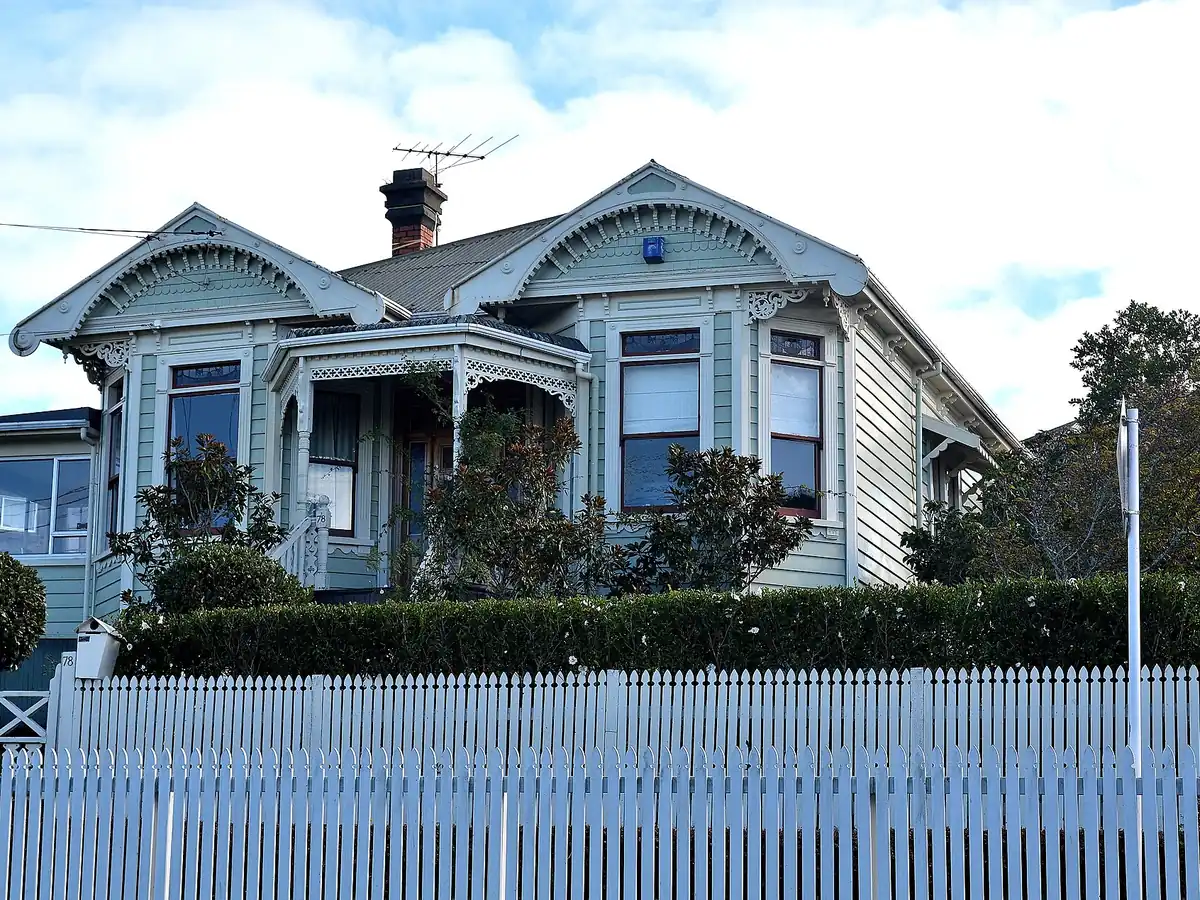

Villas, 1920s bungalows and the Oranga state houses
Onehunga has a large stock of 19th and early 20th century houses, and many of its 1920s bungalows and earlier villas have been restored in recent years. To the east, around Oranga and Te Papapa, state housing was built in the 1940s; a 1947 aerial photograph of the Oranga houses is held by the Turnbull Library.
All three groups sit before 1952, when wet boric treatment of framing was introduced, so their original framing is untreated. That does not make borer certain. It makes the timber susceptible, and leaves age, moisture and past treatment to decide what is actually there. Bungalows and villas often have rimu floors whose sapwood edges carry old holes; see borer in floorboards for what is normal in those boards, and borer in villas and bungalows for the house types as a whole.
What a typical finding looks like, house by house
The inspector works through the same questions in every house, but the answers cluster by type. This table shows where attention usually goes in Onehunga's main house types. Treat it as a starting point; renovations and replacement timber change the picture in any particular house.

| Type | Built | Typical concerns |
|---|---|---|
| Colonial house or early villa | Before about 1910 | Untreated native framing and floors; old holes in sapwood; weatherboards on the weather side |
| Bungalow | Mainly 1920s | Native timber floors, subfloor bearers, roof framing; repairs from earlier owners |
| State house | 1940s estates | Subfloor framing and floor sapwood; later decks and additions |
| Infill townhouse | Recent decades | Treated framing; check build year if about 1995 to 2005 |
Hardwood floors or trim in older houses, such as tawa, can carry the powderpost beetle, which attacks only the sapwood of certain hardwoods. Its holes are tiny and its dust is as fine as talc; the powderpost beetle guide explains the difference.
Lava flows, springs and the Manukau shore
Onehunga sits on the northern shore of the Mangere Inlet, just south of Maungakiekie / One Tree Hill. Lava from that cone runs under much of the suburb, and rain soaking through it feeds an aquifer that supplied city water until PFAS contamination closed it in 2022. The old port wharves stand on reclaimed land beside Te Hopua crater.
Fractured lava drains well, so many Onehunga subfloors are drier than those on North Shore clay. The exceptions are the low streets toward the inlet and reclaimed land, and any house where ground has been built up against the cladding or vents have been closed off. The inspector notes those conditions, because a dry subfloor slows borer and a damp one helps it.
Onehunga Mall and older shop buildings
The Unitary Plan maps part of the town centre in the Special Character Areas Overlay as Business: Onehunga. In the operative plan, external redecoration and repair of character buildings is permitted, while additions and major demolition need consent. Matching repairs to borer-damaged timber on a shopfront therefore sit within the rules.
Shop owners and buyers of mixed-use property ask for borer inspections for the same reasons homeowners do. The inspection itself is the same, but access to roof spaces above shops and to subfloors behind fit-outs can be limited, and the written findings record anything that could not be reached.
Getting under bungalows and state houses
Bungalows and state houses on piles usually have reasonable crawl space and a hatch in the foundation wall, which makes Onehunga one of the easier suburbs to inspect. Rocky ground, old rubble and service pipes can still make parts of a subfloor tight, and houses converted to flats may have their access in a neighbour's half.
If you are buying, have the agent confirm roof and subfloor access before the visit. If the building report has flagged borer, borer in a building report helps you read it alongside the borer findings. For what treatment involves when activity is confirmed, see borer treatment.
Is the borer in an Onehunga house still active?
Old holes are expected in houses this age, so the useful question is whether any are new. Pale, clean-edged holes and fine dust that reappears after cleaning point to live borer. Dark, weathered holes with no fresh dust usually belong to beetles that left long ago, often before an earlier treatment.
Common house borer adults emerge mostly from November to January, so evidence is easiest to read in early summer, though an inspection at any time can judge most holes. Where it is unclear, a small area can be marked and checked again after the next flight season. The flight season calendar shows when each beetle is on the move. For a house with a very different history, compare Botany, where most homes were built in the 1990s and 2000s, or Titirangi, where bush and slope keep timber damp.
Every other suburb gets the same visit and the same report format; the overview is under a borer inspection for an Auckland property.
Asked before booking
Do all old Onehunga houses have borer?
Not all, but most houses built before 1952 have untreated framing and native timber floors that borer can feed on, so old holes are common. Many infestations are historic. The inspection tells you whether any are live and whether any timber has been weakened.
Are 1940s state houses at risk?
Their original framing predates boron treatment, which began in 1952, so it can carry the common house borer. Many have been re-lined, re-piled or extended since, so each part of the house is checked on its own.
Does the volcanic ground help?
Lava drains well, so many Onehunga subfloors are fairly dry, and dry timber slows borer. Low-lying streets near the inlet, reclaimed land and houses with blocked vents can still be damp, and the inspector notes it when they are.
More for Onehunga owners
- Borer in floorboardsHouse borer and powderpost beetle in timber floors, finished versus bare boards, and when boards need replacing
- Powderpost beetleThe hardwood-only beetle behind talc-fine dust in tawa, rewarewa and oak floors and furniture
- Flight seasonThe months each borer flies in New Zealand, and what that means for treatment and for buyers
- Treating live borerWhat treatment involves after a live borer finding: bare and finished timber, timing, moisture and follow-up
Sources
- Wikipedia: Onehunga (Fencibles, port, aquifer, housing)
- Auckland Council: Jellicoe Park and Laishley House
- Wikimedia Commons: State housing in Oranga, Auckland, 1947
- Auckland Unitary Plan, D18 Special Character Areas Overlay (Auckland Council)
- Standards New Zealand: key historical dates for timber treatment regimes
- NZ Farm Forestry Association: powder-post beetle, leaflet 33
- NZ Farm Forestry Association: household borer, leaflet 32

Book an Onehunga borer inspection
The inspection is $285 + GST, credited against treatment done through the same operator. Treatment ranges sit on the cost page.