Devonport and Stanley Point
Borer inspections in Devonport
Devonport was a naval settlement before it was a suburb, and the villas that fill its streets went up once ferries made the harbour crossing routine. If you are buying or keeping one, a borer inspection sorts the old holes from the live ones.
In Devonport the inspection works through the subfloor, the roof space, the exterior boards and the floors of what is usually a nineteenth or early twentieth century timber villa. The inspector identifies the beetle, decides whether it is still emerging, records which members are affected and notes where salt wind and damp have reached the timber. The inspector drives over to the property; there is no office to visit.
$285 + GST covers the visit and the written findings. The fee is credited against the treatment if you go ahead with the recommended work through the same operator.
How did a naval outpost become a villa suburb?
The naval base dates from 1841, chosen for its deep-water anchorage, and a signal station on Mount Victoria the same year brought the first permanent European residents. The settlement, first called Flagstaff, was subdivided in the early 1850s, took the name Devonport by 1859 and became a borough in 1886.
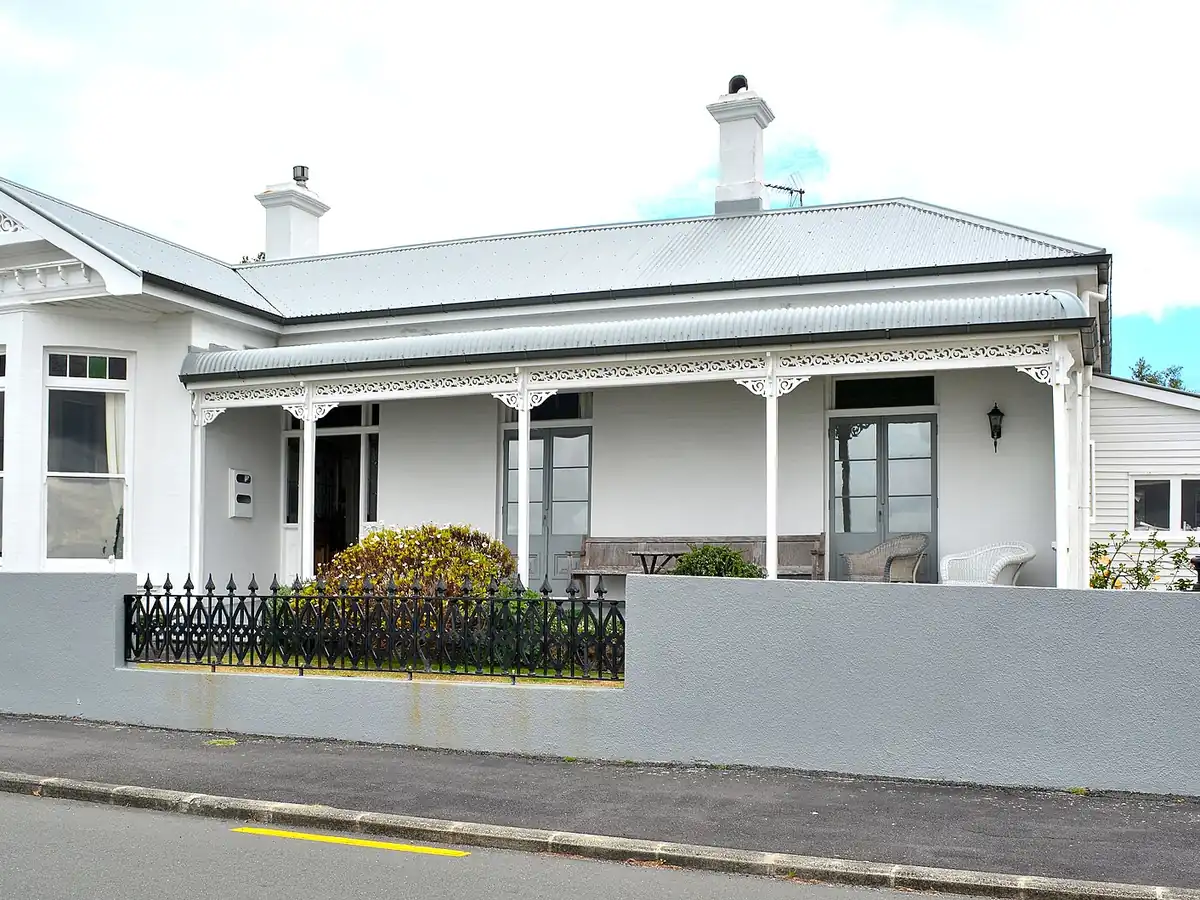
Ferries carried Devonport's growth. Steam ferries ran from 1860 and larger double-ended boats from 1904, and until the Harbour Bridge opened in 1959 the peninsula was effectively a harbour-side village joined to the city by water. Most of its villas date from the 1880s onward, and Heritage New Zealand lists several, including the Jubilee Avenue villas tied to builder Alexander Watson's Torpedo Bay development. Devonport is also among Auckland's volcanic suburbs, with Takarunga (Mount Victoria) and Maungauika (North Head) rising above the streets.

Cones, quarries and the shape of Devonport sections
Devonport sits among small volcanic cones. Maungauika (North Head) is the oldest, Takarunga (Mount Victoria) the tallest at 81 metres, and Takararo (Mount Cambria) was quarried in the 1870s, as Duders Hill later was. For about its first fifty years the settlement joined the rest of the North Shore only by a thin strip at Narrow Neck.
That geography explains a lot about the houses. Sections climbing the cones are steep, so subfloors are tall and airy on the downhill side and cramped at the top, where soil can sit against bearers. Flat land near the old swamp and the reclaimed edges can hold water in winter. The inspector notes which situation the house is in, because the same villa design behaves differently on a dry slope and on wet, flat ground.
Salt wind, sun and the condition of weatherboards
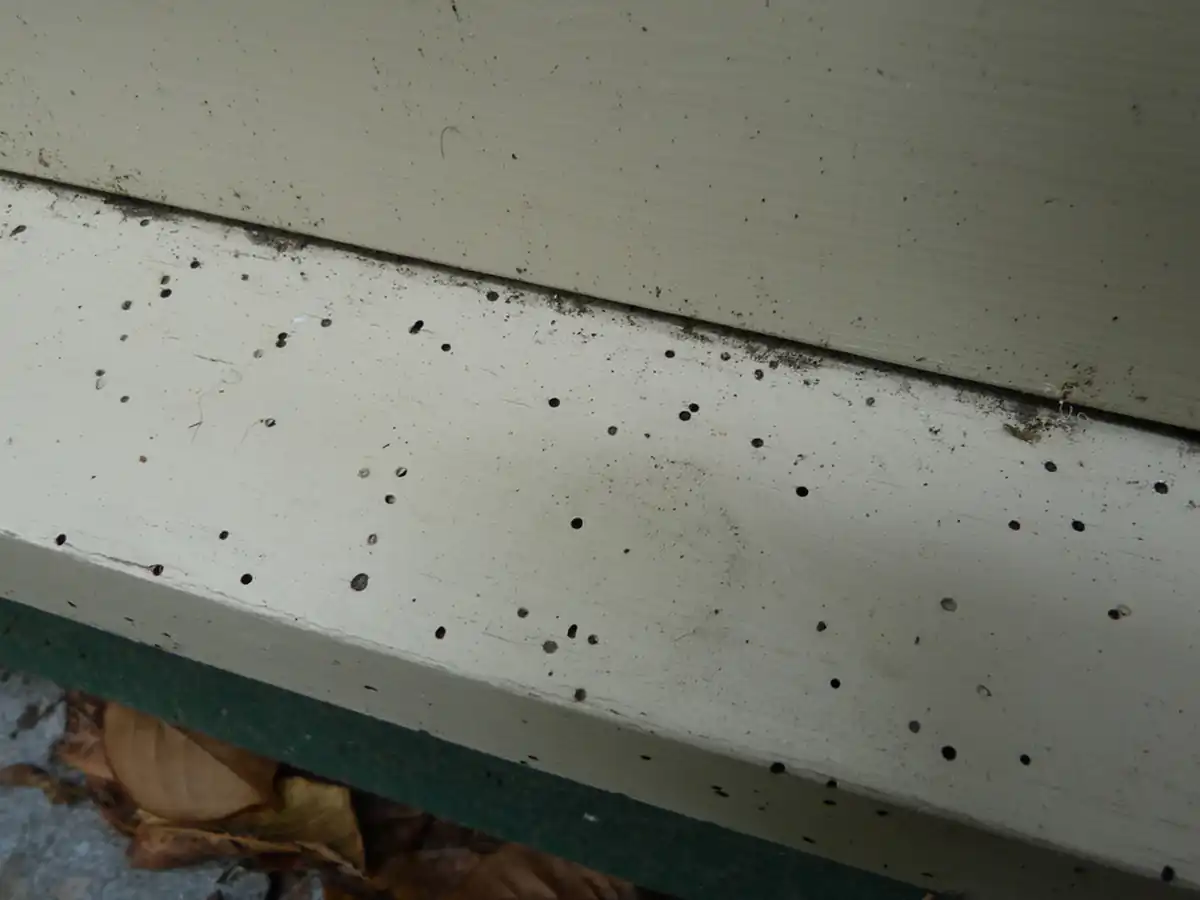
Devonport houses face weather from more than one side. Harbour-facing streets take wind and salt, paint breaks down sooner on exposed elevations, and once paint fails the bare back and edges of a board are open to egg-laying beetles and to water. Lower boards and sills are where both problems usually meet.
Borer in weatherboards is often worse than the face suggests, because larvae work from the unpainted inside face. The inspector probes lower courses, scribers and window sills, notes where paint has failed, and looks at the inside face of boards where the subfloor or roof space allows. Exposure to sea spray is decided house by house, not suburb by suburb, so the report describes what was found on this house only. For a fuller account see borer in weatherboards.
Kauri, rimu and what the beetle prefers
Villas of this period were built from native timber, much of it kauri, with rimu and other natives in framing and floors. The common house borer feeds mainly in sapwood, so its holes tend to run along board edges and the sapwood strip of joists. The two-toothed longhorn is different: it also tunnels heartwood, and damp subfloors suit it.
Nothing in a pre-1952 Devonport villa was boron-treated, because boron treatment had not been introduced. That makes the original sarking, floor framing and any untreated replacement timber the parts to watch. If the house had an extension consented between the mid-1990s and 2004, that addition may also be untreated kiln-dried pine. The two-toothed longhorn guide explains why its damage is often hidden until timber is opened up.
Character overlay and heritage listings in Devonport
The Auckland Unitary Plan names a residential special character area for Devonport and Stanley Point and a business area for the Devonport shopping centre. Repair of a building in the residential overlay is permitted; external alterations and demolition need resource consent. Individually scheduled houses carry stricter rules.
For a house on the council's historic heritage schedule, maintenance and repair is permitted only if it uses the same materials as the original fabric or the closest equivalent, and does not change the design or texture of the fabric. Swapping a borer-damaged kauri board for a matching timber board fits that; switching to a different cladding does not. A Heritage New Zealand list entry is separate from the council schedule, so check both, and confirm current overlay boundaries with the council, since Plan Change 120 is reviewing them.
Parking, slopes and subfloor access in Devonport
Devonport streets are narrow and parking near the ferry terminal and village is busy, so tell the inspector about any off-street spot when you book. Older villas on flat land can have low subfloors; houses on the slopes of the volcanic cones may have a tall downhill side and almost no room at the uphill end.
Some low ground around the old Ngataringa Bay foreshore was reclaimed in the late nineteenth century, and wet winter ground there is worth noting under a house. Anything the inspector cannot reach safely, such as a sealed-off subfloor or a roof space without a hatch, is recorded as not inspected. Read the piles and subfloor guide for what that limitation can mean.
Timing treatment for a harbourside house
If live borer is found, treatment is timed around the beetle's flight. The common house borer emerges mainly between November and January, sometimes from October and into March, so treating bare timber before early summer catches the next emergence. The native longhorn emerges in autumn and early winter instead.
Weatherboards add a step on the coast: bare timber exposed by failed paint is treated before it is repainted, because new paint alone does not reach larvae already inside the board. Where the findings call for a builder, the order is usually moisture first, repairs second and treatment of what remains, so old and new timber are protected together. The treating live borer page sets out the options.
Before you bid on a Devonport villa
A borer finding rarely stops a Devonport purchase, but it changes what you budget and what you ask the vendor. Book the check early in your due diligence, because heritage-listed or overlay houses can need more than a tradesperson's quote to repair, and repairs to these houses take longer to arrange.
If the house is being auctioned, the check must be done before the auction, since a winning bid is unconditional. The pre-purchase borer inspection page covers timing around conditions, and the flight season guide explains when fresh dust is most likely to show. Across the harbour, the Parnell page covers another early settlement with heritage houses.
Every other suburb gets the same visit and the same report format; the overview is under borer inspection Auckland.
Asked before booking
Does living by the sea make borer worse in Devonport?
Salt and wind break paint down faster, and bare timber is where borer lay eggs and where moisture gets in. The sea does not breed borer, but poorly maintained boards on exposed elevations are a common place to find it.
My villa is heritage-listed. Can borer-damaged timber be replaced?
Usually, if the replacement matches the original material and form. Auckland's historic heritage rules permit maintenance and repair with the same or closest equivalent materials. Check the council schedule and any Heritage New Zealand listing before work starts.
Is there an extra charge for Devonport?
The service covers all of Auckland, and the North Shore is part of it. The published fee and credit apply wherever the house is; ask when booking if the property is unusually large or difficult to access.
Should I wait until summer to book a Devonport borer inspection?
No. Inspections run in any month. Fresh dust is easier to see in the weeks after emergence, so an unclear finding may come with a suggestion to look again after the next flight season, but most houses can be judged on a single visit.
For Devonport villas
- Borer in weatherboardsBorer in lower boards and sills, what paint does and does not stop, and replace versus treat versus repaint
- Two-toothed longhornThe native longhorn that tunnels through heartwood: oval holes, autumn emergence, damp subfloors
- Flight seasonThe months each borer flies in New Zealand, and what that means for treatment and for buyers
Sources
- Wikipedia: Devonport, New Zealand
- Heritage New Zealand: 15 Jubilee Avenue, Devonport
- Auckland Council Unitary Plan D18 (special character)
- Auckland Unitary Plan D17 Historic Heritage Overlay (operative)
- Plan Change 120 explainer (The Spinoff)
- NZ Farm Forestry Association: household borer
- NZ Farm Forestry Association: two-toothed longhorn
- Timber treatment timeline, Standards New Zealand
Book a borer inspection in Devonport
The inspection is $285 + GST, credited against treatment done through the same operator. Treatment ranges sit on the cost page.