Identification
Woodworm in New Zealand: the same beetle, read differently
Search for woodworm and most of what comes back is written for British houses. The insect is the one New Zealanders call house borer, but the calendar, the timbers and the building history around it are different here, and so is what a borer inspection needs to look at.
First published · updated
Woodworm is the British and European name for the larvae of Anobium punctatum, the common furniture beetle, which is the same insect called house borer in New Zealand. The beetle is identical, but UK woodworm advice assumes Northern Hemisphere seasons, oak and pine buildings and a different treatment history, so its timing and much of its context do not carry over.
Is woodworm the same as borer in New Zealand?
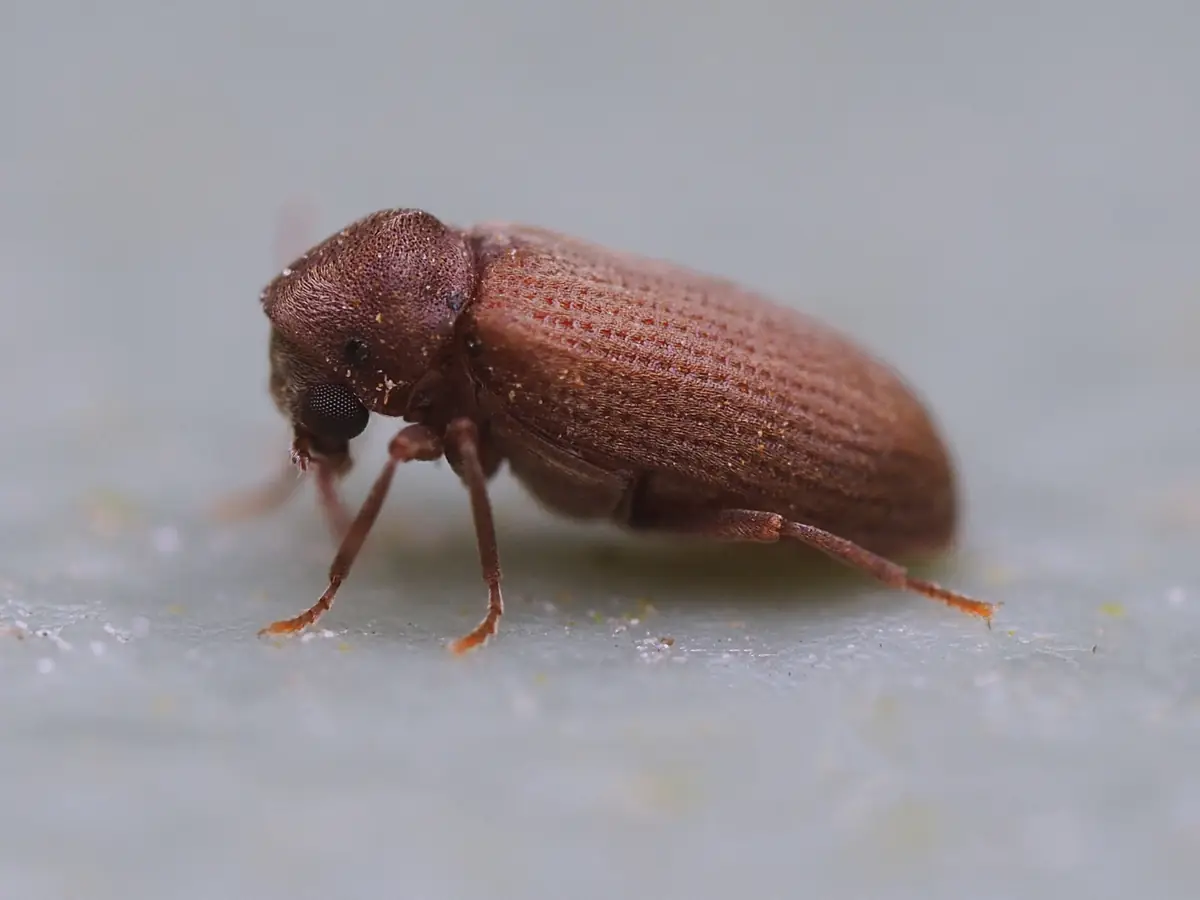
Yes. Woodworm, common furniture beetle and house borer all refer to Anobium punctatum. The adult, the round exit hole and the gritty dust are the same in a London terrace and a Ponsonby villa. The word borer in New Zealand is broader, covering the native longhorn, the powderpost beetle and huhu as well.
So when a New Zealand seller, report or neighbour says woodworm, they almost always mean house borer. When a UK website mentions death watch beetle or other European species, that part does not apply here. The guide to beetle identification compares the beetles you can actually meet in a New Zealand house.

What causes woodworm in a house?
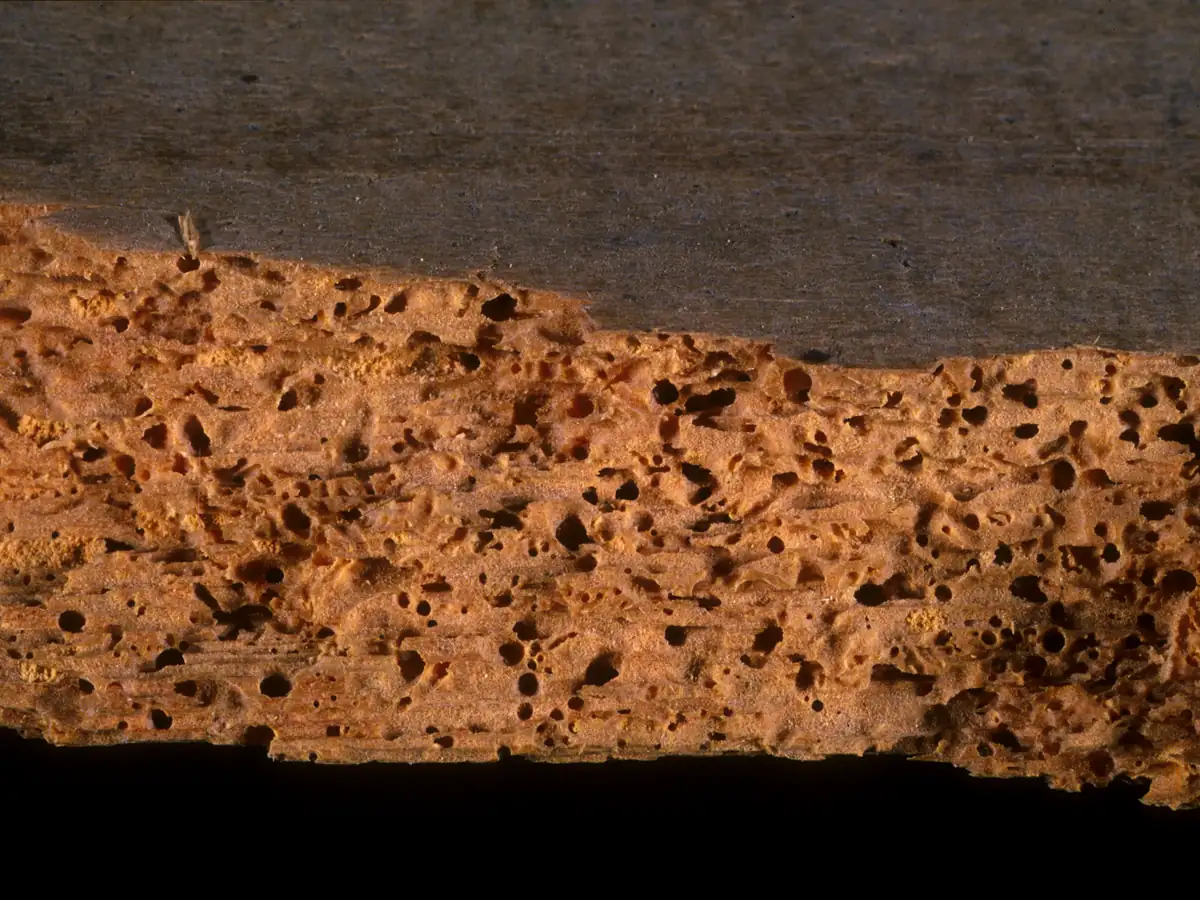
Woodworm starts when an adult beetle lays eggs in untreated timber, usually on rough or cracked surfaces or in old holes. The larvae then feed in the sapwood for years. Damp helps them: house borer develops fastest above about 70% relative humidity, and very dry wood is hostile to eggs and young larvae.
In New Zealand the biggest factor is what the house was built from. Untreated native timber and early untreated pine are susceptible; boron-treated framing resists. Furniture, recycled boards and damp subfloors then decide where an infestation sits. The house borer by build year guide sets out how risk tracks build year.
Why does UK woodworm advice not transfer to New Zealand?
Three reasons. The seasons are reversed, so UK emergence months are wrong here. British houses are framed in different timbers, with oak and European softwoods rather than rimu, kahikatea and radiata pine. And New Zealand's boron treatment history, which began in 1952, has no direct British equivalent.
| Topic | Typical UK framing | New Zealand reality |
|---|---|---|
| Adults emerge | Spring or early summer (English Heritage) | Mostly November to January, sometimes October to March |
| Timbers | Oak, ash, elm and beech sapwood; European softwoods | Rimu, kahikatea and radiata pine sapwood |
| Other species named | Death watch beetle and others | Native longhorn, powderpost, huhu; exotic termites reported to MPI |
| Building treatment history | No equivalent to New Zealand's framing rules | Boron treatment from 1952; an untreated window about 1995/1998 to 2004/2005 |
| Products | UK-registered products and rules | Products approved under New Zealand's HSNO Act, used to their labels |
Some UK guidance is still useful. English Heritage's advice that holes alone do not prove activity, and that old dust can fall from long-empty holes, applies equally here because the insect is the same.
When do woodworm beetles fly in New Zealand?
In late spring and summer. The NZ Farm Forestry Association records house borer adults from November to January, and Consumer NZ describes them flying for about a month between November and March. A UK page telling you to watch for beetles in May or June is describing the Northern Hemisphere.
Timing matters for anyone reading the evidence. Fresh holes and dust are most likely in early summer, and a winter visit sees mostly last season's results. The flight season calendar sets out the months for every beetle, including the autumn longhorn.
What does woodworm in floorboards look like?
Clusters of round holes about 1 to 2 mm across, often near the edges of boards where sapwood sits, with gritty dust in the gaps or underneath. On polished floors, filler and finish can hide old holes, so the underside seen from the subfloor usually tells more than the face you walk on.
Floorboards in older New Zealand houses are commonly rimu or pine, and the hardwood floors that show fine dust may be tawa, which suits powderpost rather than woodworm. The borer in floorboards page covers what an inspector looks for in each type of floor and when boards are judged too weak to keep.
Is woodworm in a house serious?
It depends on activity, timber and position, not on the word woodworm. Scattered old holes in sapwood edges are usually cosmetic. Live borer in subfloor framing needs dealing with alongside moisture. Timber that has lost strength, especially longhorn damage, is a builder's matter.
Buyers sometimes see woodworm mentioned in an overseas-trained inspector's notes or in a vendor's disclosure. What to ask, and how a finding should affect an offer, is covered in whether borer is a deal breaker and in the pre-purchase borer inspection.
Which woodworm terms mean what in New Zealand?
Most of the vocabulary travels, with small shifts. Flight holes and exit holes are the same thing. Frass and bore dust both mean the powder from the tunnels. Active woodworm means larvae still feeding, which New Zealand reports usually describe as live or active borer.
- Woodworm. In New Zealand usage, house borer (Anobium punctatum).
- Furniture beetle. The same insect, its common name in international references.
- Borer. The New Zealand umbrella word for wood-boring beetle larvae in timber.
- Frass. Larval waste and chewed wood. See borer dust and frass.
When the reading turns into a decision about one real house, the fee, the report and the booking steps are set out under Auckland borer inspection.
Asked about this
Is there woodworm in New Zealand?
Yes, under another name. The common furniture beetle, the insect behind British woodworm, is New Zealand's common house borer and occurs throughout the country in untreated timber.
Can I use UK woodworm treatments in New Zealand?
Use products sold and approved in New Zealand, to their label directions, as the HSNO Act requires. Overseas product names and timing advice are written for a different market and a different season, and identification should come before any product choice.
Does woodworm spread from furniture to floorboards?
It can, because adults fly and lay eggs on bare untreated timber. Whether it does depends on the timber nearby and the conditions. See the guide to how borer spreads.
Why do UK sites say woodworm emerges in spring?
Because UK spring and early summer fall in the middle of the calendar year, when New Zealand is in winter. The equivalent warm months here are November to January, which is when house borer adults mostly appear.
Read next
- House borer by build yearWhich New Zealand houses carry house borer, era by era, and why the framing timber decides it
- Flight seasonThe months each borer flies in New Zealand, and what that means for treatment and for buyers
- Beetle identificationThe wood-boring beetles of New Zealand houses side by side: size, colour, hole, dust, timber and season
- Borer in floorboardsHouse borer and powderpost beetle in timber floors, finished versus bare boards, and when boards need replacing
Sources
Book a borer inspection
The inspection is $285 + GST, credited against treatment done through the same operator. Treatment ranges sit on the cost page.