Biology
How borer spreads between furniture, timber and houses
Borer does not creep through a house like damp. It moves when adult beetles fly and lay eggs, and when infested wood is carried somewhere new. Knowing which applies tells you what to check, and when a borer inspection is worth booking.
First published · updated
Borer spreads when adult beetles emerge, fly, mate and lay eggs on bare untreated timber, often in cracks or old exit holes. It is also carried into houses inside infested wood such as furniture or recycled timber. Treated framing and well-finished surfaces are poor egg sites, so the risk depends on the untreated timber nearby.
How does borer move from one piece of timber to another?
By flight. Adults chew out of the wood, mate and lay eggs within their few weeks of life, and Consumer NZ describes them as airborne for about a month. Larvae cannot leave the timber they are in, so every new infestation starts with an egg laid by a flying adult.
Where the egg goes depends on what is available. House borer females lay on rough-sawn surfaces, in cracks and in old exit holes. Powderpost needs open-pored, starchy hardwood. Longhorn favours damp, poorly ventilated places. Old exit holes are themselves egg sites, so the piece a beetle left is often where the next generation starts.
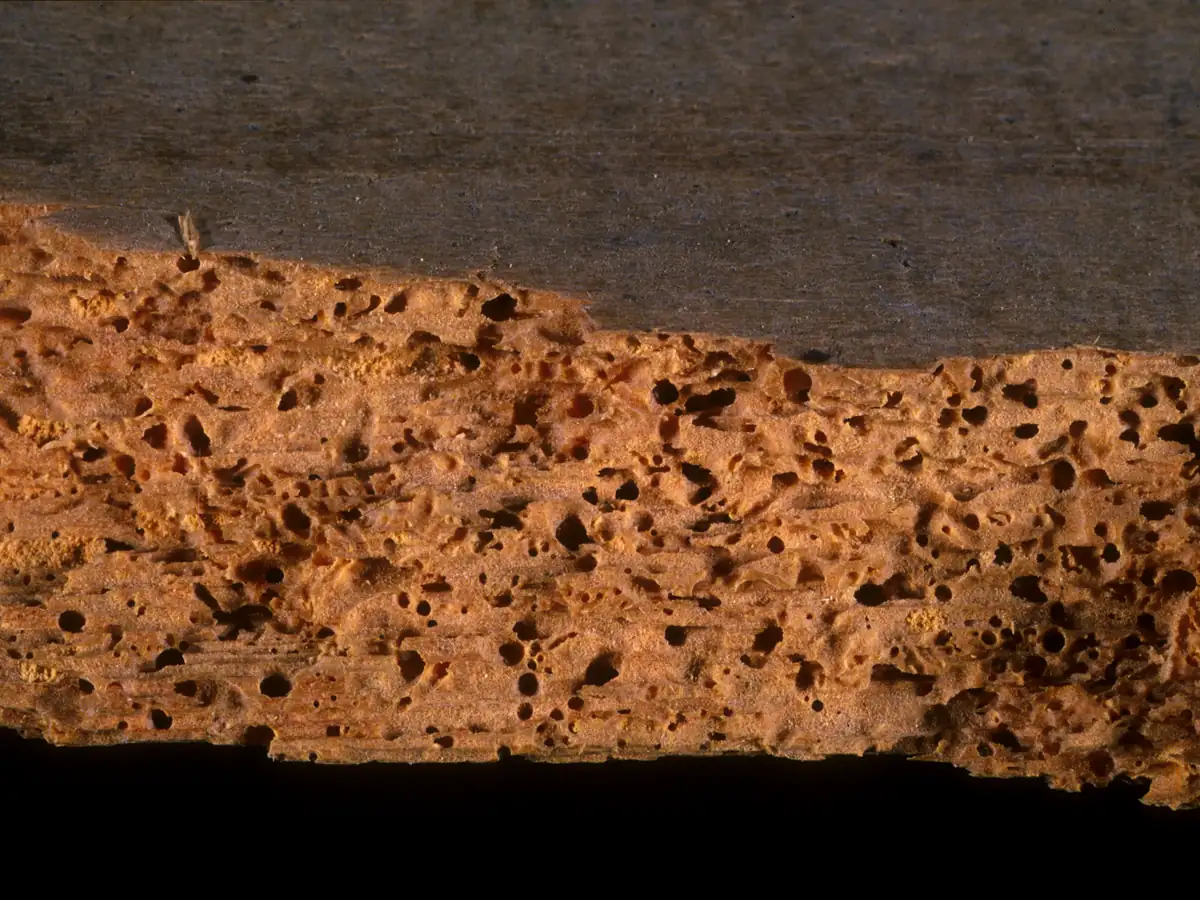

Can woodworm in furniture spread to the house?
It can, if adults emerge from the piece and find suitable untreated timber nearby. The beetle that comes out of an old chest is the same species that attacks rimu floors and pine framing, and it is not limited to furniture. How likely spread is depends on the house: treated framing and finished surfaces offer fewer egg sites.
The bigger practical risk is to other furniture and to untreated floors in the same room. That is why a piece with fresh holes or dust is best dealt with before it joins the rest of the house. The borer in furniture page covers how pieces are checked and treated without spoiling the finish.
Does recycled timber bring borer into a house?
It can carry larvae that will not show for years. Recycled native timber is usually untreated and old enough to have had several flight seasons of exposure, and holes may be hidden by paint or planing. Larvae already inside keep feeding after the boards are relaid as a floor or a feature wall.
Timber yards show the same principle with powderpost: the NZ Farm Forestry Association advises removing offcuts from yards and joinery factories because they become breeding sites, and inspecting susceptible imported stock. None of the sources used here addresses firewood specifically, so this guide makes no claim about it.
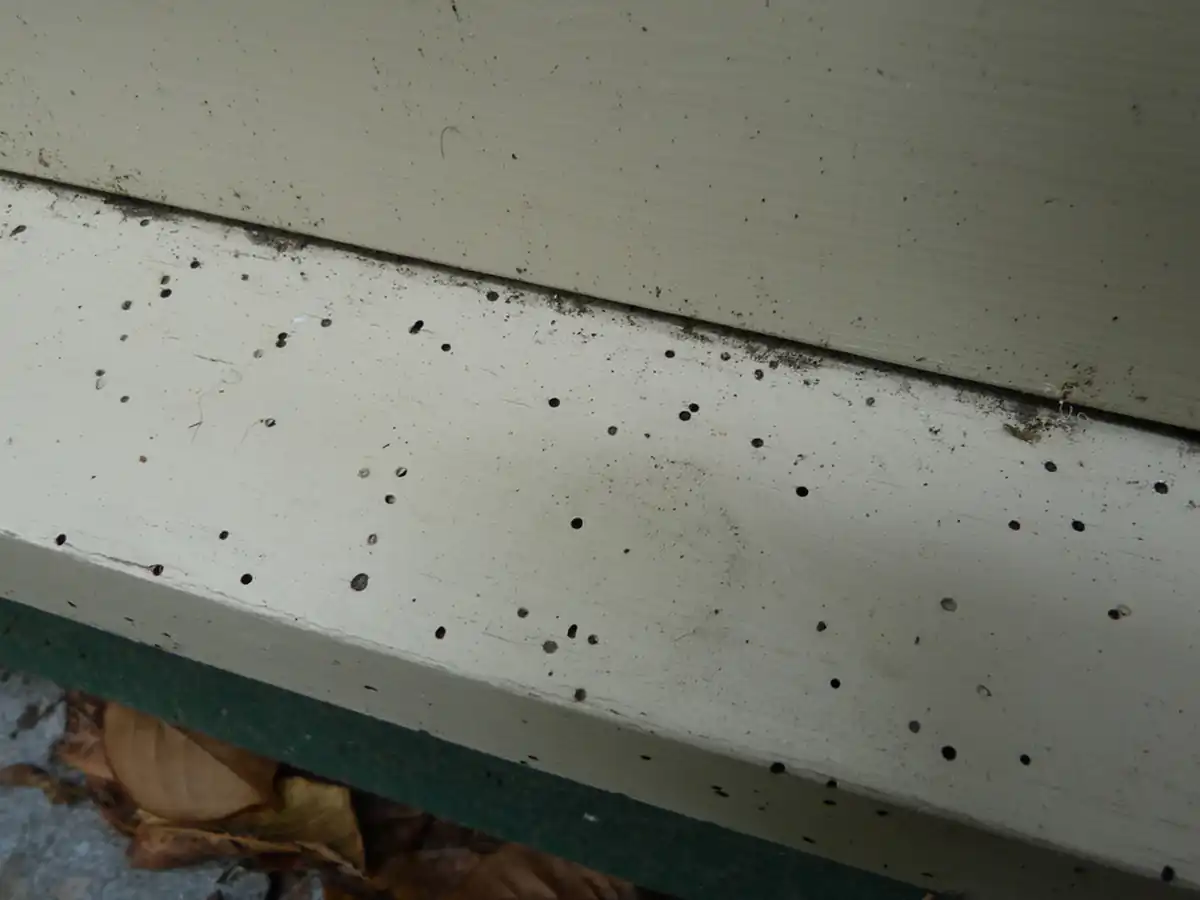
If recycled boards are going into a house, look closely at their undersides and edges before they are fixed, and keep them separate until you have. Once they are down, the only evidence will come from the face.
What if the house next door has borer?
It raises the number of beetles in the area during the flight season, but what decides your risk is your own timber. A house with treated framing and sound paint gives few places to lay eggs. A villa with bare subfloor rimu offers plenty, whatever the neighbour has.
None of the sources used here gives a distance that house borer adults fly, so this guide does not suggest one. The useful step is to know what your own subfloor, roof space and lower weatherboards are made of and whether they already show holes. The guide to house borer by build year shows how build year shapes that.
What should you check on a newly bought antique?
Look at the unfinished parts: backs, drawer bottoms, runners and the insides of legs, where bare timber invites eggs. Fresh holes with sharp, pale edges and loose dust in or below them suggest recent activity. Dark, filled or waxed-over holes are more likely old.
Timing matters. A piece bought in winter may look quiet and still produce beetles in summer, because larvae already inside emerge on their own schedule. Keeping a new piece on dark paper for a season shows whether fresh dust falls. The flight season calendar explains when emergence is likely.
Why do some timbers never get borer even in an infested house?
Because the beetles are selective. House borer feeds in the sapwood of particular softwoods and rarely damages Douglas fir or western red cedar. Powderpost needs starchy hardwood. Boron-treated framing resists both. Within a single house, the borer finds some boards and never touches others.
Surfaces matter too. Eggs are laid on rough or cracked faces and in old holes, so sealed, painted and polished faces present fewer sites than bare undersides. That is why the subfloor so often shows more than the living rooms. The guide to the timbers borer attacks sets out which timbers each beetle uses.
How does an inspection judge whether borer is spreading?
By comparing fresh and old evidence across the house. Fresh holes and dust in several rooms or timbers suggest an active population; old holes in one area with none elsewhere suggest a past problem. The finding records where each sign was seen and the timber it was in.
For buyers, that map is more useful than a yes or no. It shows whether borer is confined to one old floor, spread through the subfloor, or arriving with furniture. The pre-purchase borer inspection page explains how this fits inside a purchase timetable.
When the reading turns into a decision about one real house, the fee, the report and the booking steps are set out under Auckland borer inspection.
Asked about this
How does woodworm spread?
Adult beetles fly, mate and lay eggs on bare untreated timber, often in cracks or old holes. The larvae then feed inside that timber for years. Woodworm is also carried in infested wood, such as furniture or recycled boards.
Can borer spread from furniture to floorboards?
Yes, if the floorboards are untreated and the beetles emerging from the furniture find suitable surfaces to lay on. Treated or well-finished timber is far less likely to be affected. Deal with an active piece before it sits in a room with bare old timber.
Can borer travel between houses?
Adult beetles fly, so borer is present wherever susceptible timber is. A neighbour's borer adds to the beetles around, but your own untreated timber decides whether eggs find a place to develop.
Does borer spread quickly?
No. Each generation takes about three to four years for house borer, and up to eleven for the longhorn. Infestations build over many seasons, which is why damage is usually found long after it began.
Read next
- Borer in furnitureChecking antiques and second-hand pieces, treating them without harming the finish, and keeping borer out of the house
- Woodworm in New ZealandWoodworm is the British name for house borer: why UK advice, seasons and timbers do not transfer to NZ houses
- Borer larvae and eggsThe hidden stage of borer: where eggs go, how long larvae feed, and why holes lag years behind the damage
- House borer by build yearWhich New Zealand houses carry house borer, era by era, and why the framing timber decides it
Sources
Book a borer inspection
The inspection is $285 + GST, credited against treatment done through the same operator. Treatment ranges sit on the cost page.