Mt Albert, around Ōwairaka
What a borer inspection finds in Mt Albert houses
Mt Albert filled slowly. Sections sold in the 1890s often stayed empty until the 1920s, so a single street can hold a villa, a bungalow and a state house side by side, each with different timber.
The inspector dates the timber first and then looks for the beetle. In Mt Albert that means native framing in villas and bungalows, state-house timber from the postwar estates, and later additions that may fall in the 1995 to 2004 untreated framing window. Each borer inspection here starts with the build year of every part of the house, because a single property can span four decades or more.
Slopes on Ōwairaka, the old lava flows and Oakley Creek all affect how dry the subfloor stays.
A railway suburb that became New Zealand's largest borough
Ngāti Whātua sold the area to the Crown in 1841. The railway station opened in March 1880, and the population doubled to 1,400 over the following decade. The tram arrived in 1915, and by 1931 Mt Albert had grown from about 2,000 people in 1901 to 20,600, the largest borough in the country.
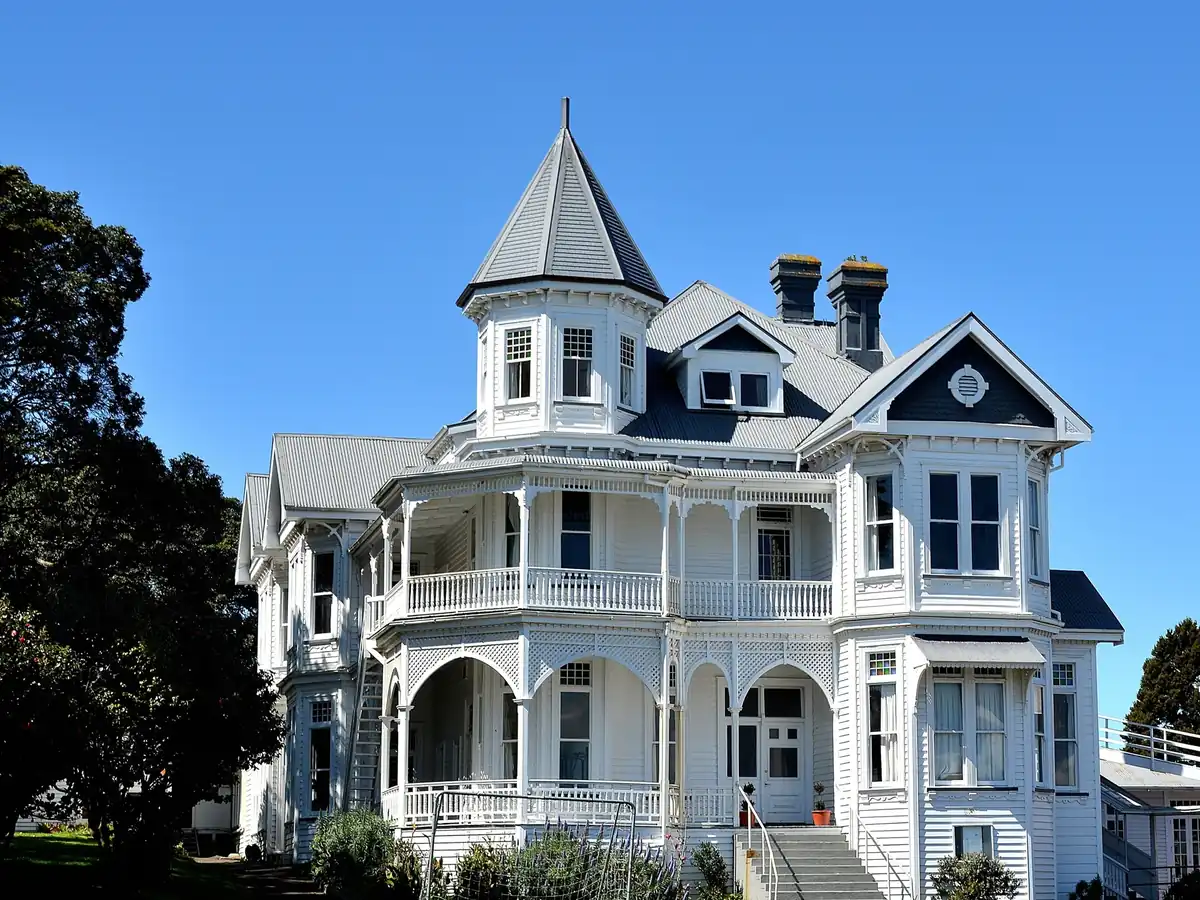
Some very early houses remain. Alberton on Mt Albert Road began around 1863 as a two-storey timber farmhouse and gained its towers and east wing between 1870 and 1880; it is a Category 1 historic place. Ferndale House on New North Road, a Carpenter Gothic timber house, started as a four-room cottage in 1865. Caughey House on McLean Street dates from 1888.

Why do houses on one street differ so much?
Schedule 15 notes that much of Mt Albert was subdivided after the late-1890s upturn, but vacant sections often stayed empty until the 1920s or later. Postwar state housing, including the Stewart Estate, filled more gaps. The result is that a buyer cannot assume the age of a house from its neighbours.
For borer that matters, because the timber and its treatment follow the build year. Boron treatment started in 1952, so a 1910 villa and a 1948 state house next to it both have untreated original framing, while a 1960s house nearby is more likely to have treated pine. Additions from 1995 to early 2004 can be untreated again.
Roof spaces in villas, bungalows and state houses
Roof spaces are often where the first evidence shows. Sarking, battens and the sapwood edges of rafters in native timber carry the round holes and fine gritty dust of the common house borer, and dust collects on ceiling joists and insulation below. Villa roofs are usually tall enough to move through; bungalow and state-house roofs are lower, and later insulation can hide joists.
Dust that falls into ceiling batts is easy to miss, so the inspector lifts edges where it is safe to do so.
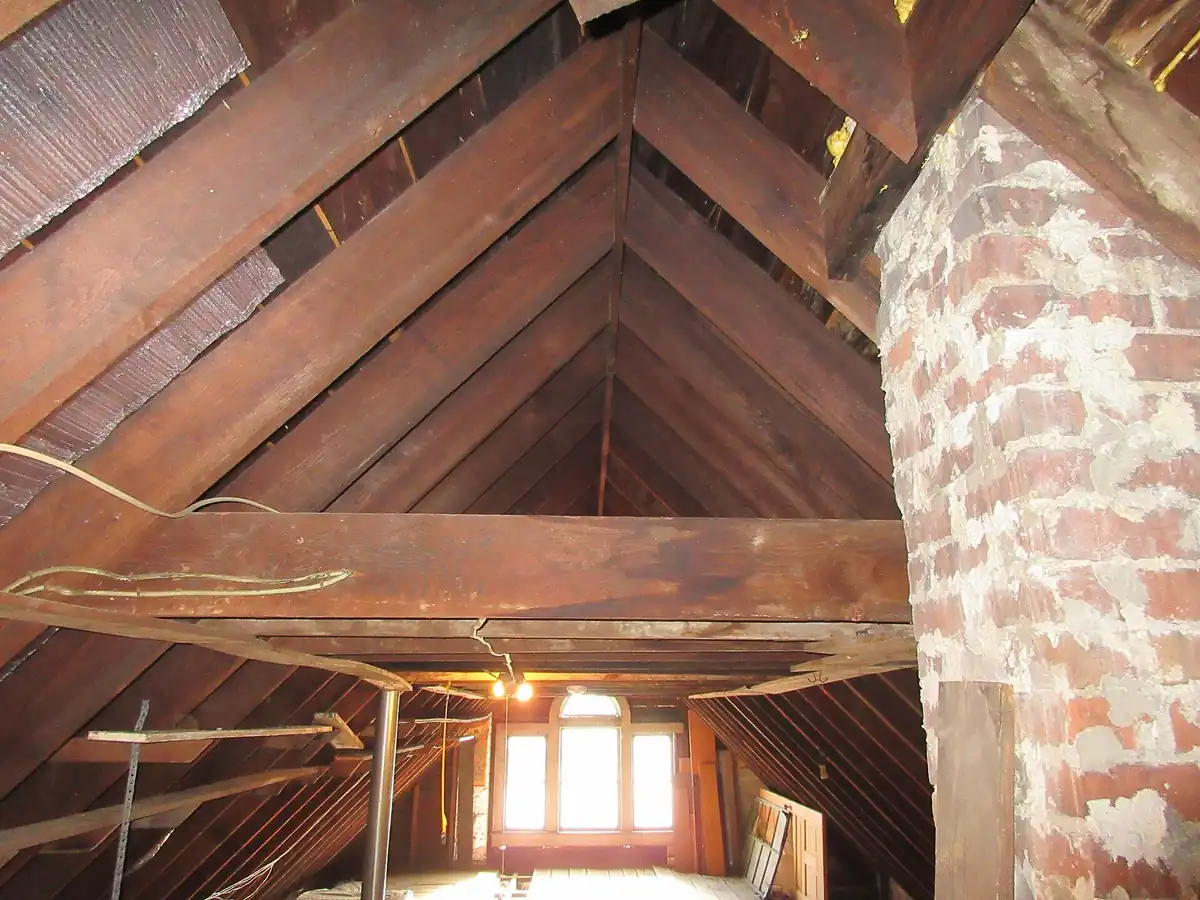

The inspector notes which parts were reached and which were seen only from the hatch. The roof space guide covers what to expect in each roof type.
Ōwairaka, Te Kōpuke lava and Oakley Creek
Ōwairaka / Mount Albert erupted about 120,000 years ago and was quarried until 1928. Lava from Te Kōpuke / Mount St John, about 28,000 years ago, flowed into the northern part of the suburb, and Oakley Creek forms the western edge. Houses on the slopes of the mountain often have deep subfloors on the downhill side.
Volcanic ground tends to drain, but not everywhere. During the 1 February 2023 downpour RNZ photographed firefighters pumping water out of a home on Wairere Road and flooding at a property on O'Donnell Avenue. Ask about any past water under the house, and expect the findings to record subfloor moisture area by area.
Setting a bid ceiling from the findings
An auction bid cannot be made conditional on a borer result, so if you plan to bid the inspection has to fit inside the marketing period, usually in the same week as the builder's visit. Ask the agent early for access to the roof space and subfloor, since some vendors lock hatches or store belongings over them.
The findings separate old, finished damage from current emergence, name the timber affected and flag any member soft enough to need a builder. Those three points set a sensible ceiling: finished damage in a few joists is usually a maintenance note, active borer across a roof space is a treatment cost, and a weakened bearer is a carpentry job. Is borer a deal breaker? works through how far each should move a price.
Character areas on the Mt Albert slopes
The D18 list includes Isthmus B for Mt Albert, which Schedule 15 describes as modest houses including villas, bungalows and state houses, and an Isthmus C area covering houses on the slopes of Ōwairaka. Repairs that match the original timber are treated differently from changes to cladding or joinery. With Plan Change 120 amending special character overlays, the current rules for a particular address should be confirmed with Auckland Council.
What it costs and how the visit runs
A Mt Albert visit is charged at $285 + GST. The fee is credited against the treatment if you go ahead with the recommended work through the same operator. The inspector covers the roof space, subfloor, exterior and floors, and the written findings follow. Where treatment is recommended, published prices are about $350–$600 + GST for a roof space and about $450–$750 + GST for a subfloor, as the cost guide explains.
Buyers should book as soon as an offer is accepted; the pre-purchase page sets out what the findings add to a builder's report.
Questions Mt Albert buyers bring
- Is the house original to its section, or was it moved there? Winstone House on Summit Drive was moved to the mountain slopes around 1910.
- Is any part of the house built between 1995 and April 2004?
- Has the subfloor ever held water after heavy rain?
- Is the property in a special character area?
Sandringham lies to the east and Point Chevalier to the north-west. Other suburbs are listed in the locations hub, and the fee and report format for how borer inspections work across Auckland are on the home page.
Every other suburb gets the same visit and the same report format; the overview is under the Lignum borer inspection across Auckland.
Asked before booking
Is a house on the slopes of Ōwairaka inside a character area?
Possibly. The D18 list includes an Isthmus C area for houses on the mountain's slopes, but Plan Change 120 is amending the special character overlays. Confirm the rules for the exact address with Auckland Council.
Do Mt Albert state houses usually have borer?
Many were built before boron treatment became routine, so their original floors and framing are untreated. Old holes are common; activity varies, which is what the inspection checks.
Does volcanic ground mean a dry subfloor?
Often but not always. Slopes, retaining walls and blocked drainage can still put water under a house, as some Mt Albert properties found in 2023.
Can the inspector check a house on the slopes of Ōwairaka with a tall subfloor?
Yes, where it is safe. Tall downhill subfloors are usually easy to see; tight uphill ends are viewed from the nearest safe point and recorded as part-seen.
Further reading for Mt Albert
- Borer in the roof spaceWhat a roof space borer check covers: rafters, purlins, sarking, ceiling joists and dust on the ceiling
- Untreated framing yearsHouses from the untreated kiln-dried framing window of about 1995 to 2005, and what that means for borer
- Is borer a deal breaker?When borer should change an offer on a house, and when it should not
Sources
- Wikipedia: Mount Albert, New Zealand
- Heritage New Zealand: Alberton, List No. 26
- Auckland Unitary Plan, Schedule 15: Special Character Schedule, Statements and Maps
- Auckland Unitary Plan, D18 Special Character Areas Overlay
- RNZ, 1 February 2023: in pictures, downpour compounds Auckland's weather woes
- Standards New Zealand: key historical dates for timber treatment regimes
Book a Mt Albert borer inspection
The inspection is $285 + GST, credited against treatment done through the same operator. Treatment ranges sit on the cost page.