Westmere, Coxs Bay and Meola
Westmere borer: what to inspect in a lifted bungalow
Westmere began as a suburb of single-storey bungalows for working families. A large share of those houses have since been lifted, extended or rebuilt, so a borer inspection here starts by working out which timber is original.
In Westmere the inspector reads the house as layers: 1920s native timber in the old floor and roof, state-house framing in some streets, and new framing from whatever lift or addition came later. Each layer has a different borer risk depending on when it was built.
The ground matters too. Westmere is bordered by Coxs Creek, the Coxs Bay wetlands and Meola Creek, and low streets near them can hold damp under a house.
Estates of 1916 to 1926 and the bungalow streets
Lots in what is now Westmere were auctioned as early as 1844, but most of the suburb came later. The northern part was put on the market in 1916, the Westmere Estate between Nottingham Street and Warwick Avenue followed in 1923, an extension in 1925 and the Westmere Park Estate in 1926. The first houses were for workers and tradespeople, built in the Californian bungalow style, and the late 1930s brought state housing.
A few older buildings predate the estates: Lynton Lodge on William Denny Avenue dates from 1890, and the house at 1 Kingsley Street from 1904. Kingsley Street also has a group of former state houses at numbers 17 to 25. For a buyer this means the build year on a listing is often the year of the original bungalow, not of the timber you are actually standing on.
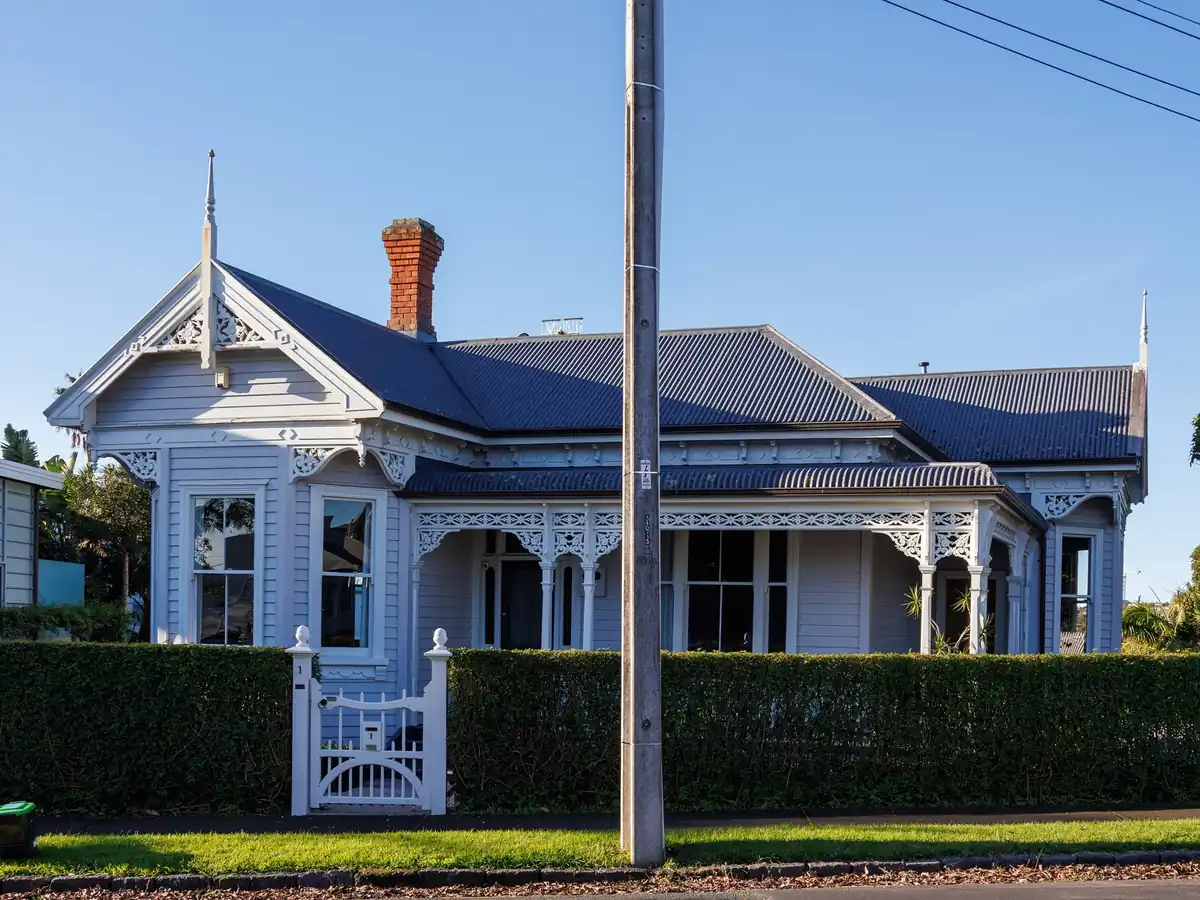

What happens to borer when a bungalow is lifted?
By 2000 rising prices had turned Westmere middle-class, and many homes had been raised to two storeys. Lifting a bungalow and building underneath it changes the borer picture in three ways. The old subfloor bearers and joists may now sit inside a mid-floor, hidden behind linings. The new ground floor is framed in whatever timber was standard in its year. And the original roof space may have been rebuilt or left as it was.
Dates help here. Boron treatment of framing began in 1952; untreated kiln-dried framing was allowed from 1995; treated framing became a requirement again for consents from 1 April 2004. A Westmere lift built between those last two dates can have untreated pine in the new storey under original native timber above. The 1995 to 2005 framing guide explains what that window means.
Piles and bearers on the original bungalow
Where the house is still single-storey, the subfloor is where most of the useful reading happens. Bungalows of the 1920s usually stand on short piles with native timber bearers and joists above, and the sapwood edges of those members are where the common house borer leaves its round holes. Low clearance at one end of the subfloor is common.
The inspector checks each pile-to-bearer connection, probes any member that looks soft, notes how much air moves through the vents and records whether the ground underneath is dry. More detail on what can and cannot be seen from a hatch is in piles and subfloor.

Coxs Bay, Meola Creek and damp ground
Westmere was once a peninsula on the southern shore of the Waitematā. Coxs Creek and the Coxs Bay wetlands, with their mangrove boardwalk, sit on one side; Meola Creek and Meola Reef sit on the other. The reef is the far end of an 11 km lava flow more than 28,000 years old, since 2008 attributed to Te Kōpuke / Mount Saint John.
Houses on the lower streets near the creeks and the bay deserve a closer look at subfloor moisture, standing water after rain and the condition of the lowest timber. Ask the seller or the council about any past flooding on the property itself, since the inspector can only record what the ground looks like on the day.
Reading the builder's report on a converted bungalow
A builder's report on a Westmere conversion usually describes the new ground floor in detail and says less about the original floor above it, because that framing is now buried between storeys. A line such as "borer noted in subfloor" on a house with no open subfloor under its oldest timber often means the builder saw a remaining crawl space at one end, not the whole original floor.
The borer findings list each area as inspected, part-seen or not reached, so you can tell how much of the 1920s timber was actually looked at. If the lift also replaced the roof, ask for the date: a new roof in treated pine changes the roof-space reading entirely, while an original roof over a new ground floor keeps the old risk on top. It is worth reading the builder's wording slowly before relying on it.
Pricing a Westmere borer check
The inspection fee is $285 + GST. The fee is credited against the treatment if you go ahead with the recommended work through the same operator. If treatment is needed, published Auckland prices run at about $350–$600 + GST for a roof space and about $450–$750 + GST for a subfloor. A lifted house can need both, and sometimes a closer look at enclosed mid-floor timber, which the cost breakdown covers in more detail.
The fee and the report format are the same across the city, as set out on the page about Auckland borer inspections.
Overlay status is a question for each address
Westmere does not appear by name in the D18 list of special character areas, but a list is not a map, and neighbouring overlays reach close to some streets. Plan Change 120 is also amending the special character overlays. Look up your own address on Auckland Council's GeoMaps, or ask the council, before assuming that cladding or joinery repairs are free of character rules.
Buying in Westmere: questions to settle before you commit
- When was the house lifted or extended, and was the new framing consented? The consent date places it against the 1995 to 2004 window.
- Is any original subfloor timber now enclosed? If so, the findings will say what could not be seen.
- Does the property sit low near Coxs Bay or Meola Creek, and has the subfloor ever held water?
- Was the house one of the former state houses, and have its floors been sanded back to bare timber?
Book the pre-purchase borer check once your offer is accepted or your auction date is set. Neighbouring suburbs with different housing are Herne Bay to the north-east and Point Chevalier to the west; others are in the locations hub.
Every other suburb gets the same visit and the same report format; the overview is under Auckland borer inspection.
Asked before booking
My Westmere bungalow was raised in about 2000. Should the new storey be checked?
Yes. Framing consented between 1995 and 1 April 2004 could legally be untreated kiln-dried pine, which the common house borer can attack. Bring any consent paperwork to the visit so the inspector can date the new framing.
Are former state houses in Westmere more at risk of borer?
They are not a special case, but they are usually timber-floored on piles and built before boron treatment was routine, so the subfloor and floors get the closest look.
Does living near Coxs Bay or Meola Creek mean my house has borer?
No. Proximity raises the chance of damp ground, which is worth checking, but borer depends on the timber and its moisture, not the postcode. The findings record moisture separately from the beetle.
Reading for Westmere houses
- Untreated framing yearsHouses from the untreated kiln-dried framing window of about 1995 to 2005, and what that means for borer
- Piles and subfloorBorer in piles, bearers and joists, damp subfloors, rot versus borer, and when replacement needs a consent
- Pre-purchase borer inspectionA borer check timed to your building condition, read alongside the building report
- Borer and moistureHow humidity, damp subfloors and timber moisture drive borer, and what moisture readings in findings mean
Sources
Book a Westmere borer inspection
The inspection is $285 + GST, credited against treatment done through the same operator. Treatment ranges sit on the cost page.