Reading the findings
Borer and moisture: why damp timber keeps beetles going
Borer is an insect problem with a moisture problem close behind it. Humid air speeds up the common house borer, wet wood is what huhu needs, and a damp subfloor is where both meet. That is why a borer inspection records moisture next to the beetle, and why fixing damp often comes before any treatment.
First published · updated
Moisture decides how fast borer develops and which beetles can live in a timber. The common house borer develops fastest above about 70% relative humidity, huhu larvae need wood at about 25% moisture content or wetter, and the longhorn's development is shaped by moisture too. A damp subfloor with poor ventilation and bare ground keeps all of these going.
How does humidity affect the common house borer?
The NZ Farm Forestry Association notes that common house borer larvae develop fastest at relative humidity over about 70%, with temperature and the food value of the wood also playing a part. In practice that means borer in a humid, still subfloor or a poorly ventilated roof space tends to progress faster than borer in dry, airy timber of the same kind.
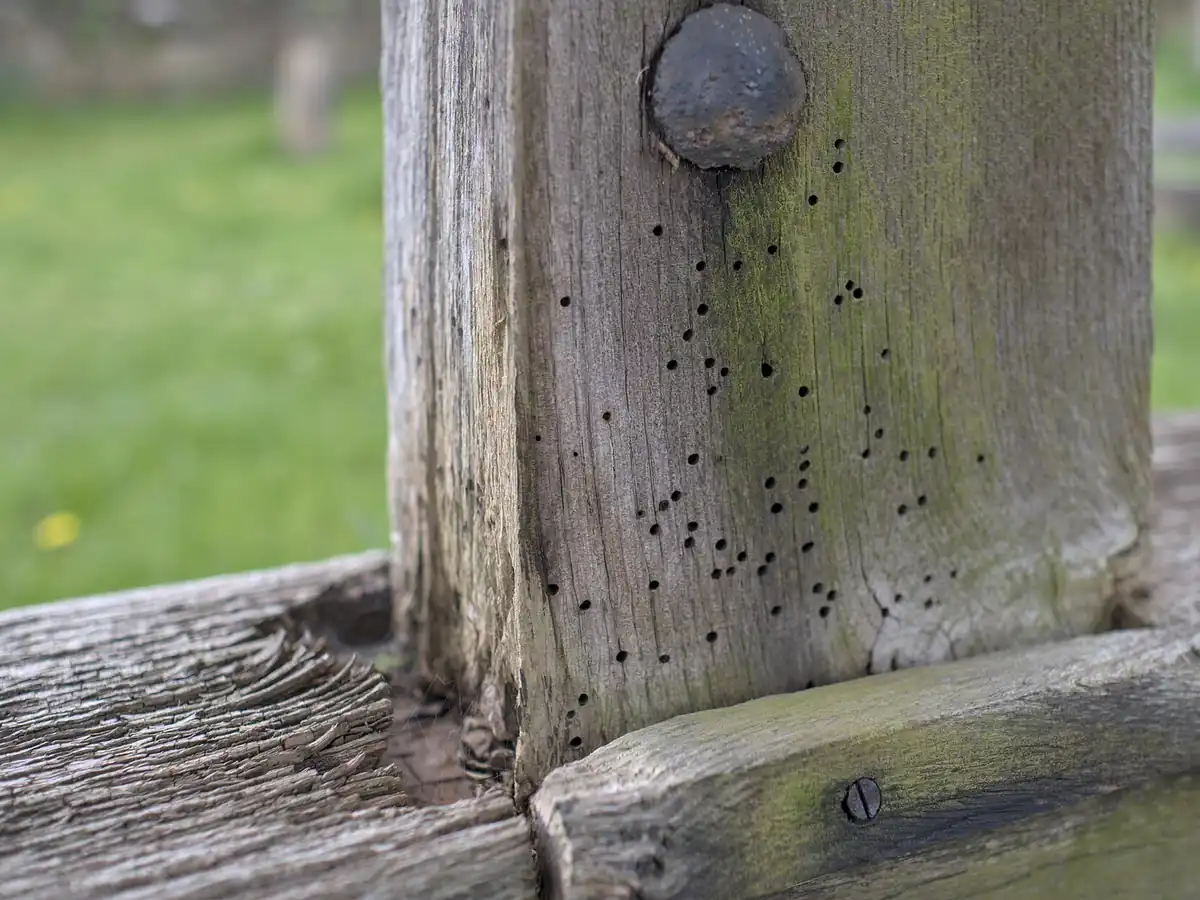
Auckland's mild, humid climate does not help. Subfloors close to the ground, shaded by neighbours or planted along their edges can hold moist air for long periods, and that is where the lowest framing in a villa or bungalow sits. The guide to borer in piles and subfloors covers what that framing looks like when it is affected.

Why does huhu mean the wood is wet?
Because huhu cannot establish in dry wood. Newly hatched huhu larvae need moist timber, and older larvae keep developing in seasoned wood only while its moisture content stays at or above about 25%, according to the NZ Farm Forestry Association. Sound, dry framing is not huhu habitat, so finding huhu grubs or their large oval holes in a house points to a leak, a damp subfloor or rot.
The fix starts with the water. Treating or replacing the timber without finding why it was wet invites the same problem back, and wet timber is often decaying as well. The library page on huhu in the house covers identification.
Does moisture affect the two-toothed longhorn?
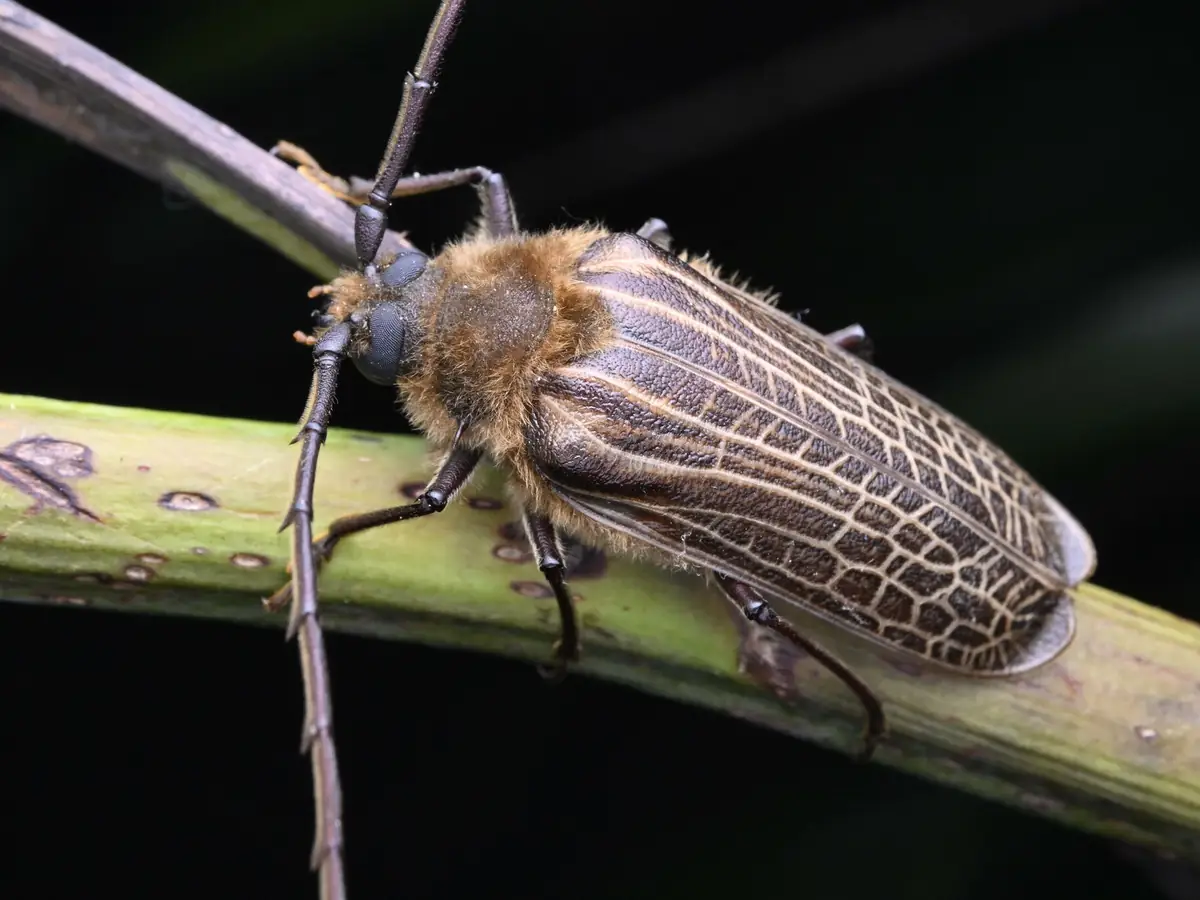
Yes. The NZ Farm Forestry Association gives the two-toothed longhorn a larval period of anywhere from 2 to 11 years, depending on moisture, temperature and the food value of the wood. It tunnels heartwood as well as sapwood, attacks rimu, kahikatea and macrocarpa most often, and Consumer NZ describes its damage as usually severe, so conditions that favour it are worth taking seriously.
That does not mean every damp subfloor holds longhorn. It means a moisture note and oval holes in the same structural member are worth reading together, and that probing those members matters more where the timber has been damp for years.
What makes a subfloor damp?
Bare ground, poor ventilation and water arriving from outside. Soil gives off moisture continuously; vents that are too few, blocked by plants, garden beds or storage, or closed in by later additions stop it leaving; and downpipes discharging beside the foundations, leaking pipes and ground sloping towards the house add more. Each one is something an inspection can see and record.
- Blocked or missing vents: soil or planting heaped against them, or vents boxed in by decks and extensions.
- Bare ground: no ground moisture barrier on the soil under a suspended floor.
- Surface water: ground falling towards the house, or ponding against the foundation wall.
- Roof water: missing or broken downpipes, or discharge onto the ground near the house.
- Plumbing leaks: wet patches under bathrooms, laundries and kitchens.
What do the building rules say about subfloor ventilation and ground cover?
NZS 3604, the standard for timber-framed buildings, requires subfloor spaces to be ventilated and specifies a ground vapour barrier in paragraph 6.14.3. For rental homes, the Healthy Homes standards require a ground moisture barrier under suspended floors with an enclosed subfloor, where it is reasonably practicable to install one, along with efficient drainage of roof and surface water.
Tenancy Services says the barrier is generally a polythene sheet installed under section 8 of NZS 4246:2016, or an alternative with a vapour flow resistance of at least 50 MNs/g installed by a professional installer. MBIE lists a ground moisture barrier among building work that does not need a building consent. Owners of homes that are not rentals are not bound by the Healthy Homes rules, but the same barrier does the same job under any floor.
The exact vent areas and spacings for a particular house come from the standard and from a builder looking at the site, so this page does not quote them.
What do moisture readings in borer findings mean?
A moisture reading is a snapshot of how wet the timber was at that point on that day, usually given as a percentage moisture content from a meter. It is most useful compared with two reference points: the 18% in-service limit the 1995 standard assumed for untreated kiln-dried framing, and the roughly 25% at which huhu larvae can keep developing. Readings well above dry framing levels point to a water source.
| Note or reading | What it suggests | Usual next step |
|---|---|---|
| Dry, vents clear, ground covered | Conditions do not favour borer or decay | None for moisture |
| Humid, still air in the subfloor | Common house borer can develop faster | Improve ventilation, consider ground cover |
| Timber reading near or above 18% | Wetter than dry framing is expected to be | Look for the source; recheck in dry weather |
| Timber at about 25% or wetter | Wet enough for huhu and for decay | Find and fix the water before treatment or repair |
| Localised wet patch | A leak, downpipe or ground water at one spot | Plumber, drainage or builder as appropriate |
Readings vary with weather and season, so one high number after a week of rain is weighed differently from a high number in a dry spell. A good finding says when the readings were taken.
Should moisture be fixed before borer treatment?
Usually, yes, or at least at the same time. Treatment deals with the beetle; it does not dry the timber. Boron preservatives are water-soluble and BRANZ notes they can leach out of timber that stays rain-wet for long periods, and wet wood keeps inviting huhu and decay. Fixing vents, ground cover and drainage protects whatever treatment or repair follows.
Moisture work is usually a separate cost from borer treatment and may involve a builder, a plumber or a drainage contractor. How it shows up in the price of dealing with borer is covered in the borer cost guide, and how a moisture note fits among the other findings is in reading a borer report.
When the reading turns into a decision about one real house, the fee, the report and the booking steps are set out under borer inspection in Auckland.
Asked about this
Does damp cause borer?
Damp does not create borer, but it helps it. Common house borer develops fastest in humid conditions, huhu need wet wood, and the longhorn's development is shaped by moisture. A damp subfloor makes an existing infestation progress and makes the timber more inviting.
Will a ground moisture barrier stop borer?
Not on its own. It reduces moisture rising from the soil into the subfloor, which makes conditions less favourable for borer and decay. Live borer already in the timber still needs to be dealt with.
What moisture reading is too high for framing?
There is no single cut-off in the findings, but the 1995 standard allowed untreated kiln-dried framing only where in-service moisture would stay at or below 18%, and huhu larvae can develop at about 25% or more. Readings near or above those levels point to a water source worth finding.
Do landlords have to install a ground moisture barrier?
Under the Healthy Homes standards, rental homes with an enclosed subfloor need a ground moisture barrier where it is reasonably practicable to install one. Tenancy Services publishes the details and the exemptions.
Moisture and timber
- Huhu in the houseWhy huhu in house timber points to wet wood, and where the moisture usually comes from
- Piles and subfloorBorer in piles, bearers and joists, damp subfloors, rot versus borer, and when replacement needs a consent
- Reading a borer reportEach line of borer inspection findings explained, and what it means for a buying or repair decision
- Untreated framing yearsHouses from the untreated kiln-dried framing window of about 1995 to 2005, and what that means for borer
Sources
- NZ Farm Forestry Association: household borer, Anobium punctatum
- NZ Farm Forestry Association: huhu beetle
- NZ Farm Forestry Association: two-toothed longhorn, Ambeodontus tristis
- Tenancy Services: Healthy Homes moisture ingress and drainage standard
- Building Performance (MBIE): exempt building work, ground moisture barrier
- MBIE Codehub: BRANZ Appraisal 961 (2022), referencing the NZS 3604 paragraph 6.14.3 vapour barrier
- Standards New Zealand: key historical dates for timber treatment regimes
- BRANZ: H1.2 framing timber treatment
Book a borer inspection
The inspection is $285 + GST, credited against treatment done through the same operator. Treatment ranges sit on the cost page.