Reading the findings
Reading borer inspection findings, one line at a time
Borer findings are laid out as a short set of fields for each part of the house. Each field answers a different question, and the decision usually turns on two or three of them rather than on the word "borer" itself. This guide takes the fields in the order a borer inspection records them and says what each one should change.
First published · updated
Read species first, because it sets how serious the rest is; then activity, which decides whether treatment is needed at all; then the timbers listed, the moisture note and the structural flag, which decide whether a builder is involved. Finish with the areas not inspected, which tell you how much of the house the findings actually cover.
What does the species line tell you?
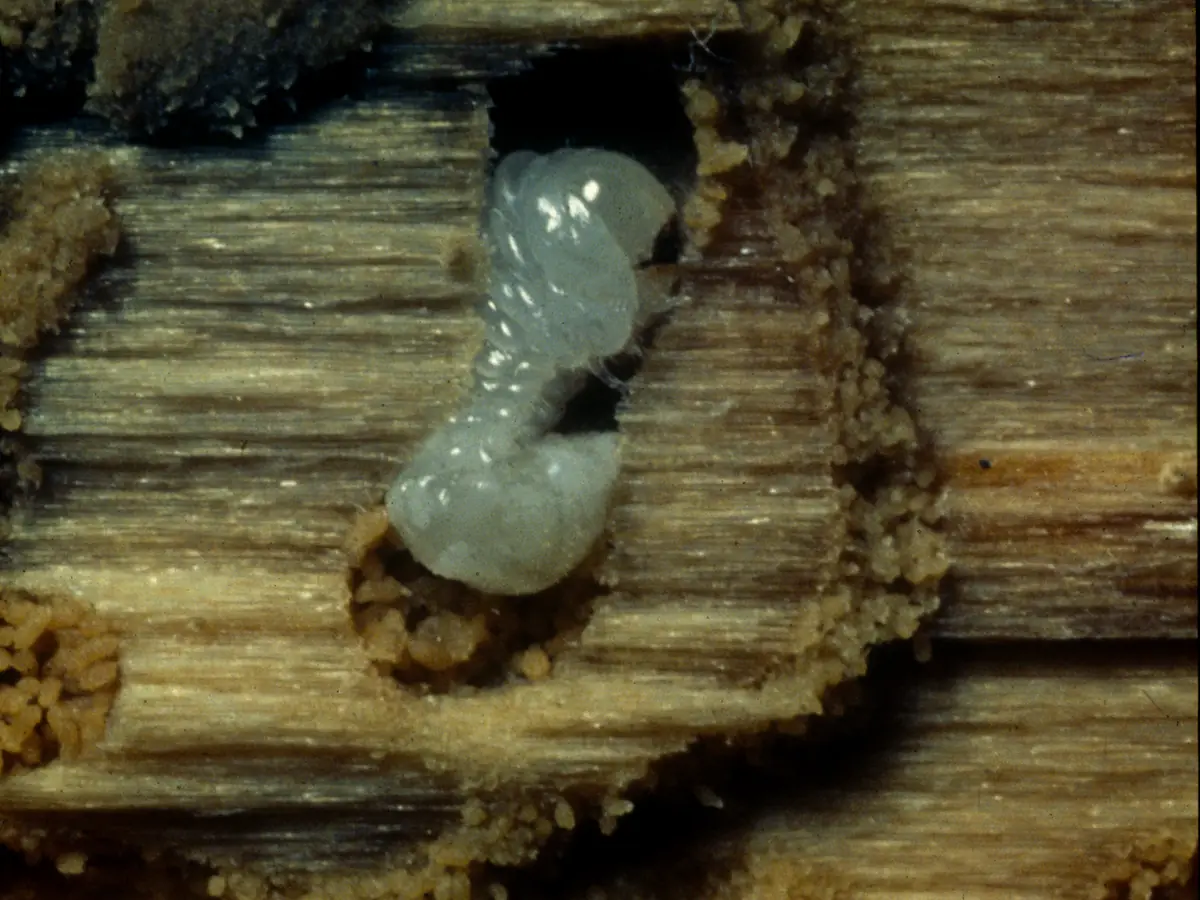
It names the beetle, usually from the exit holes and dust, and that name sets the scale of everything below it. The common house borer, Anobium punctatum, eats sapwood only and works slowly. The native two-toothed longhorn, Ambeodontus tristis, tunnels heartwood as well and can leave a shell. Huhu points to wet timber. Powderpost beetle is confined to certain hardwoods.
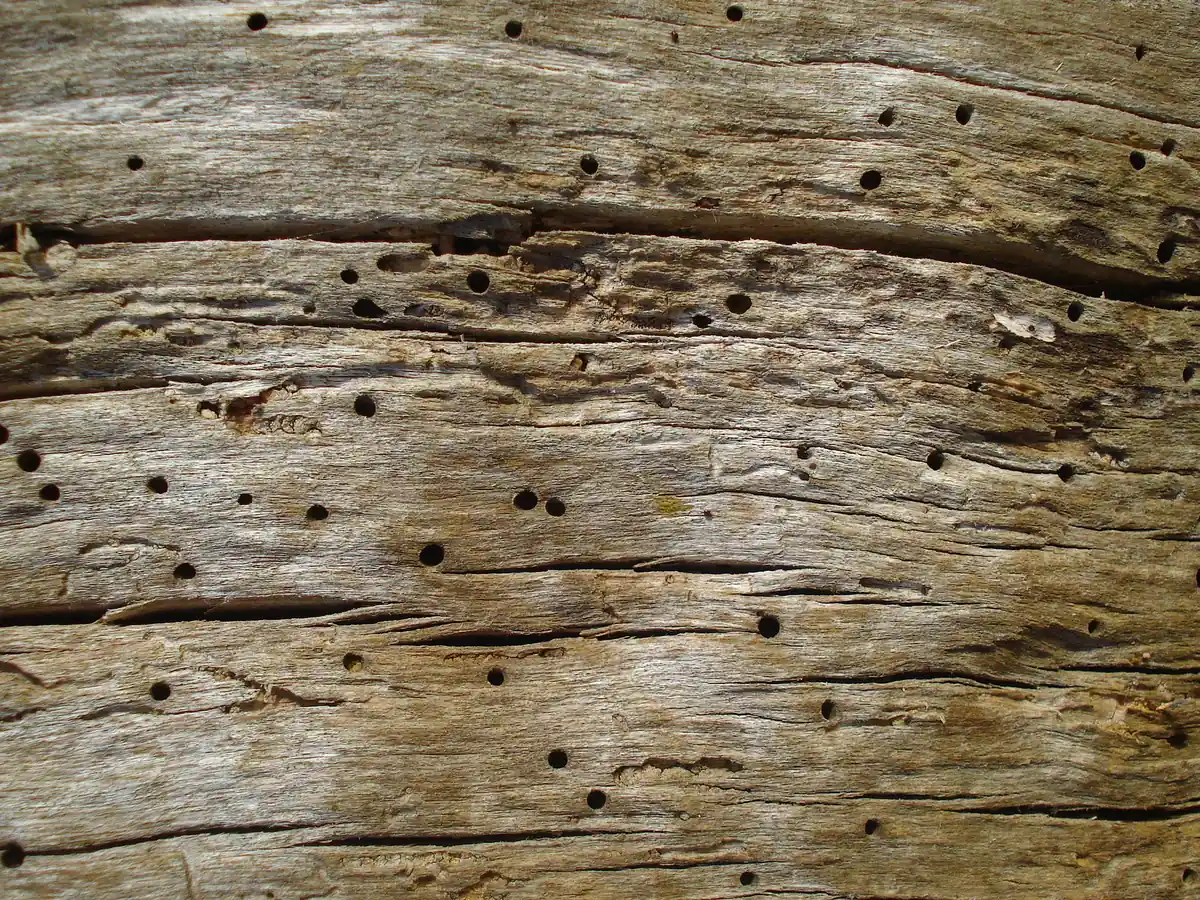

| Species named | Holes | What it implies for the timber |
|---|---|---|
| Common house borer | Round, about 1 to 2 mm | Damage often limited to sapwood edges; heartwood keeps working |
| Two-toothed longhorn | Oval, about 3 to 7 mm | Can hollow members out; probing and a builder are often needed |
| Huhu | Large oval, about 10 to 20 mm | Timber has been damp; fix the moisture source first |
| Powderpost beetle | Round, 0.8 to 1.6 mm | Hardwood sapwood such as tawa or rewarewa; pine framing is not affected |
If more than one species is named, read each area separately. A roof space with old common borer and a bearer with longhorn are two different problems in one house.
What does the activity line mean for your decision?
Activity says whether larvae are probably still feeding. Live means fresh dust, clean pale holes or beetles in season, and it means treatment before the next emergence. Historic means the signs are old and nothing points to current feeding, and it usually means no treatment. Uncertain means the evidence is mixed, often because of the season, and it calls for monitoring or a follow-up look.
Be careful with the season. Common house borer adults emerge mostly from November to January, so a winter inspection sees fewer fresh holes even where larvae are inside. A good finding says when the signs were judged and why. For a buyer, "historic" in a non-structural trim board is reassuring; "uncertain" in a bearer is a reason to ask more before the condition date. The flight season calendar sets out when each beetle emerges.
Why do the named timbers matter?
Because the same borer means different things in different members. Holes in a roof batten or a skirting board are a maintenance item. Holes in a pile, bearer, joist, top plate or rafter are in timber that carries load. A finding that lists members by name, rather than saying "subfloor", lets a builder or a treatment quote work from the same list and lets you judge where the money would go.

- Structural members (piles, bearers, joists, studs, plates, rafters): read the structural flag next.
- Floors and stairs: often native timber with sapwood edges; usually treatable in place.
- Cladding: borer can work from the inside face of weatherboards, so the visible face can understate it.
- Joinery and trim: rarely urgent, often cosmetic once inactive.
Treated framing is also worth noticing. If the finding says framing is stamped or coloured as treated while floors are untreated rimu, the borer question is about the floors.
How should you read the moisture note?
The moisture note says whether the conditions around the timber help borer or decay: a damp subfloor, blocked vents, missing ground cover, a leak under a bathroom, or readings from a moisture meter. Damp matters because the common house borer develops fastest in humid air, huhu needs wet wood, and the longhorn's development is shaped by moisture. A dry note is good news even where old borer is present.
A damp note usually brings a separate cost, such as clearing vents or laying a ground moisture barrier, and it comes before treatment, because treating timber that stays wet treats the symptom. The guide to borer and moisture explains readings and remedies.
What does a structural flag mean?
A structural flag means a member dented, crumbled or felt hollow under a probe, or showed enough damage that its strength is in question. It is not a verdict that the house is unsafe. It means a builder should look at that member and say whether it needs reinforcing, replacing or nothing, because borer treatment does not restore strength.
For a buyer, a flag is the line most likely to change the numbers. Replacing a few members like for like in the same position is generally exempt from building consent under Schedule 1 of the Building Act. Complete or substantial replacement of structural timber is not, and a full re-pile is consented work. The borer damage repair page explains where that line falls.
Why does the not-inspected list matter so much?
Because findings only cover what was reached. A report that says "no live borer" and lists the subfloor as inaccessible has said nothing about the piles and bearers. Read the not-inspected list next to the findings, and ask whether any gap sits where the risk is highest for this house, usually the subfloor of a villa or the roof space of a bungalow.
- Areas too low, too tight or too obstructed to enter.
- Timber under fixed floor coverings or behind linings.
- Parts of the roof space beyond safe walking.
- Outbuildings not included in the booking.
A gap is not a problem in itself; it is something to weigh. Sometimes it can be closed by clearing an access hatch and booking a return visit before the condition date.
How do you turn the next-step line into a decision?
The next-step line says what the findings call for: nothing, monitoring, treatment of named areas, a builder's view of flagged members, moisture work first, or a mix. Match it to your situation. An owner plans the work and its timing. A buyer prices it, decides whether it changes the offer, and talks to a lawyer about conditions.
| Next step in the findings | Owner | Buyer |
|---|---|---|
| No action; historic only | Keep the report; recheck in a few years | Usually no change to the offer |
| Monitor | Mark holes, look again next summer | Ask how confident the judgement is |
| Treat named areas | Get a treatment quote for those areas | Price it into your decision |
| Builder to assess | Book a builder before treating | Get the builder's view before unconditional |
| Fix moisture first | Vents, ground cover or leak repair | Add the moisture work to the cost |
How these findings feed into an offer is covered in is borer a deal breaker.
When the reading turns into a decision about one real house, the fee, the report and the booking steps are set out under a borer inspection for an Auckland property.
Asked about this
What is the most important line in a borer report?
For most decisions it is the structural flag, followed by activity. Live borer means treatment; a flagged member means a builder. Species explains how serious each is, and the not-inspected list tells you how much of the house the findings cover.
What does "activity uncertain" mean?
The inspector saw signs that could be old or recent, often because the visit fell outside the main emergence season. It usually leads to monitoring or a follow-up look. In structural timber, a buyer should ask what it would take to firm the judgement up before the condition date.
Does a borer report say how much treatment will cost?
The findings describe the beetle, the areas and the timber, which is what a treatment quote is built from. The price itself comes as a separate quote for the named areas. Published Auckland ranges are on the borer cost guide.
Can I give the borer findings to a builder?
Yes, and it helps. A list of members by name, with the structural flag and photos, lets a builder see what to look at and price the repair without starting from scratch.
Act on the findings
- Borer inspectionWhat a borer inspection records, part by part, and what it costs
- Is borer a deal breaker?When borer should change an offer on a house, and when it should not
- Borer damage repairWhen borer damage needs a builder, which repairs are exempt from consent, re-piling and the order of work
- Old borer damageWhen historic borer holes in an old house matter, how strength is judged, and what to record
Sources
- NZ Farm Forestry Association: household borer, Anobium punctatum
- NZ Farm Forestry Association: two-toothed longhorn, Ambeodontus tristis
- NZ Farm Forestry Association: huhu beetle
- Consumer NZ: borer and other pests
- Building Performance (MBIE): general repair, maintenance and replacement (Schedule 1, exemption 1)
Book a borer inspection
The inspection is $285 + GST, credited against treatment done through the same operator. Treatment ranges sit on the cost page.