Owners and buyers
Old borer damage in an older house: when it still matters
Almost every house framed in untreated native timber carries some old borer holes. Most of them are a record of beetles that left decades ago, and the timber around them is still doing its job. A few are not. The difference lies in where the holes are, which beetle made them, how much wood is left, and whether anything is still feeding, which is what a borer inspection sorts out.
First published · updated
Old borer damage matters when it has taken enough wood out of a load-bearing member to weaken it, when the holes belong to the native longhorn, which hollows heartwood, or when the conditions that let borer in are still there. Historic holes in trim, floor edges or roof battens with sound timber behind them usually need nothing more than a record.
Is old borer damage a problem?
Usually not, if it is old and the timber is sound. The common house borer feeds in sapwood, which in many native members is a narrow band along one edge, so a member can carry a line of holes and keep most of its strength. Old damage becomes a problem when the holes are in structure and probing shows the wood beneath has gone soft, powdery or hollow.
That is why inspectors separate two questions that people tend to run together. Is the borer still active? And has the damage it already did weakened anything? A house can answer no to the first and yes to the second, in which case there is nothing to treat but something for a builder to look at.
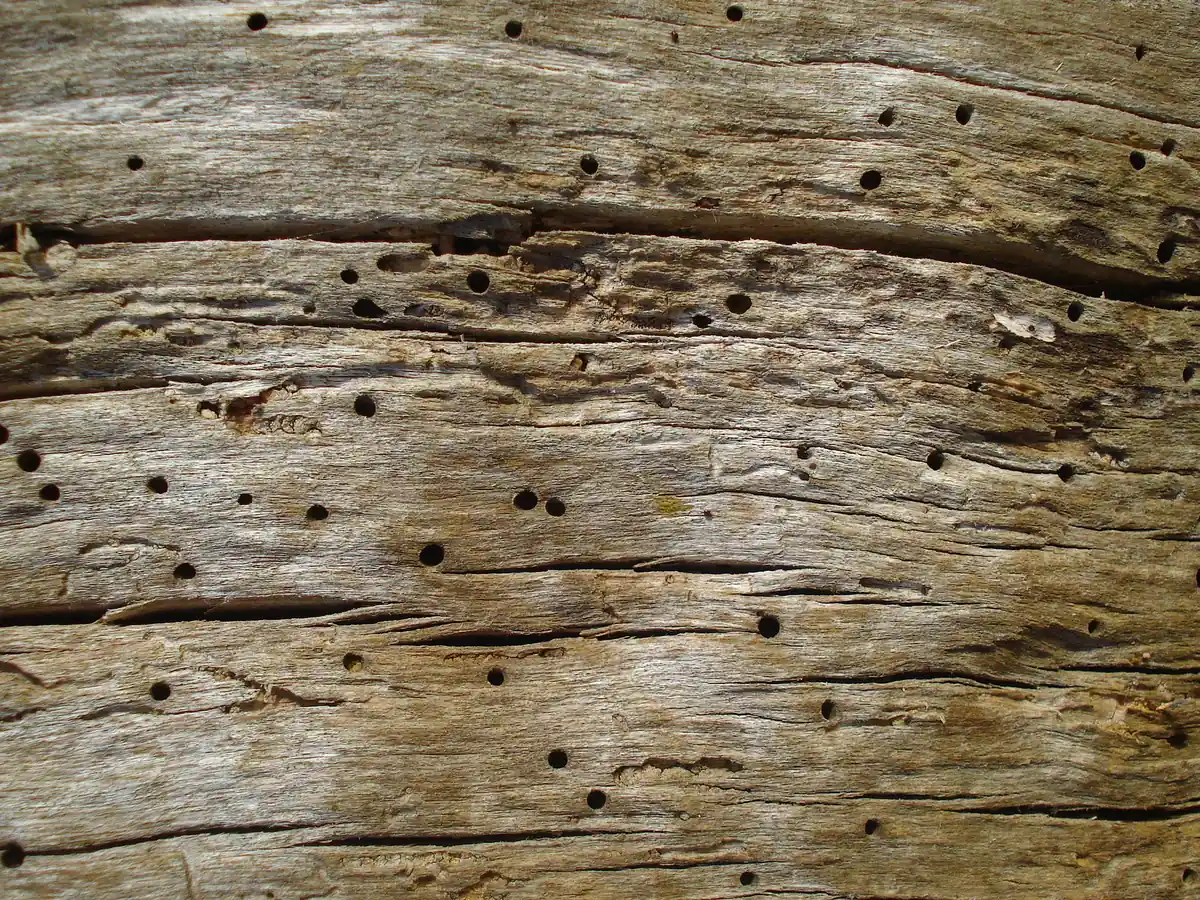

How do you tell old borer damage from live borer?
Old damage has dark, weathered holes with soft rims, dust that is grey, compacted or mixed with cobwebs, and no new dust after cleaning. Live borer shows clean, pale holes, fine fresh dust that comes back, and adult beetles in the emergence season, mostly November to January for the common house borer. Season matters: winter can make live borer look old.
| Sign | Usually old | Possibly active |
|---|---|---|
| Hole edges | Dark, rounded, dirty | Sharp, pale, clean |
| Dust | Grey, packed, cobwebbed | Fine, pale, in fresh piles |
| After cleaning | Nothing returns | Dust reappears in weeks |
| Beetles | None found in season | On sills in late spring and summer |
| Finish | Holes painted over long ago | Holes cut through recent paint or filler |
None of these is decisive alone. The flight season calendar shows when each beetle emerges, which is when the activity signs are clearest.
How is strength judged in timber with old borer holes?
By probing and by looking at how much of the section is affected. An inspector pushes a sharp probe or awl into the timber around the holes: sound wood resists, borer-riddled sapwood gives a little, and badly damaged wood crumbles or lets the probe sink. The number of holes on the surface is a poor guide, because the tunnels behind them can be sparse or dense.
The location of the damage on the member matters as much as the depth. Holes confined to one sapwood corner of a large bearer leave most of the section intact; the same damage across the whole face of a thin joist leaves far less. Where probing leaves doubt about a load-bearing member, the finding should say so and point to a builder, because strength is a builder's judgement.

Why does the native longhorn change the picture?
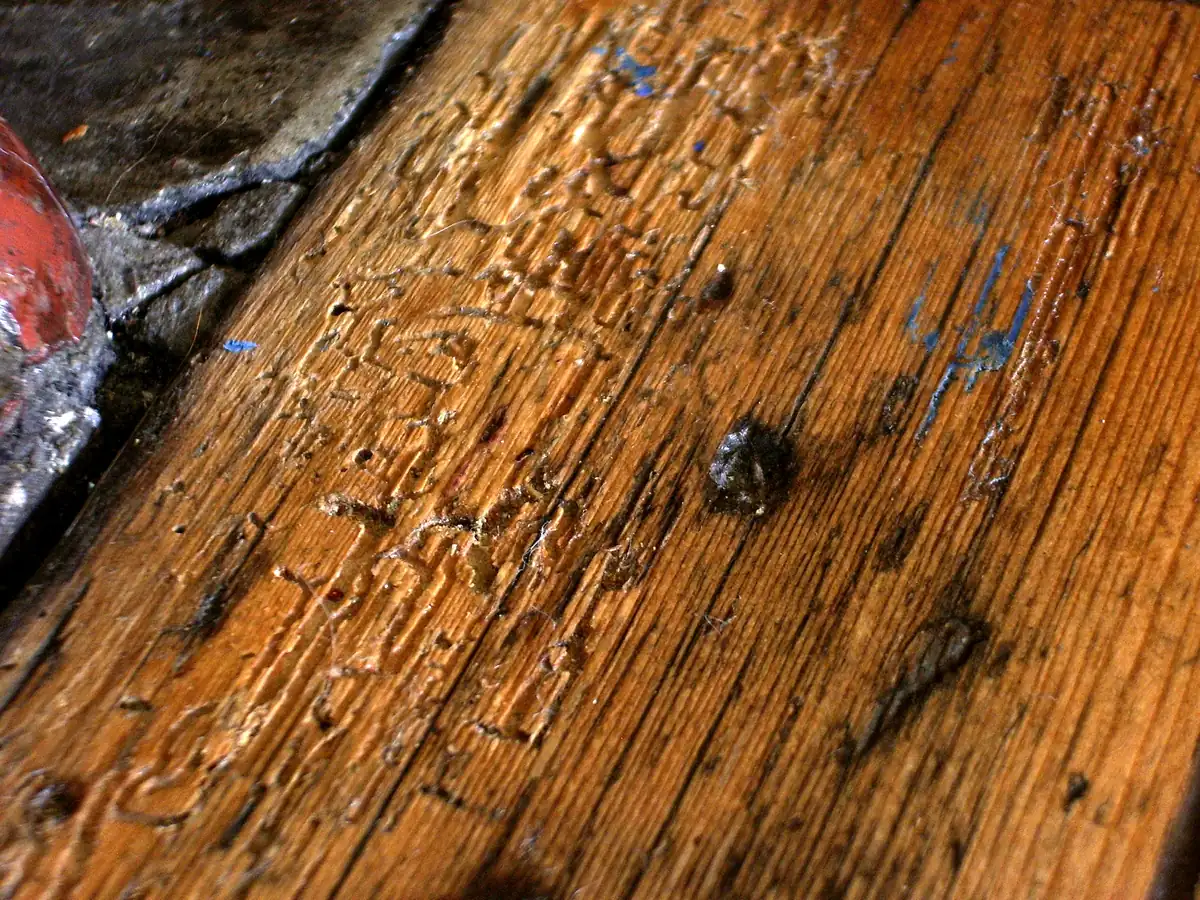
Because the two-toothed longhorn, Ambeodontus tristis, does not stop at sapwood. The NZ Farm Forestry Association records its larvae tunnelling through heartwood too, and heavily attacked timber can end up as a thin outer shell. Its larval stage can last from 2 to 11 years. So old oval holes in a pile or bearer deserve probing even when they look long finished.
Its holes are oval, about 3 to 7 mm across, compared with the round 1 to 2 mm holes of the common house borer. Rimu, kahikatea and macrocarpa are the timbers most often attacked. The two-toothed longhorn guide covers identification in more detail.
How do you get rid of old house borer?
If it is genuinely old, there is nothing left to kill: the beetles have gone and the larvae finished long ago. Getting rid of old borer is then a question of the damage, not the insect. That means leaving sound timber alone, filling or finishing holes where appearance matters, and replacing members that probing shows are too weak.
- Sound timber, historic holes: no treatment; fill or leave as character.
- Weakened member: a builder reinforces or replaces it like for like.
- Any sign of activity: treat the affected area first, then repair.
- Damp conditions: fix the moisture so old damage does not become new damage.
Like-for-like replacement of some damaged members in the same position is generally exempt from building consent under Schedule 1 of the Building Act; complete or substantial replacement of structure is not. The borer damage repair page sets out where that line sits.
What should you record about old borer damage?
Record where it is, what it looks like and when you saw it, so that change can be spotted later. A dated photo of each affected area, with a ruler or coin for scale, and a short list of the members involved is enough. Some owners mark the edge of a cluster with a pencil line; new holes outside the line the next summer are easy to see.
-
Photograph
Each area, close and wide, with something for scale.
-
List
Room or space, member, round or oval holes, dust or none.
-
Clean
Vacuum dust from sills and floors near the holes.
-
Recheck
Look again after the next emergence season for new holes or fresh dust.
-
Keep
Store the photos with any inspection findings or treatment invoices for a future sale.
A record like this is also what a future buyer will ask for, and it makes the line in their building report easier to read.
Does old borer damage affect a house sale?
It can, mostly through how it is reported. A building report that notes borer without saying whether it is old or live leaves buyers to assume the worst. Written findings saying the damage is historic, the timber is sound, and nothing is active usually settle the question. Undisclosed weakened structure is a different matter and is best dealt with before marketing.
For buyers, the guide to reading a borer report explains how to weigh historic findings, and filling borer holes explains why freshly hidden holes deserve a question.
When the reading turns into a decision about one real house, the fee, the report and the booking steps are set out under the Lignum borer inspection across Auckland.
Asked about this
Do old borer holes mean the house is weak?
Not necessarily. Common house borer works in sapwood, so many members carry old holes along one edge and keep most of their strength. Weakness is judged by probing the timber, especially in piles, bearers, joists and rafters, not by counting holes.
Should old borer holes be treated?
If the borer is genuinely inactive, treatment kills nothing, because nothing is there. Treatment is for live borer. Old damage needs either nothing, cosmetic filling, or a builder's repair if the timber is weak.
How can I tell if old borer has come back?
Clean away the old dust, photograph the holes, and look again after the next emergence season. Fresh pale dust, new holes outside a marked area, or beetles on sills in late spring and summer suggest activity.
Is historic borer damage covered by house insurance?
Policies differ and many exclude gradual damage from insects, so check your own policy wording or ask your insurer. This site does not give insurance advice.
Old damage, next steps
- Borer damage repairWhen borer damage needs a builder, which repairs are exempt from consent, re-piling and the order of work
- Two-toothed longhornThe native longhorn that tunnels through heartwood: oval holes, autumn emergence, damp subfloors
- Reading a borer reportEach line of borer inspection findings explained, and what it means for a buying or repair decision
- Piles and subfloorBorer in piles, bearers and joists, damp subfloors, rot versus borer, and when replacement needs a consent
Sources
Book a borer inspection
The inspection is $285 + GST, credited against treatment done through the same operator. Treatment ranges sit on the cost page.